
Why Spend 2 Weeks in Lyon?
Spending 2 weeks in Lyon is one of the best ways to experience authentic French culture beyond Paris at slower pace. We want to enjoy more time “living as locals” enjoying the best things to see, eat and experience. Instead of a quick typical tourist visit cramming in the top 10 sites. Lyon is the gastronomic capital of France. Thanks in part to legendary chef Paul Bocuse, whose influence elevated traditional Lyonnaise cuisine. Visitors can indulge in local specialties in cozy “bouchon” restaurants scattered throughout the city. Lyon blends incredible food, architecture, riverfront views, and easy access to stunning day trips. So it’s perfect for a two week stay.
A Slice of Lyon history
Lyon was once the capital of Roman Gaul—known as Lugdunum—and founded in 43 BC. It still preserves remarkable ruins like the Ancient Theatre of Fourvière, offering a glimpse into its 2,000-year-old past. Wandering through the cobblestone streets of Vieux Lyon reveals Renaissance-era buildings and hidden passageways called traboules. The hilltop Basilica of Notre-Dame de Fourvière rewards visitors with sweeping views of the Rhône and Saône rivers. The heart of the city lies on a peninsula between these two rivers.
Our first two days
We arrived in Lyon by train, after spending a week in Nice, Monaco and Menton. Today a cold front blew in and temperatures dropped from 80 into the 40s. We had our first two days of rain. So, we decided to take a break. We unpacked and stocked up our apartment with the necessities like wine, pâté, cheese, chocolates and other groceries. So, even though it’s raining, we headed to our favorite food stores, Auchan and Picard. Although, we frequent others like Monoprix, Super U, Carrefour, and Casino.
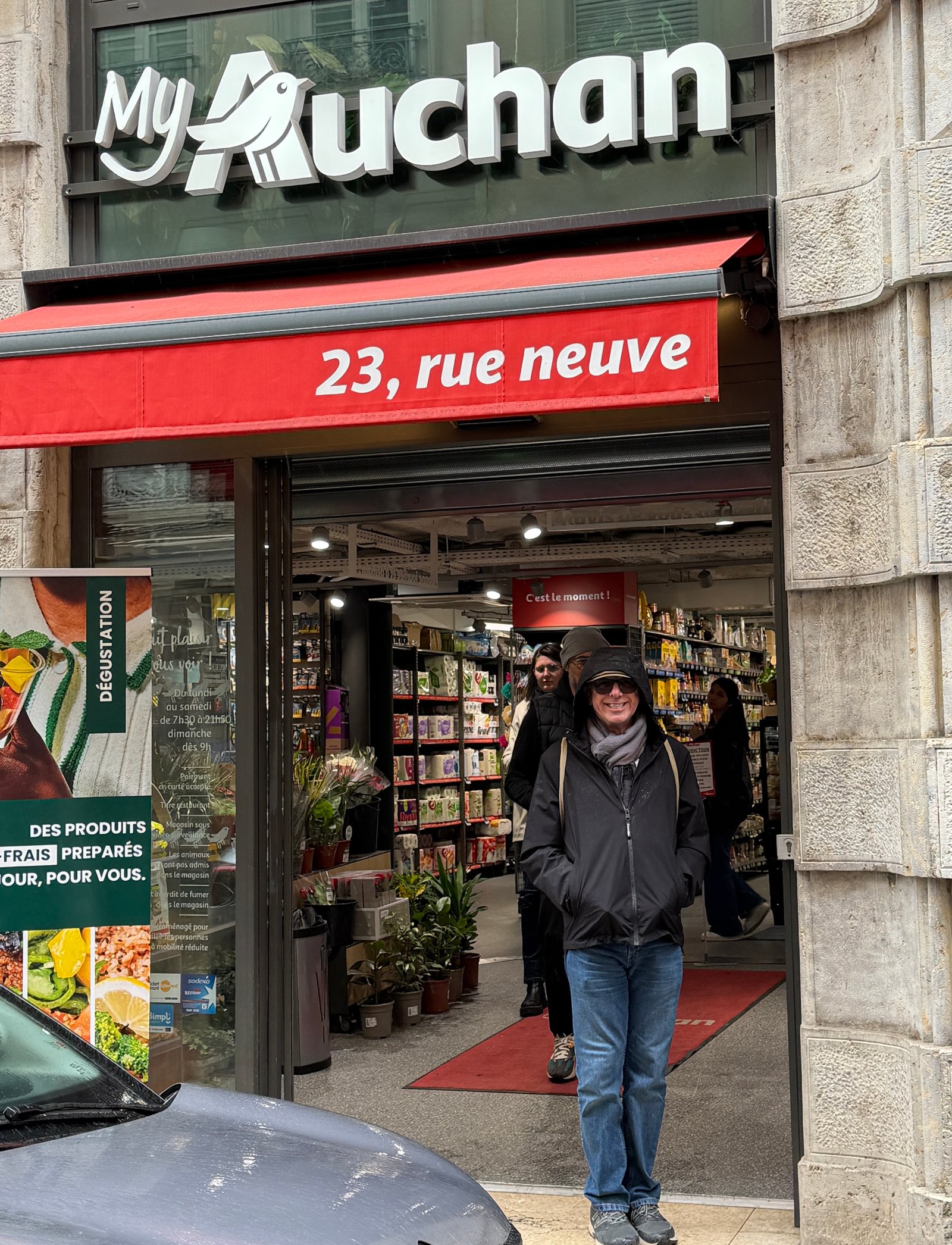
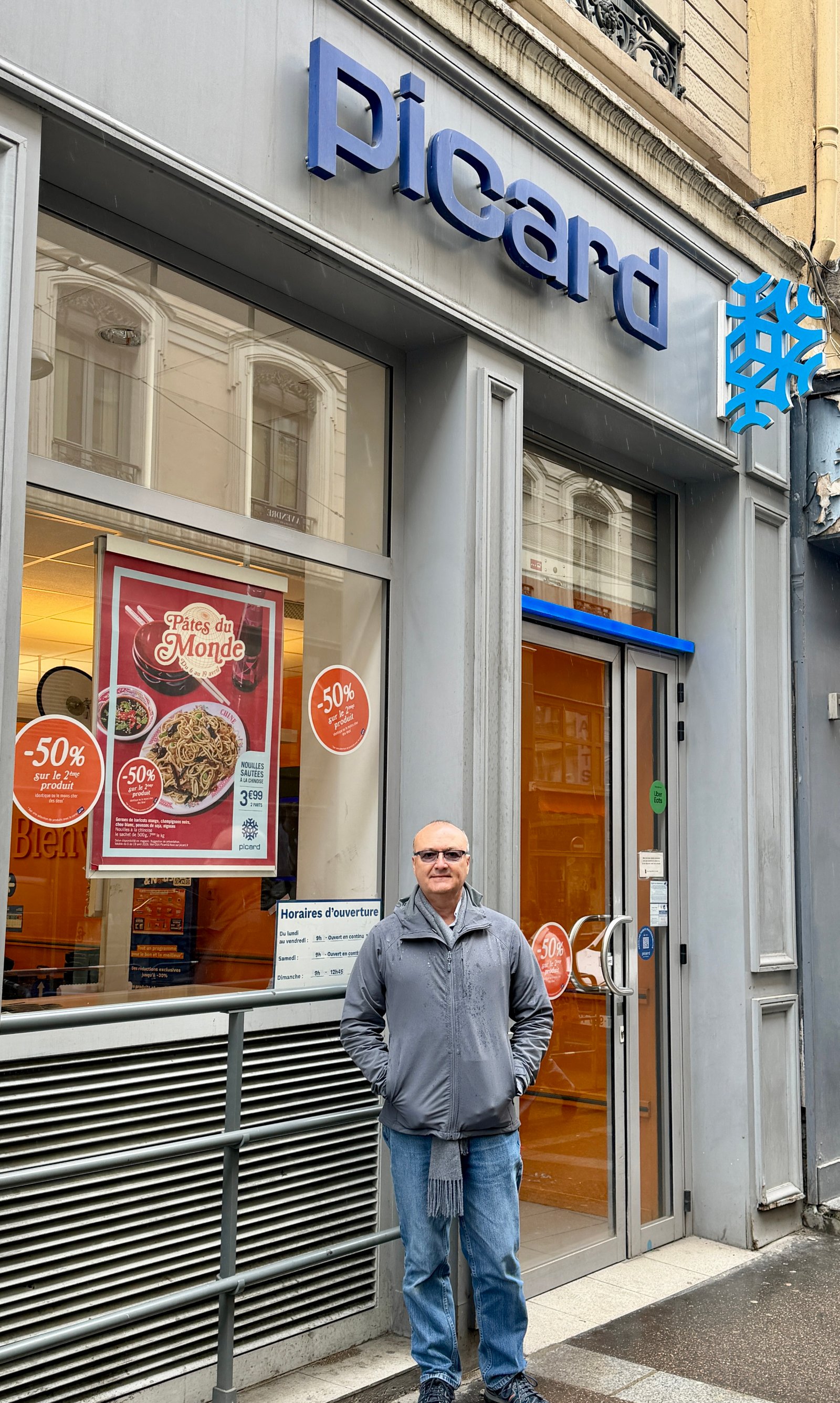
If you have an apartment or a hotel with a kitchenette and can prepare simple meals, look for these stores. Picard only sells frozen foods, while all the others have both. However, if you haven’t shopped at Picard before, it’s so worth checking out. You might first wonder what makes frozen foods special, but this is upgraded frozen food. They have everything from grilled veggies, meats, seafood, casseroles, pizzas, ready to heat gourmet meals and appetizers to desserts, sorbet and gelato. Quite a few of our best home cooked meals came from here.
Our neighborhood and first meal
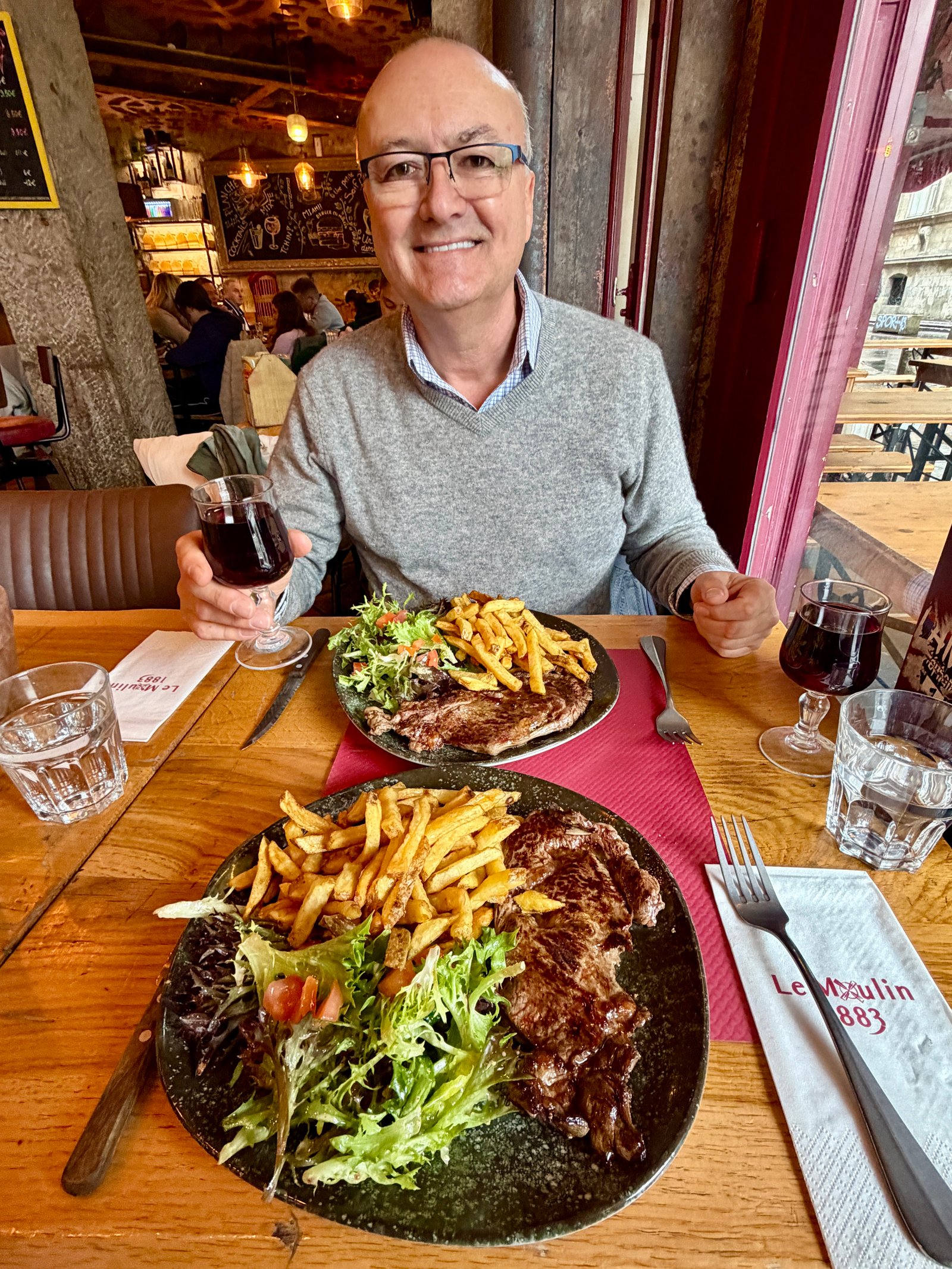
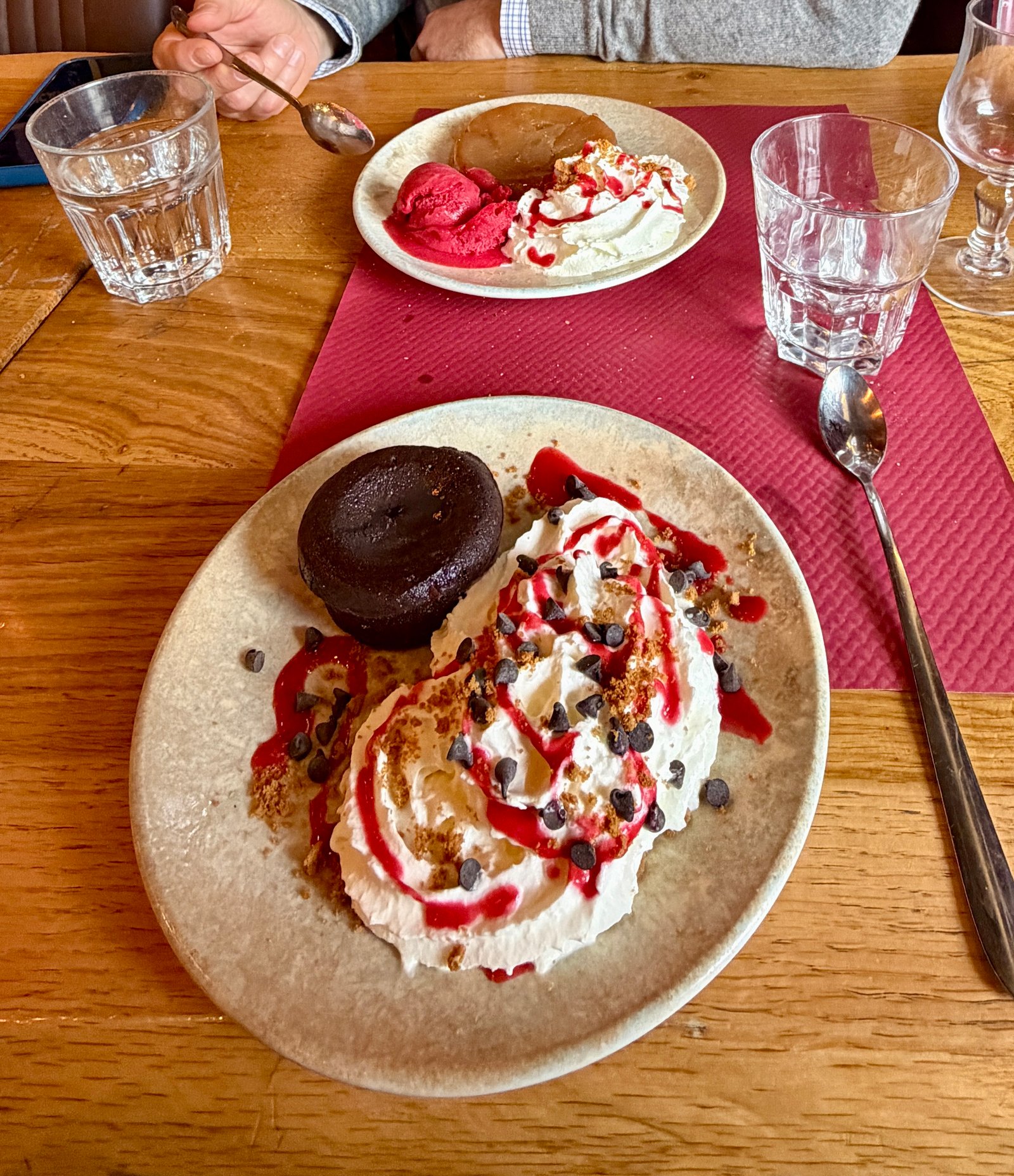
We noticed a bistro on the corner of our street called Le Moulin 1883, with a €19.90 lunch special. What did it include for about $23 USD? A typical dish of “steak frites” with salad, dessert and a glass of wine with tip and tax! Delicious. This is why we typically eat a nice lunch out, because you get multiple courses of quality food for a great price. Then we can prepare a light evening meal in the apartment.
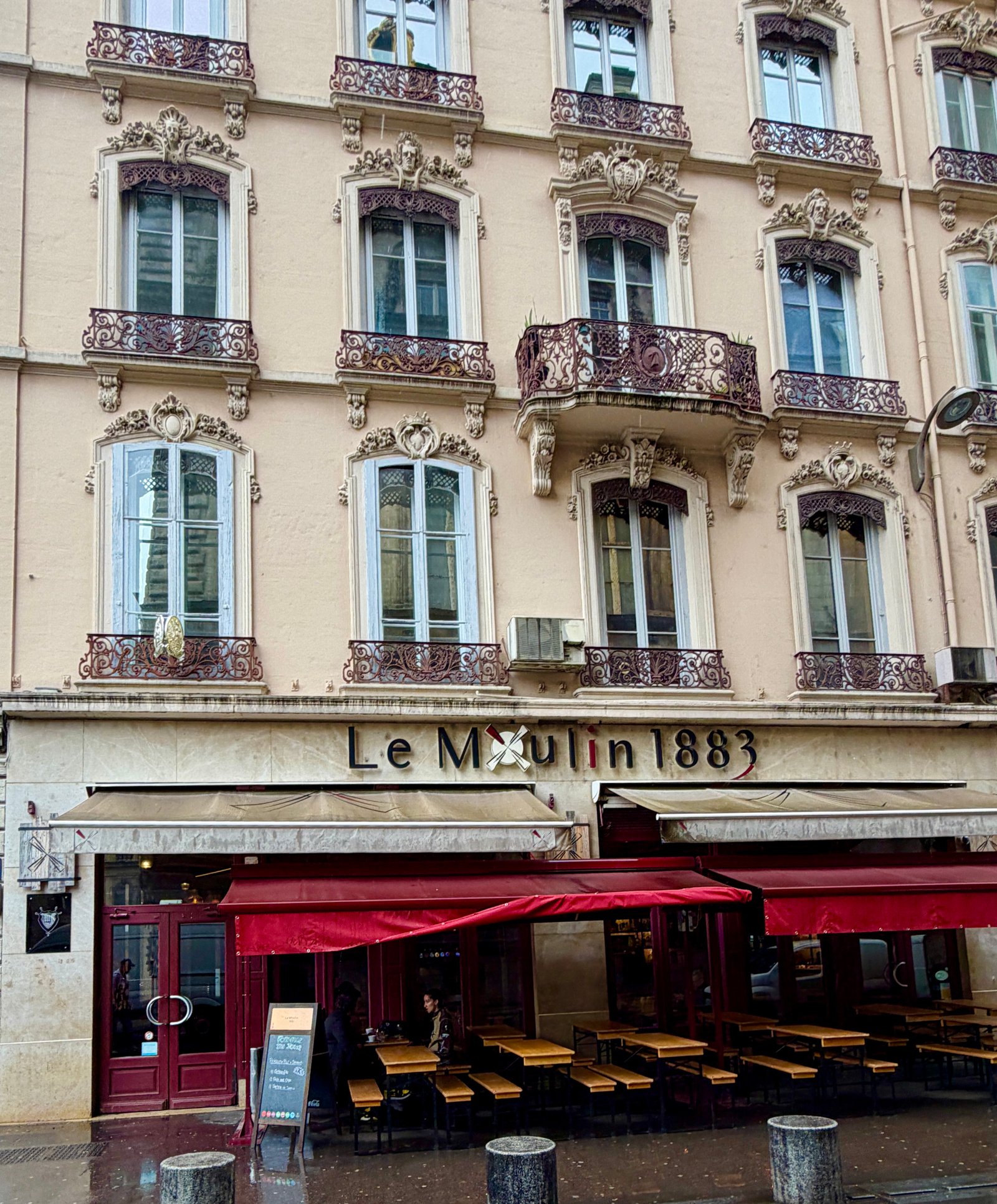
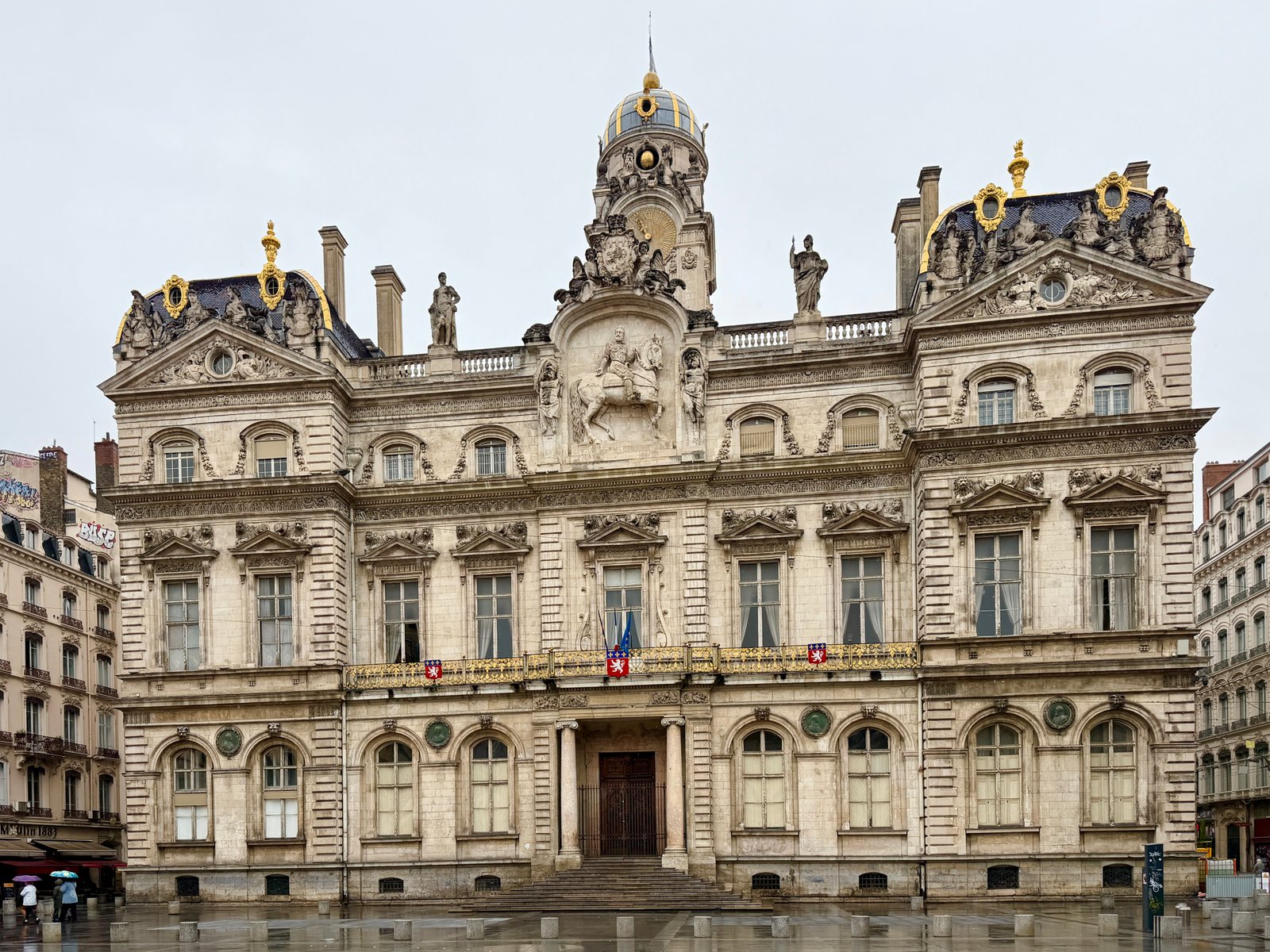
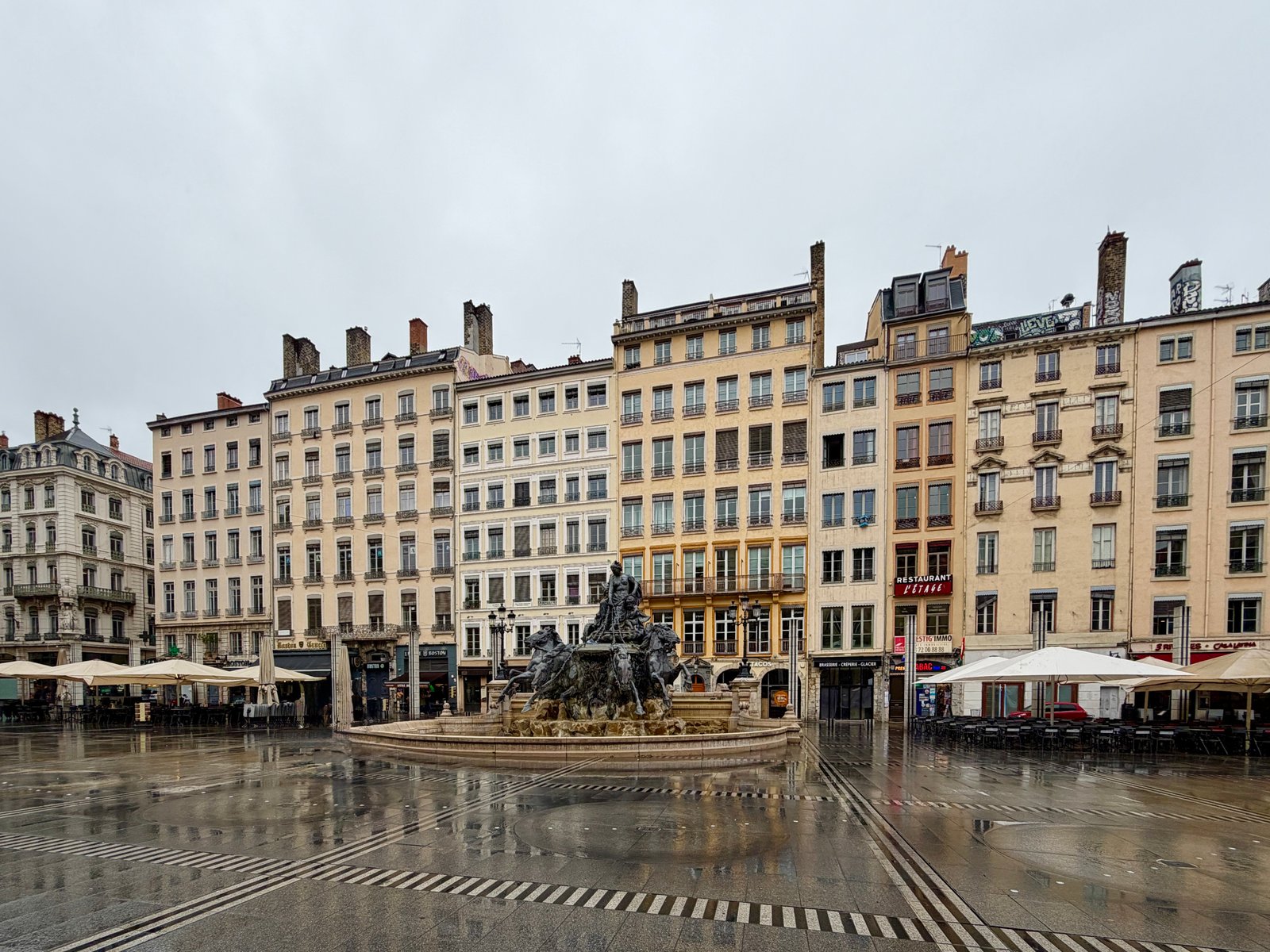
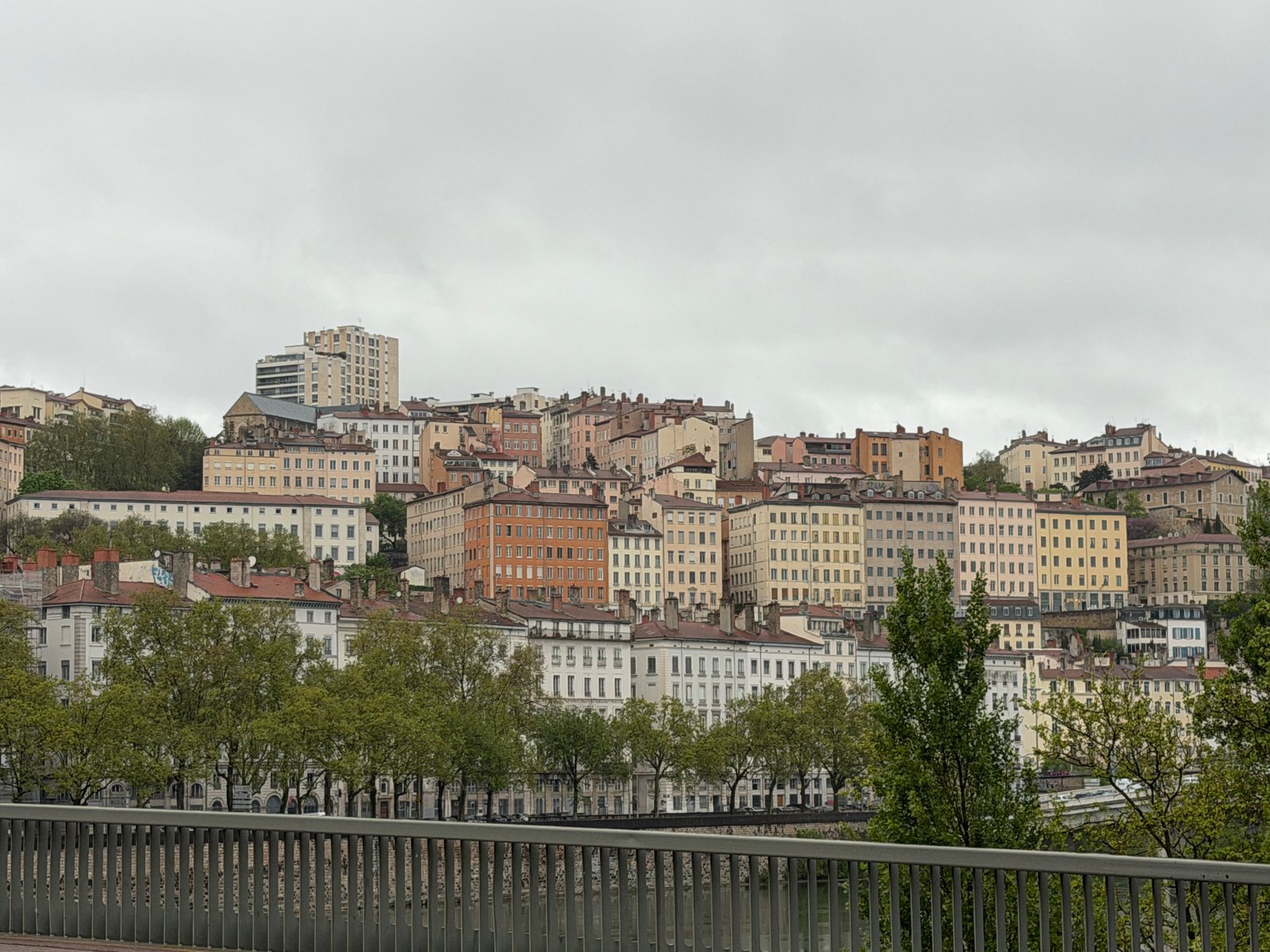
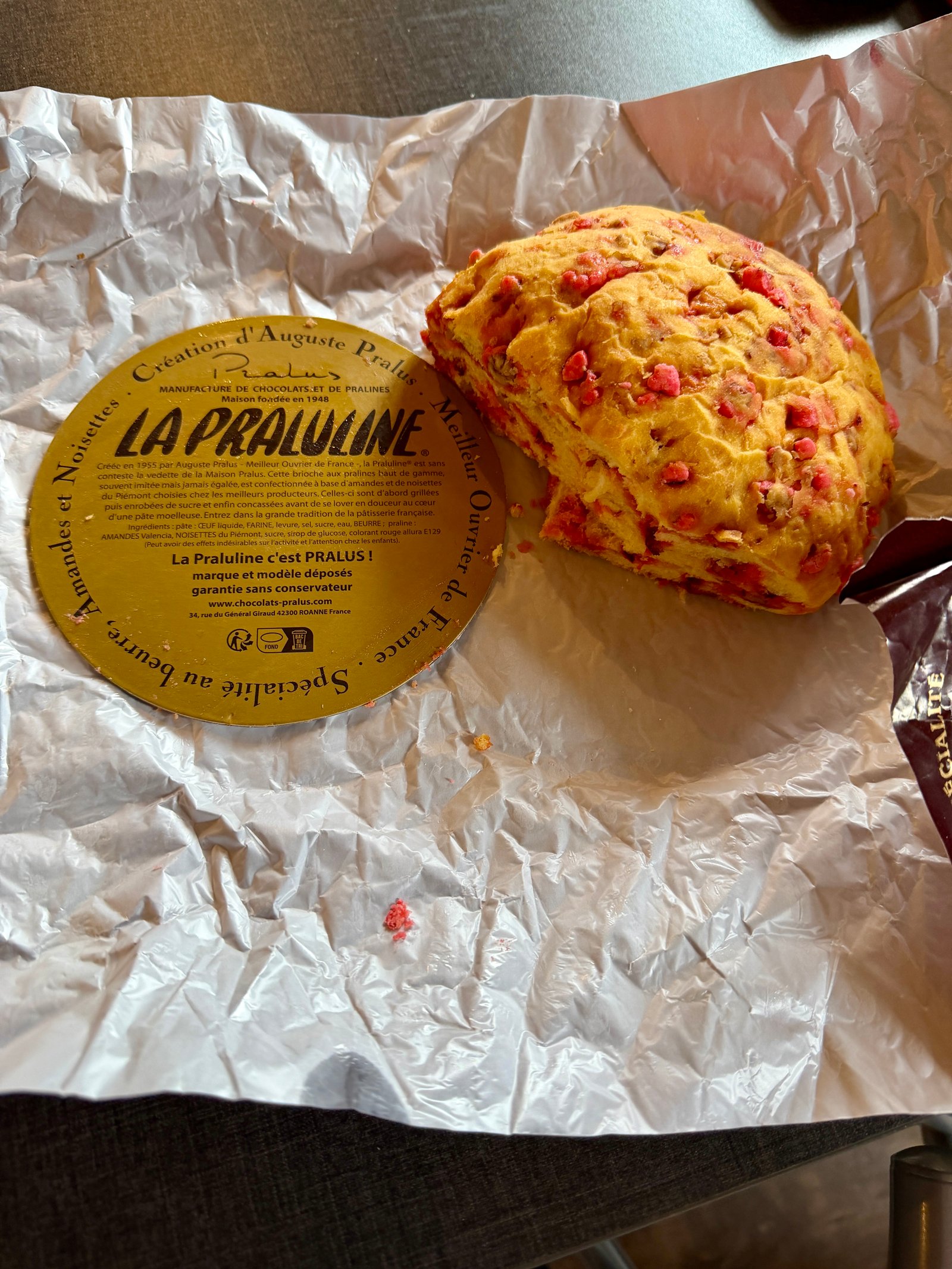
Here are a few rainy photos of our neighborhood. We live next to the Hôtel de Ville. Our host left us a special local treat in the apartment, as shown in the last photo. Sorry, we ate half before I thought to take the photo. It is so good! It’s called Praluline, and a baker first created it in 1955. Crunchy almonds and hazelnuts that are candied pink in copper cauldrons and then baked into a sweet brioche pastry. A must local try when in Lyon.

Vieux Lyon
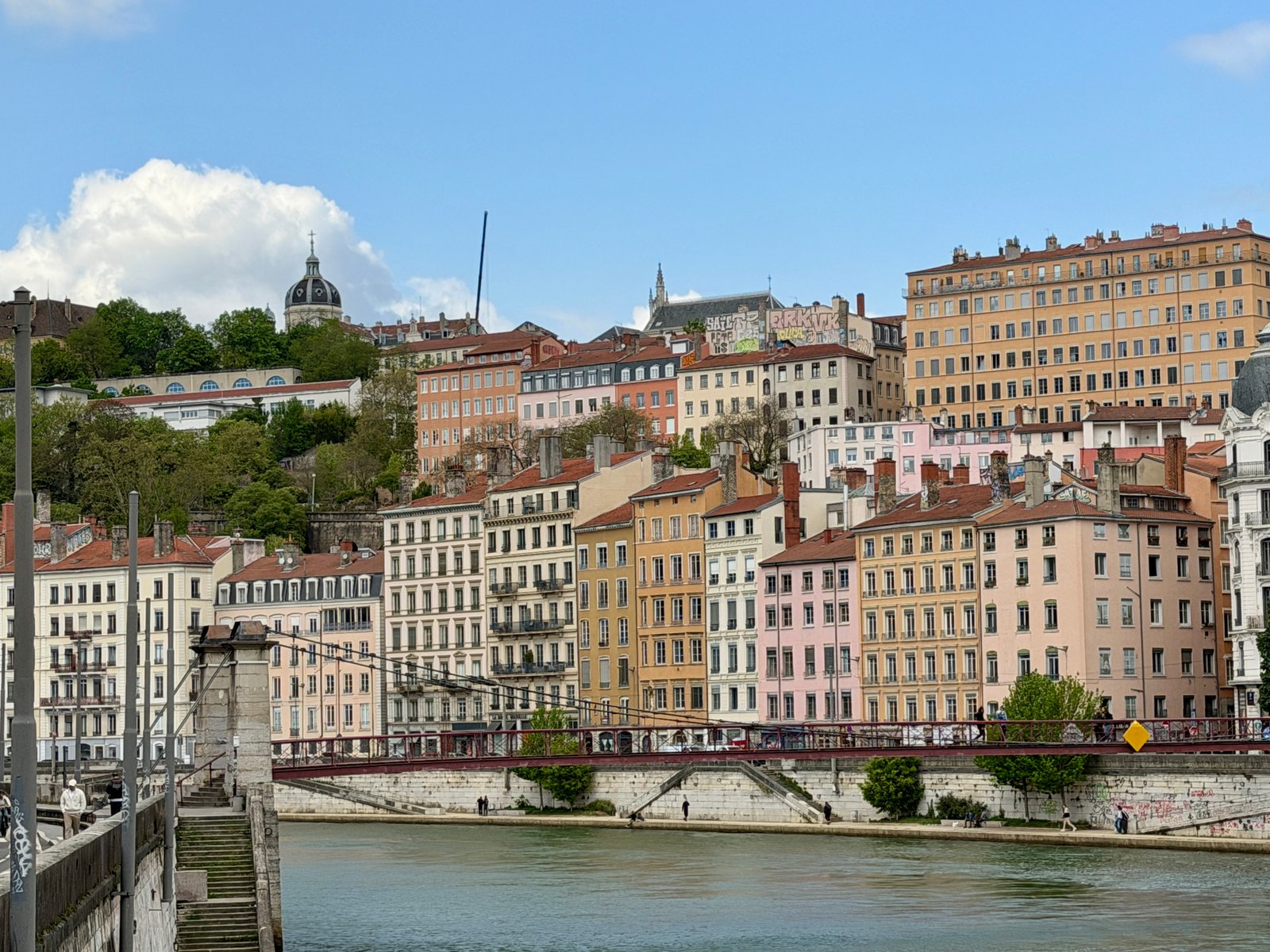
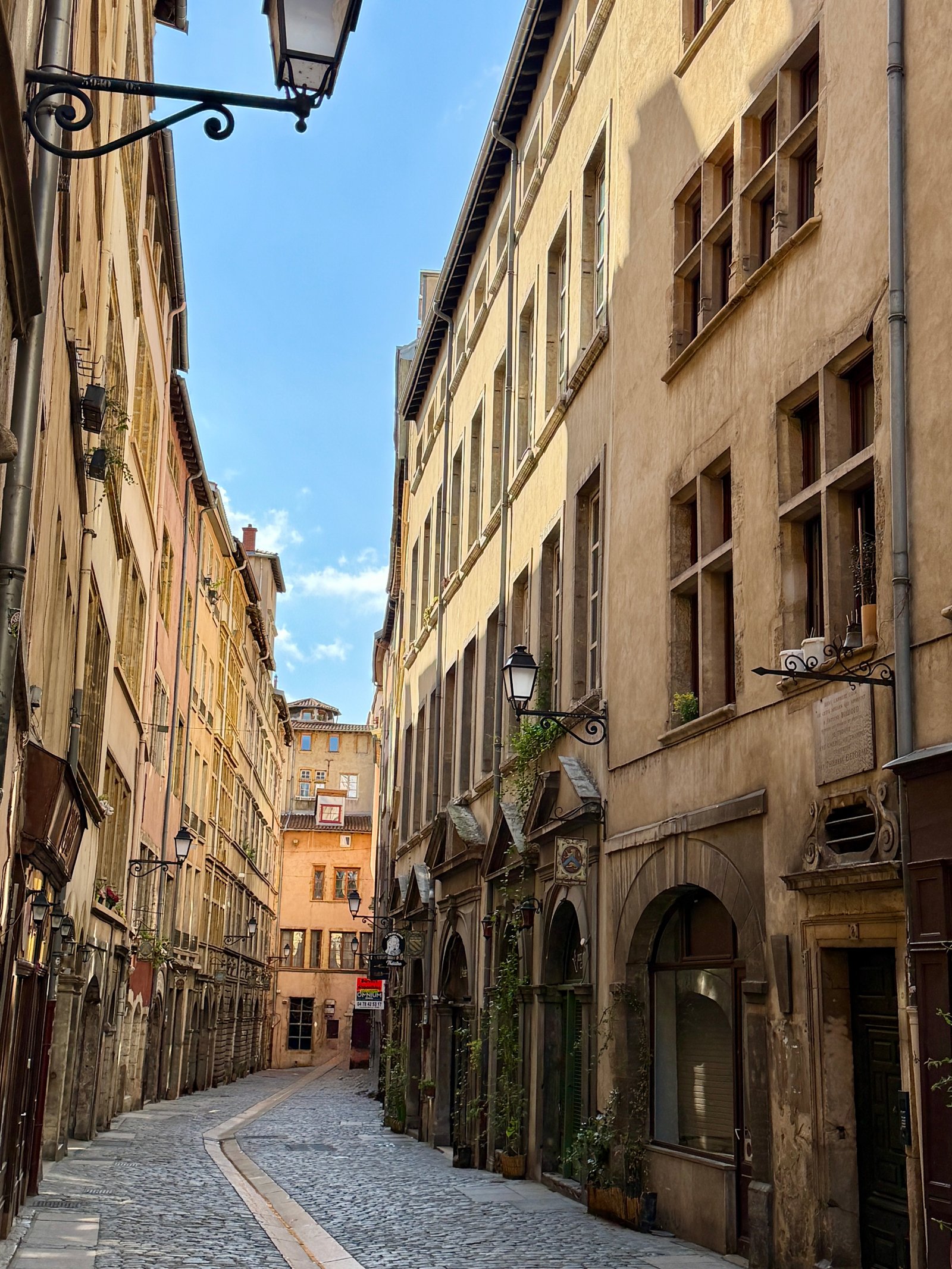
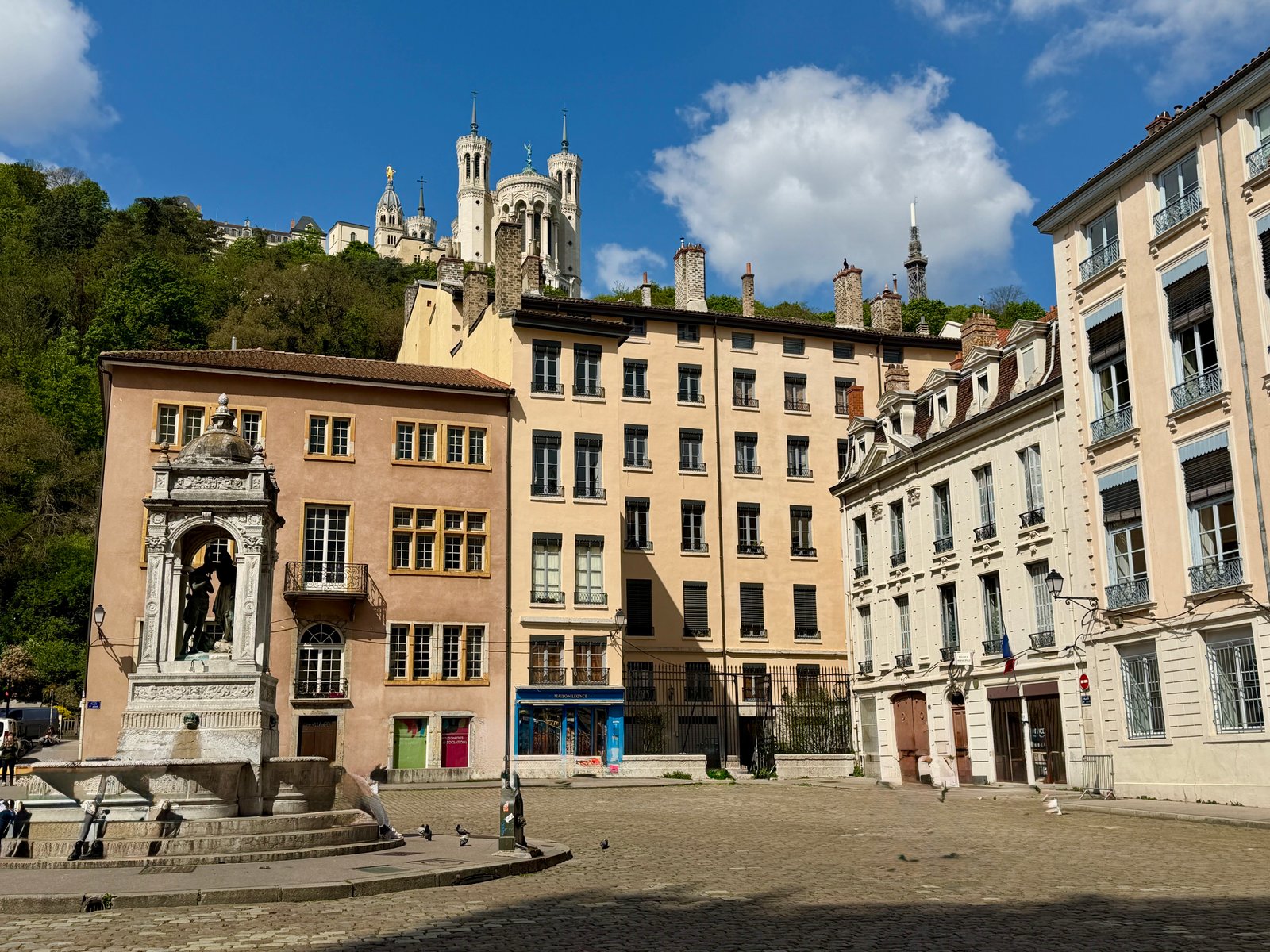
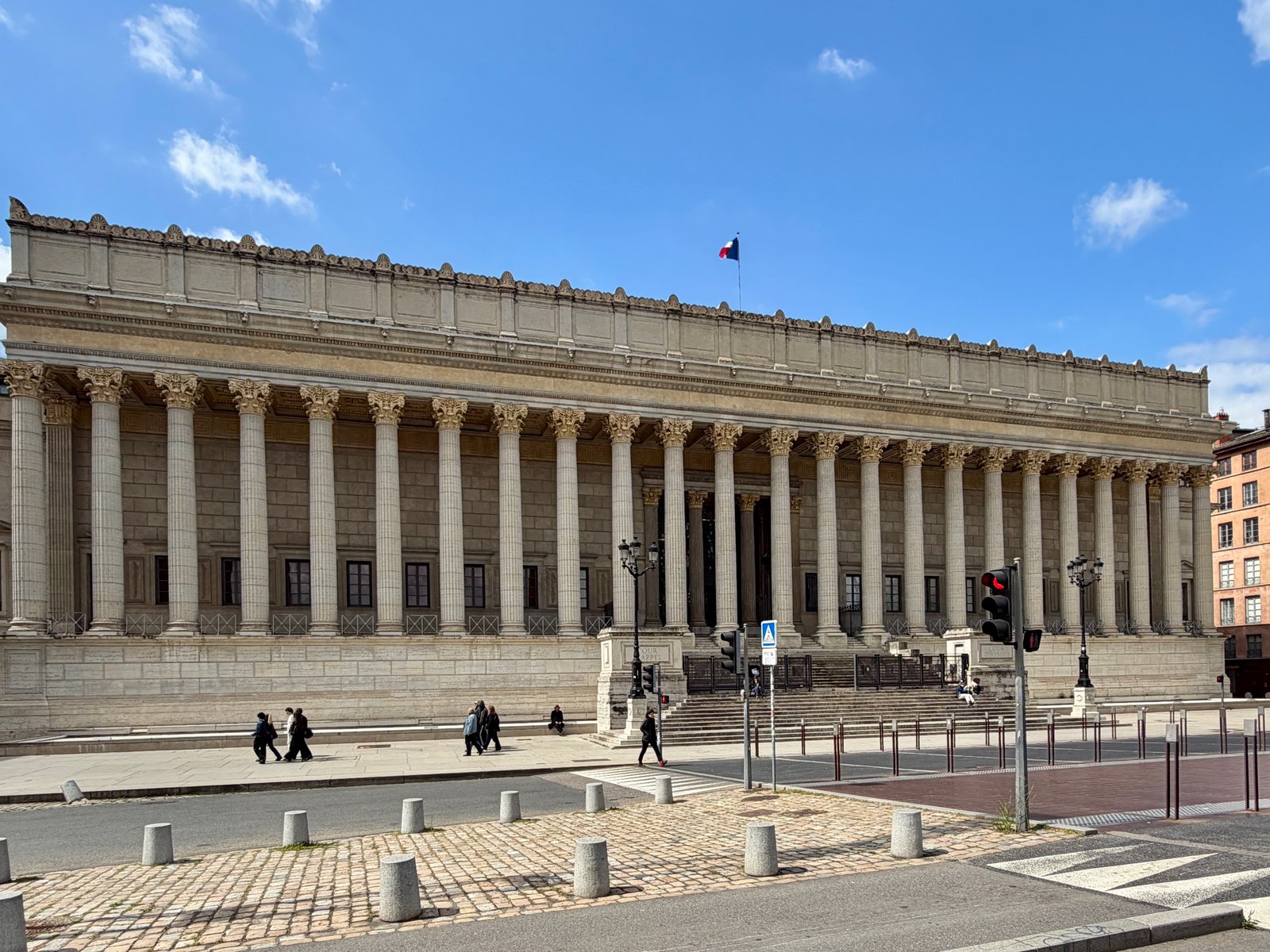
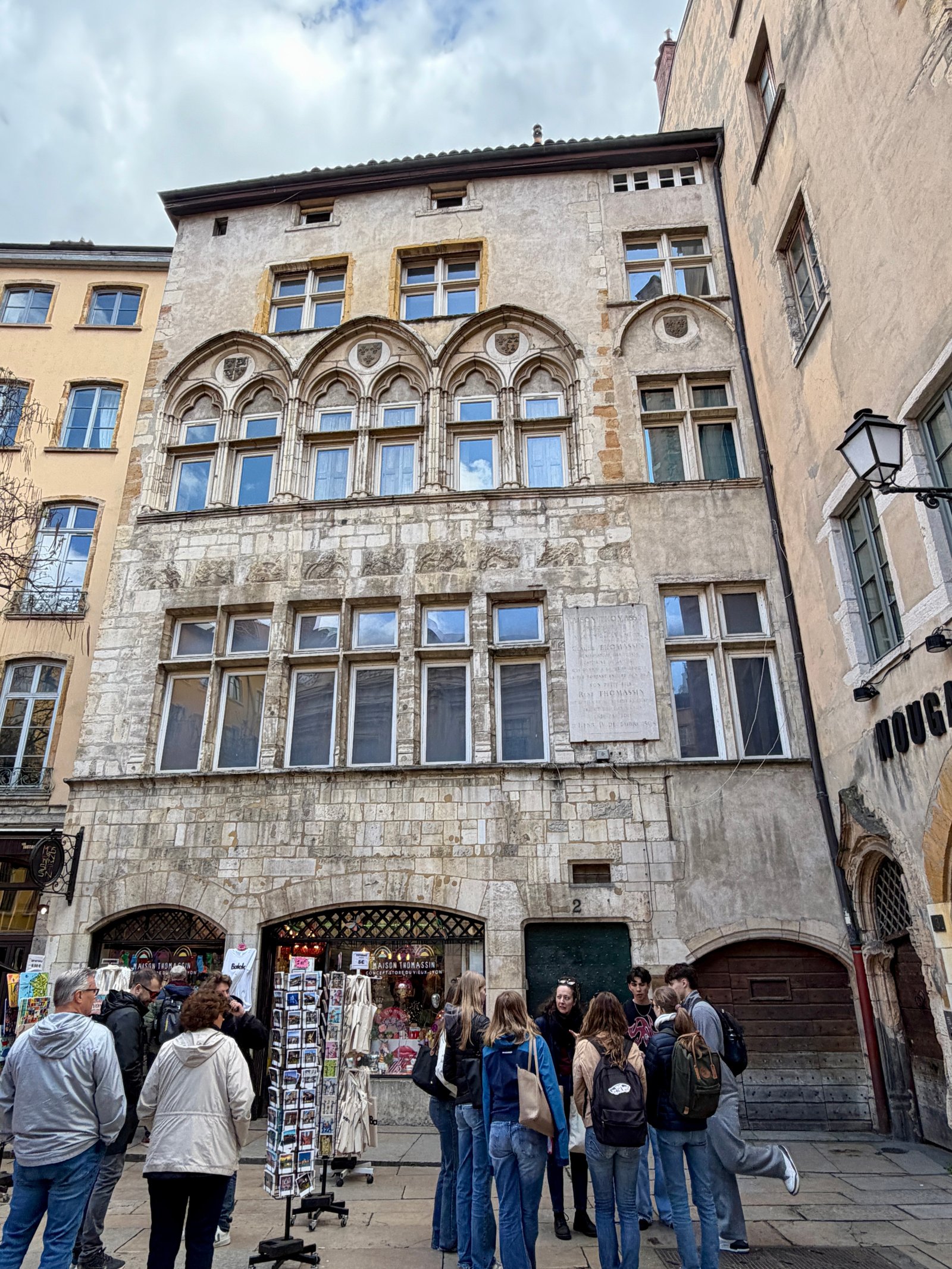
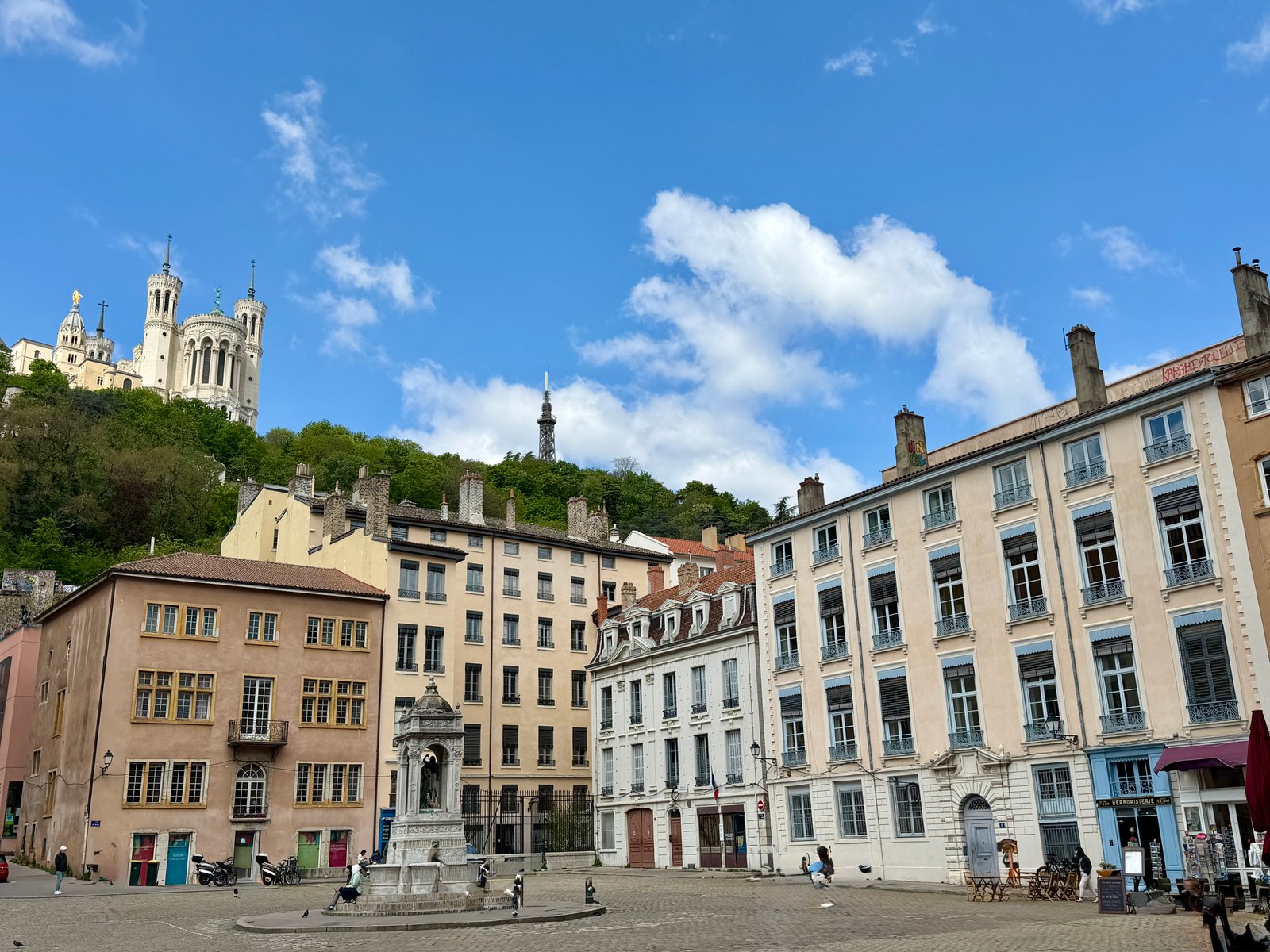
Vieux Lyon (Old Lyon) is Europe’s largest Renaissance district, located along the Saône River. It is famous for its cobblestone streets, hidden traboule passageways, Renaissance architecture, and traditional “bouchon” restaurants. Walking is the best way to explore Vieux Lyon, as it’s mostly pedestrianized. By far, this is a favorite area for visitors to explore. The charm and ambiance are simply unbeatable!


Lyon Cathedral
No great French city is complete without a cathedral. The builders began the Cathedral of Saint John the Baptist in 1180 on the ruins of a 6th-century church and completed it in 1476. Almost 300 years to complete. It was also the site of the wedding of King Henry IV to Marie de Medici in 1600.
The most renowned feature of the cathedral is the astronomical clock (1379) located in the north transept. It not only tells the time, day, date, and months in Latin, but also the position of the stars, moons, date of eclipses and time between sunrise and sunset. A technological feat for a device almost 650 years old.
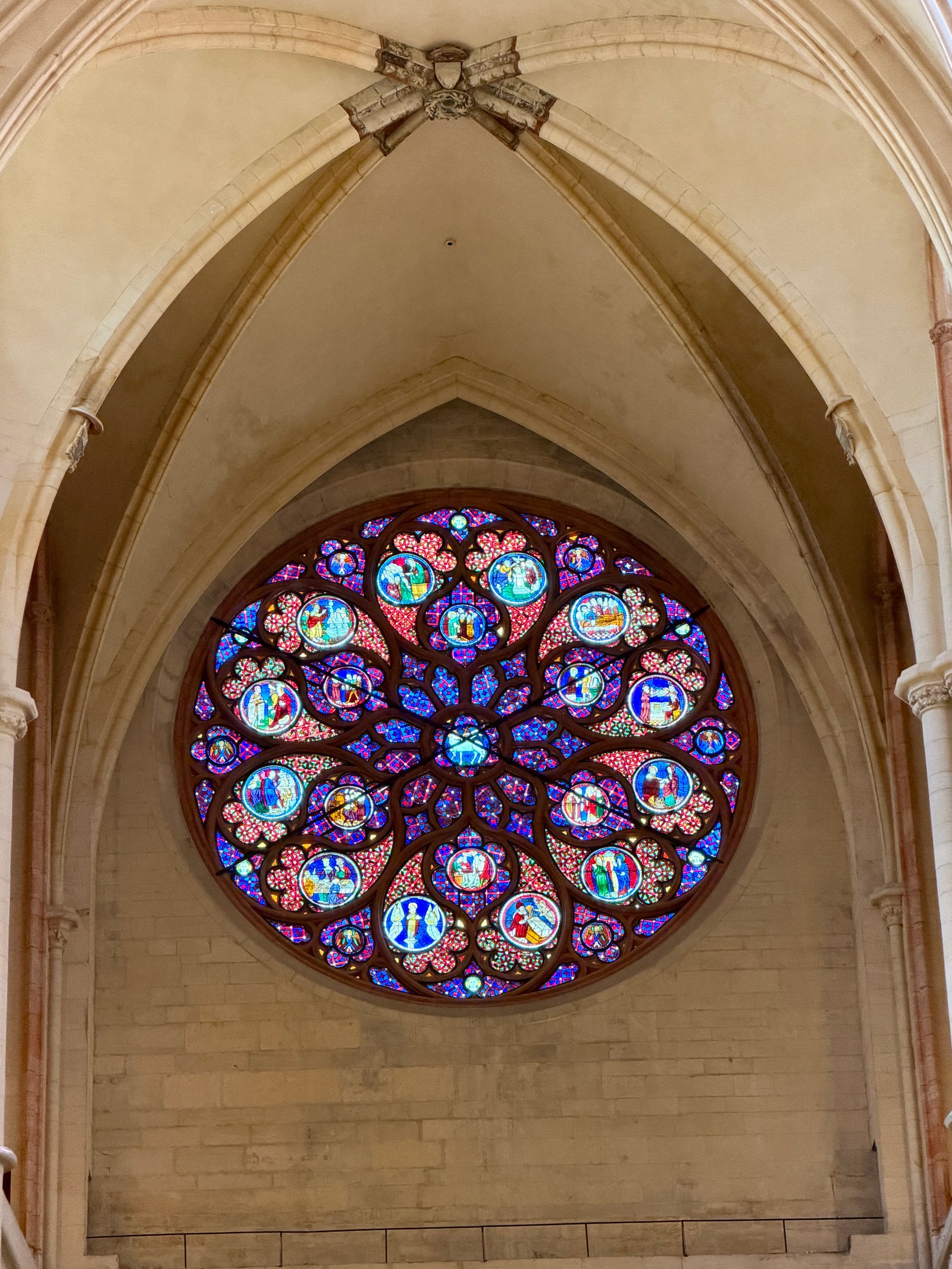
Another remarkable feature of the cathedral is its exceptionally beautiful stained glass, which depicts stories from the Old and New Testaments.
Adjacent to the church is the archeological garden. It displays the remains of the religious buildings that occupied the site before the construction of the cathedral. The oldest ruins date back to the 4th century (baptistery of the old Saint-Étienne church).




Traboules
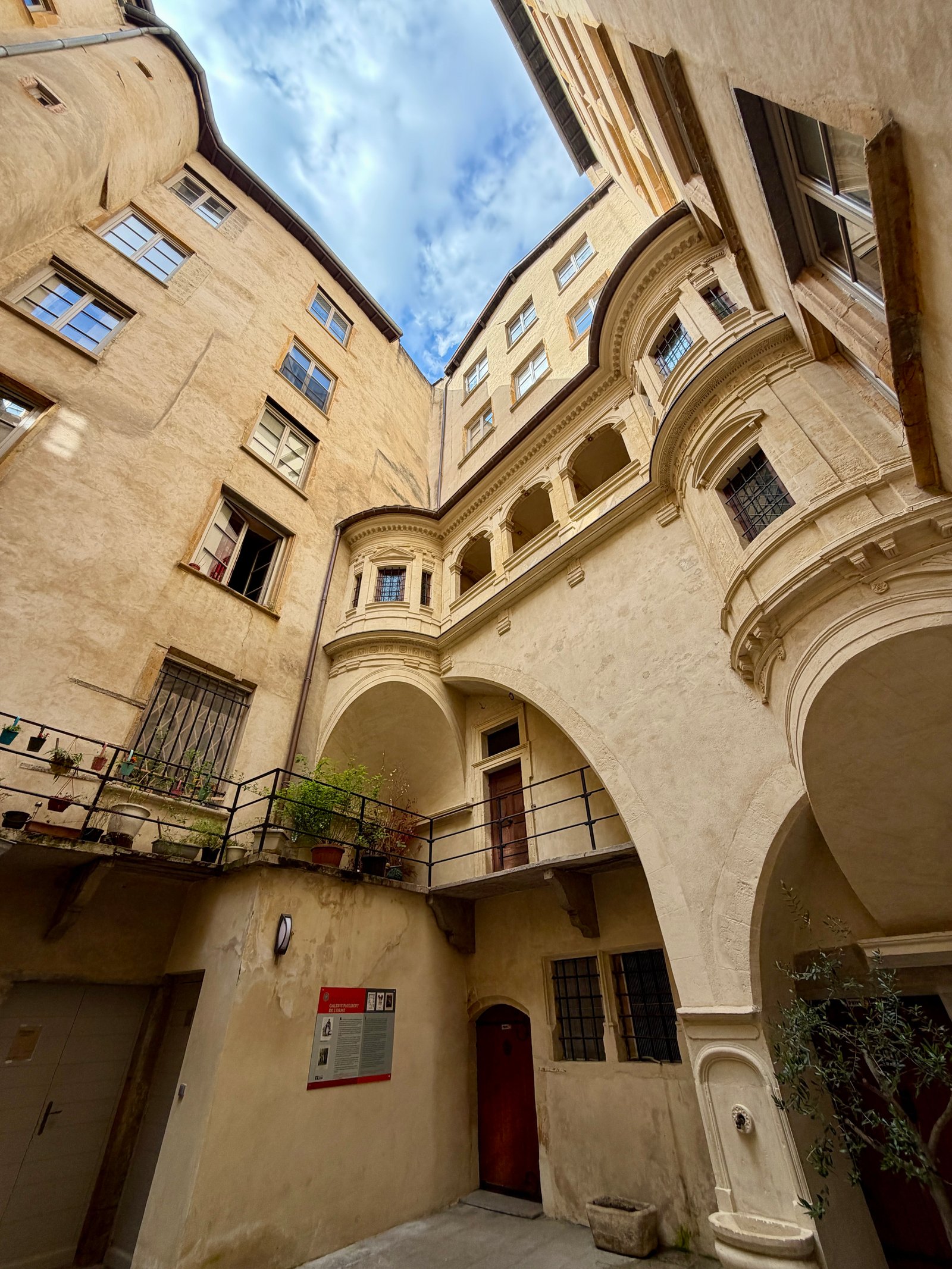
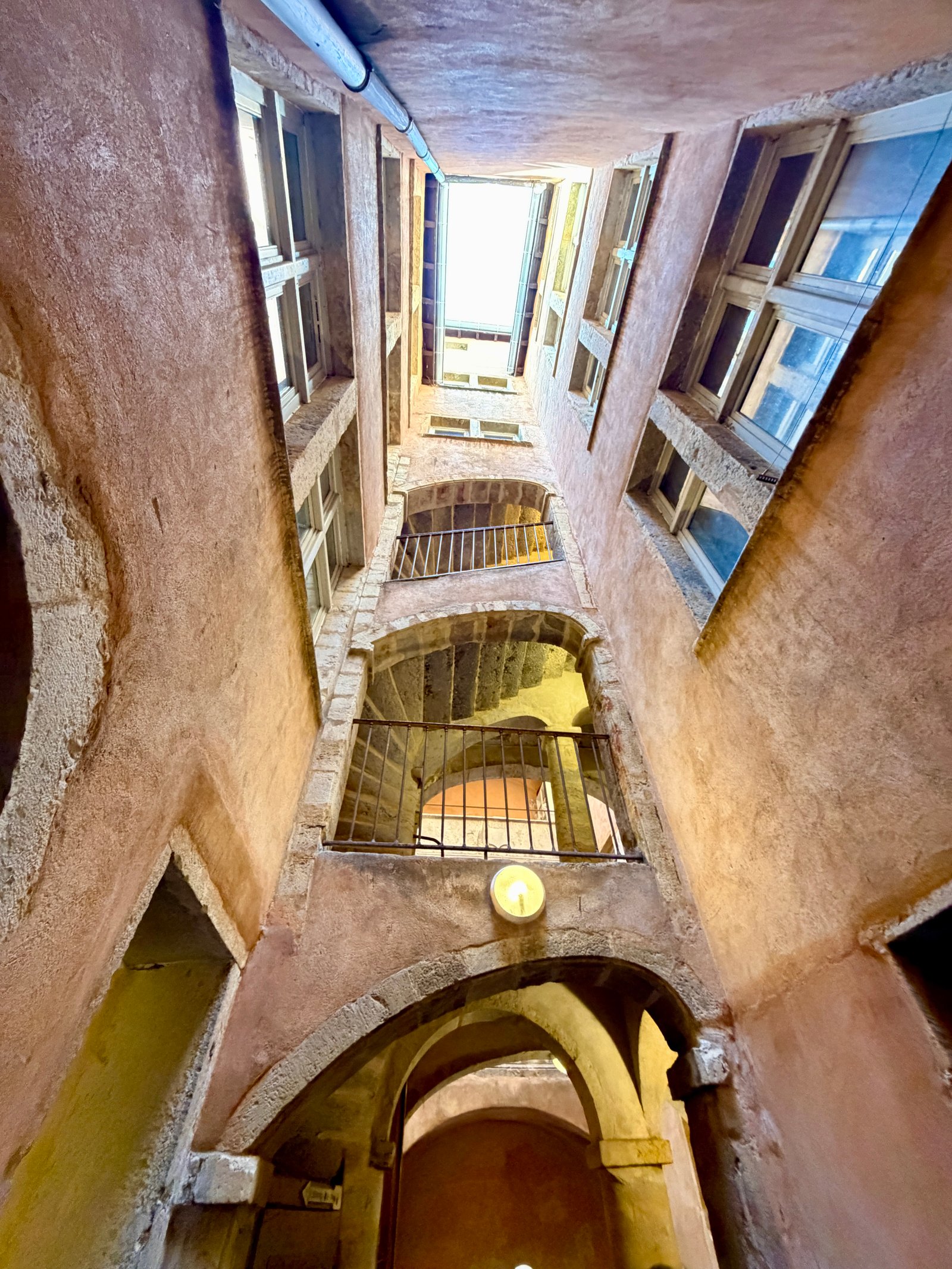
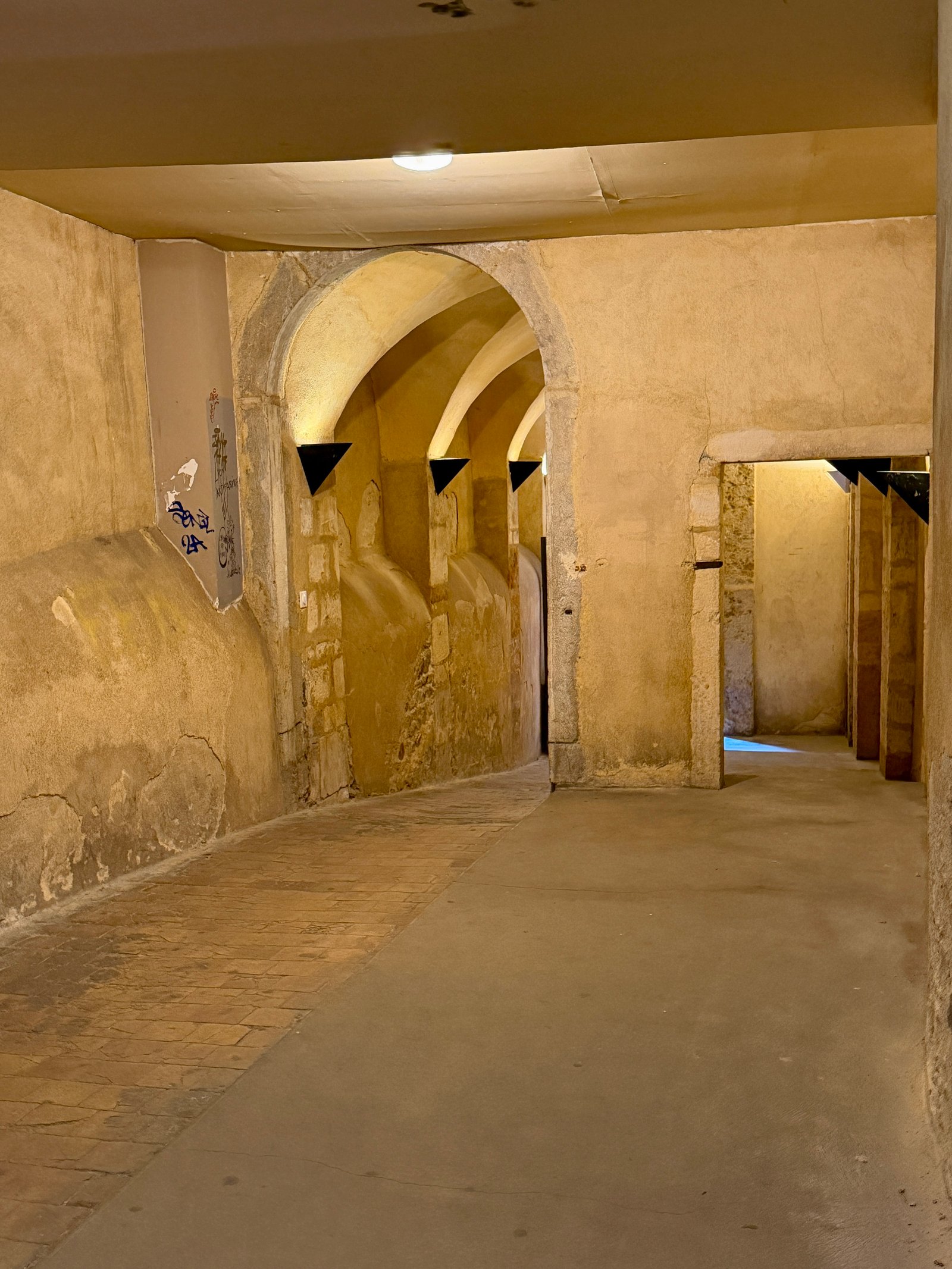
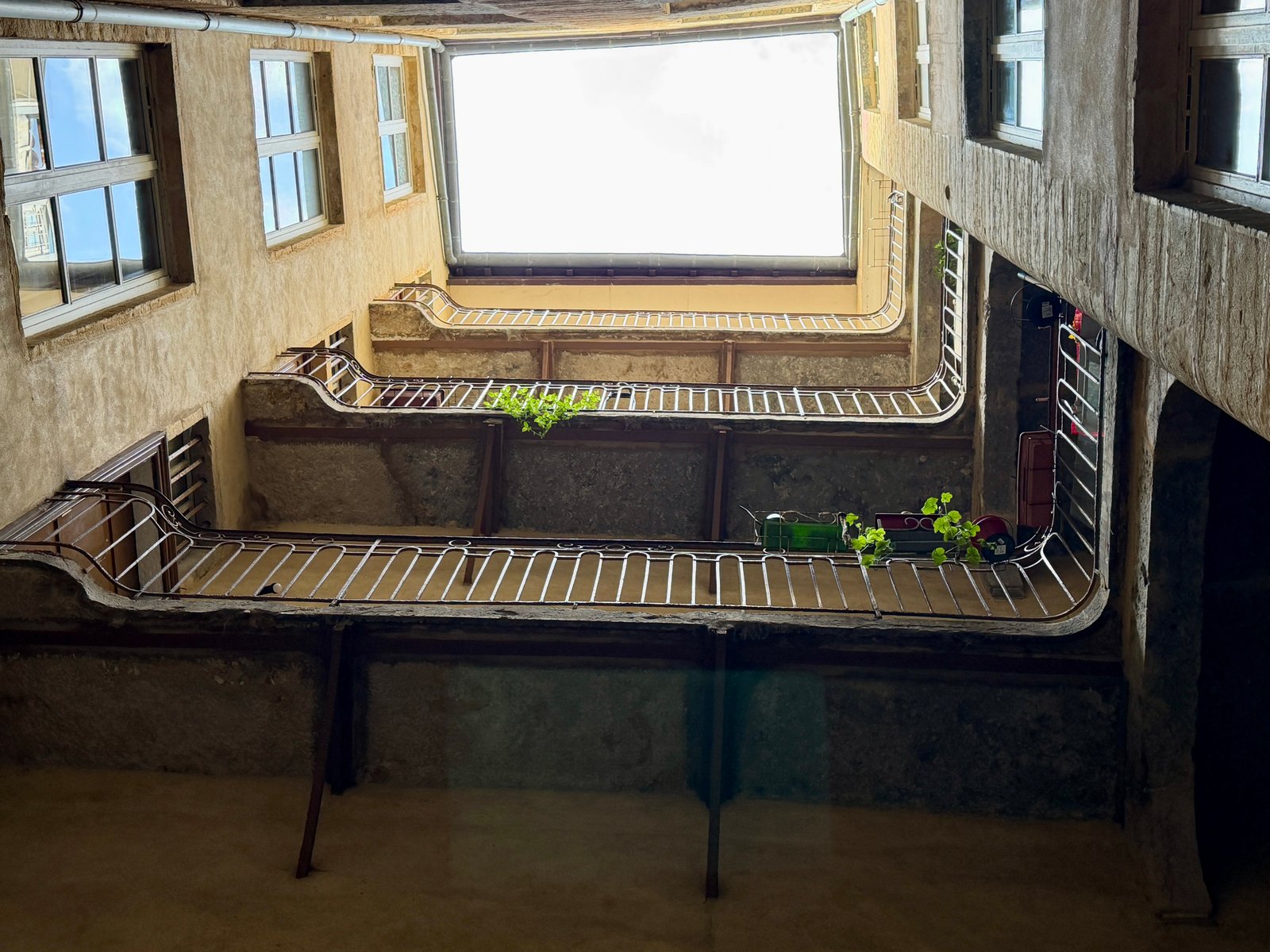
Who would guess that beneath the elegant streets of Lyon lies a hidden network of secret passageways? Known as traboules, these tucked-away corridors feel like stepping into a living maze of history. Around 40-50 of them are currently open to the public, though historians believe the city may conceal as many as five hundred in total.
Their story stretches back to around the 4th century, when they were first built to help residents move more easily from the hilltop neighborhoods down toward the riverbanks. Centuries later, they became vital shortcuts for Lyon’s silk workers, who used them to transport bolts of fabric from their workshops to merchants near the river for shipping across Europe.
The traboules also hold a more dramatic chapter in history: during World War II, they served as covert meeting points for members of the French Resistance, their hidden doors offering refuge and secrecy in dangerous times. Today, wandering through these passageways feels less like sightseeing and more like time travel—each doorway quietly echoing centuries of daily life, trade, and courage.
No two traboules are alike. Some are painted in soft pastel hues, while others feature elegant curves, spiral staircases, vaulted ceilings, or striking Renaissance arches. Each one reveals its own character and architectural charm. You can spot them by their small identifying seals, inviting curious visitors to step inside and uncover the city’s hidden layers.
While walking around old Lyon we explored several traboules. The Hôtel de Bullioud Traboule (1536) built by the owner of two houses overlooking a courtyard, envisioned constructing a gallery between them. The Long Traboule is the longest as It crosses 5 courtyards and 4 buildings. The Pink Tower traboule in 1600, King Henry IV stayed here for a few days during his marriage to Marie de Medici.



Painted Wall Murals
Over the past two decades, Lyon has witnessed the emergence of over two hundred painted walls, each a testament to the collective efforts of teams of painters who have dedicated themselves to enriching the city’s public art scene. Here are just a few we discovered while walking around old town.


La Croix-Rousse Neighborhood
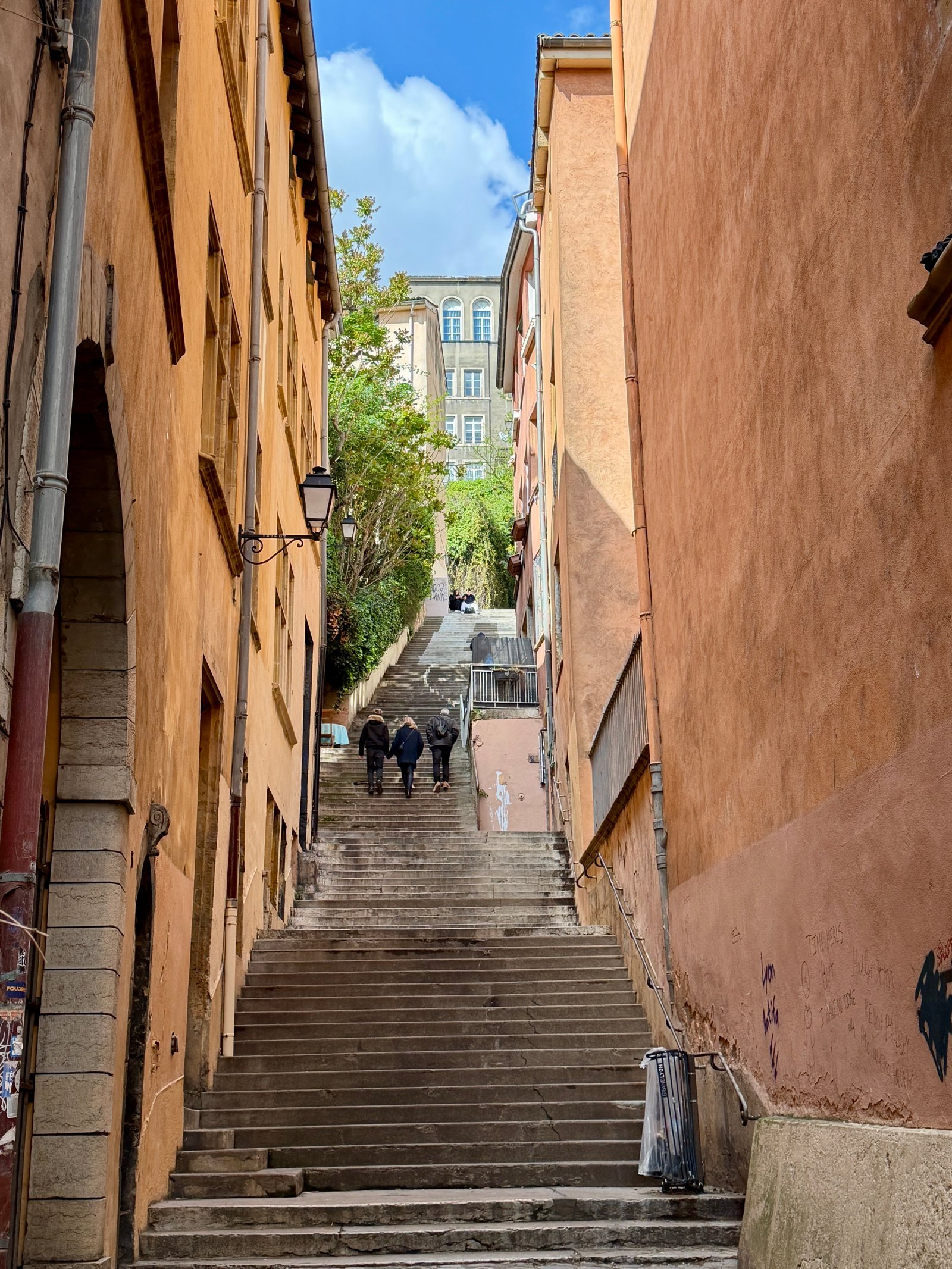
We choose this neighborhood to explore next. Perched above the city of Lyon, La Croix-Rousse (Red Cross) is one of the most characterful and historic neighborhoods in France—a place where steep stairways, silk-weaving history, and bohemian charm all come together. It’s one of two hills in the city and it rises to over 800 feet.
This district is filled with hundreds of staircases and steep climbs, especially along routes like Montée de la Grande Côte, which connects the city center to the hilltop. We had quite the workout climbing stairs and steep alleyways to get there. If you choose to wander around this neighborhood, you can also take the metro up and walk down. But what’s the fun in that? 😉 Take a look of a few of the stairs we encountered on our walk. Trust us, there are a lot of them and our feet and legs are sore!


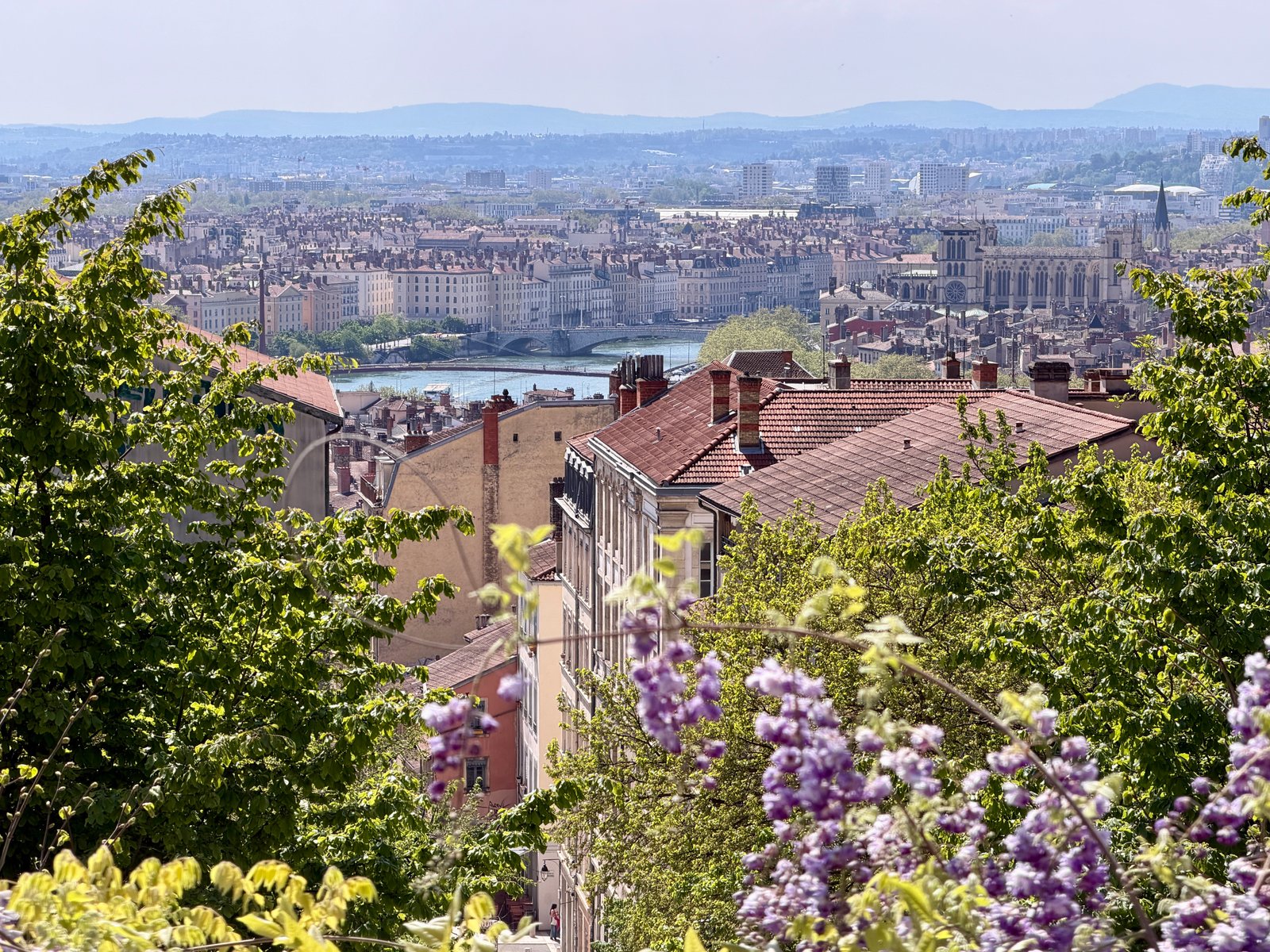

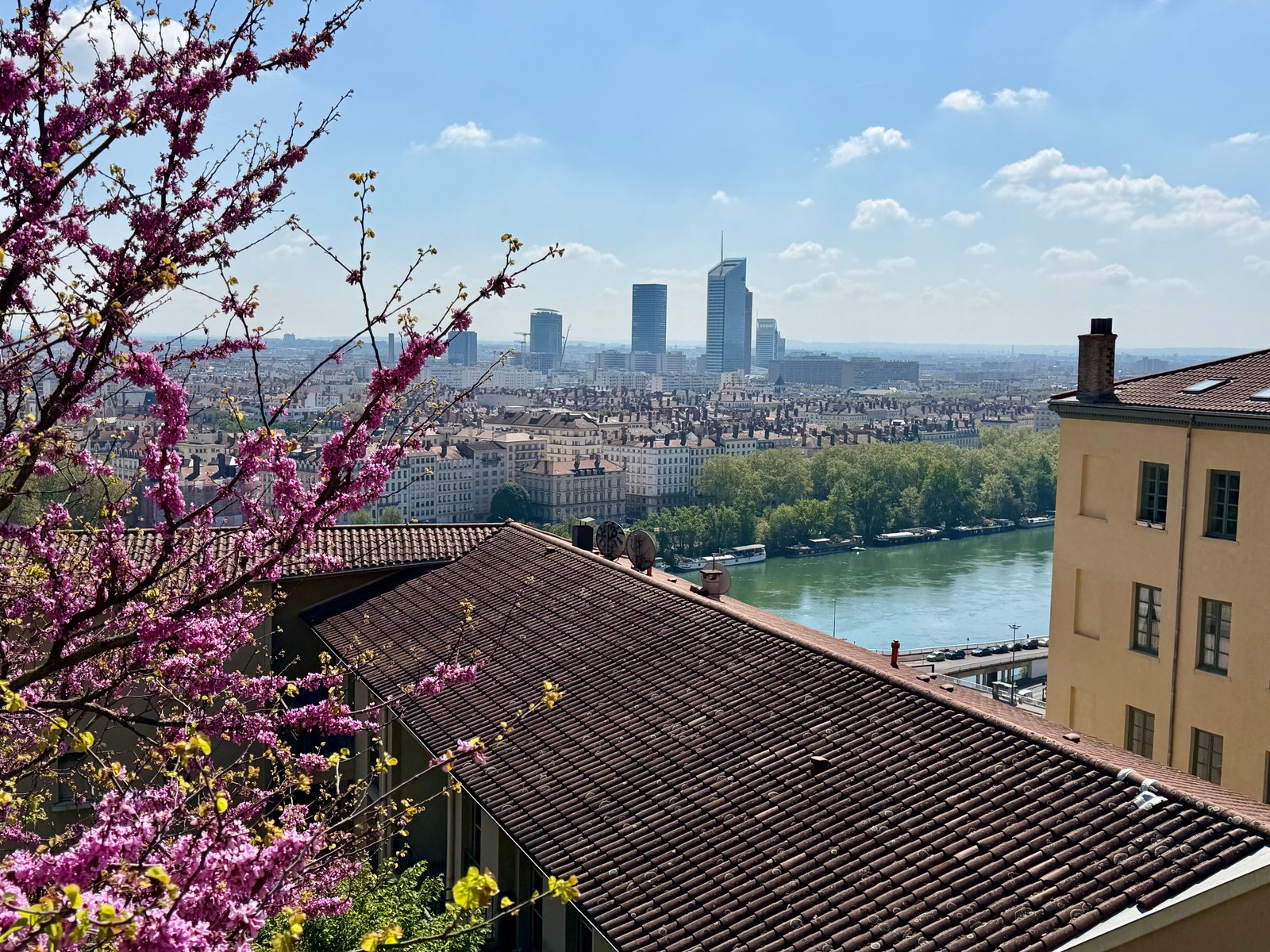
A Traboule, Wall Mural, Rock and Roman Arena
We saw lots of interesting sites while strolling in La Croix-Rousse. Cour des Voraces is the iconic traboule here, instantly recognizable for its dramatic architecture. It features a monumental open staircase about 6 stories high.
Next we visited the most famous mural in the Croix-Rousse district, Le Mur des Canuts (the Silk-Weavers’ Wall). It’s the largest frescoe in Europe. This one is amazing. The entire wall is painted. I took a slight closeup of the center. Note that everything is painted on from the stairs, people, car, buildings, crane, greenery, etc.
The Gros Caillou, or Big Pebble, is a renowned rock located in Croix-Rousse. This 140,000-year-old glacial boulder transported from the Alps by glaciers. It serves as a symbol of the neighborhood’s identity and a popular gathering spot. The area around the Gros Caillou is filled with benches, offering visitors scenic views of the city.
The hill is also home to the remains of the 1st century Amphithéâtre des Trois Gaules, built around 19 AD when Lyon was still Lugdunum.


Museum of Fine Arts Garden
Although exhausted from our walk today, we descended the hill and are very near our apartment. So, we decided to peek into the garden of the Museum of Fine Arts of Lyon. It’s free to enter the garden in the courtyard and it’s beautiful. The building originally began as a 17th-century royal convent. It housed Benedictine nuns. In 1801, it officially became a museum to showcase confiscated artworks. The sculpture garden is originally the abbey’s cloister.


Le Petit Prince
I didn’t read Le Petit Prince as a child, like millions of others around the world. I first encountered this book in my college French literature class. Expecting something quaint and simple, a children’s tale, it quietly surprised me. I became struck by how something so subtle carries such profound truths about love, loss, and what really matters in life.
The little prince’s journey doesn’t feel like a children’s book—it seems like a mirror, reflecting the ways we complicate life as we grow older. In a way, we forget the clarity we once had as children. The little prince’s devotion to his rose, fragile and imperfect, redefined how I think about love—not as something perfect, but as something we choose to care for, again and again. By the time I finished the book, I wasn’t just reading a story; I was remembering a way of seeing the world that I didn’t realize I had forgotten.
Author of Le Petit Prince, Antoine Saint-Exupéry
Antoine Marie Jean-Baptiste Roger de Saint-Exupéry, born on June 29, 1900 in Lyon and disappeared in flight at sea on July 31, 1944. He was a French writer, poet and aviator. His missing plane was found 50 years later in 2004. The Little Prince, written in New York during the war, was published in New York using his own watercolors in 1943. It was published posthumously in France in 1945. Though he wouldn’t know it in his lifetime, his tale quickly became a huge global success. It has been translated into more than 600 languages, the second most translated book in the world behind the bible.
I of course wanted to visit anything related to the author and the little prince while we are in town. We stopped by the author’s birthplace, a statue erected in their honor, noticed them in the wall mural I showed earlier in this post, and saw lots of references to the little prince all over town while shopping.


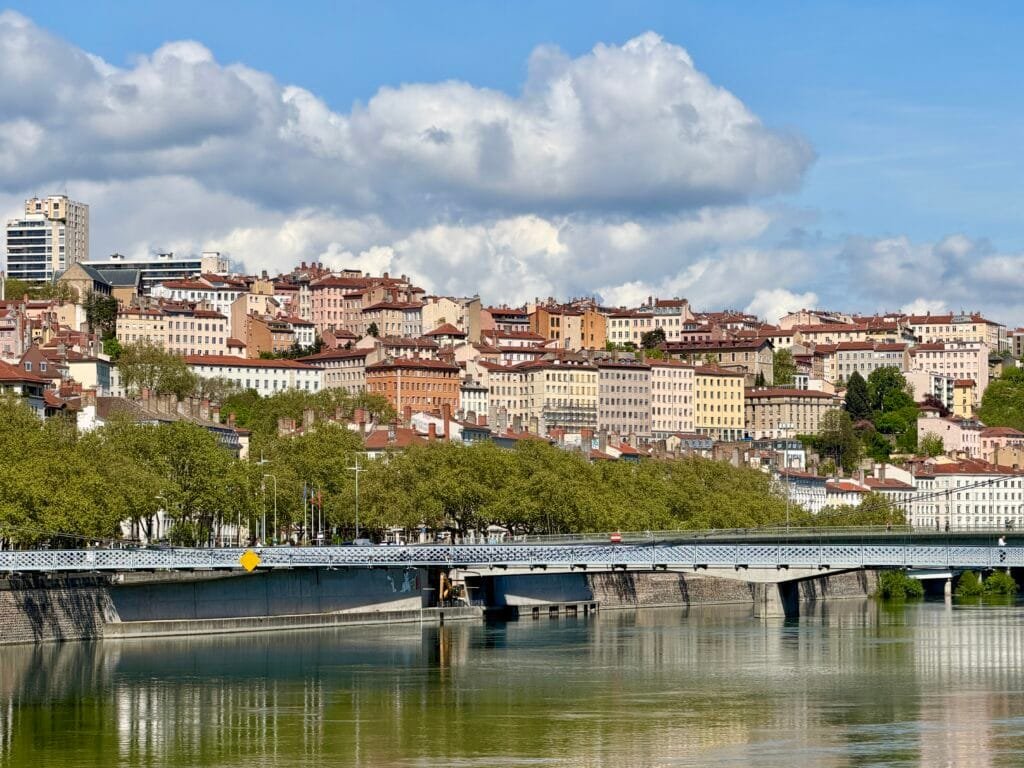
We awoke to another beautiful day, so we continued wandering around our neighborhood before we branched out to the indoor market hall.
Halles de Lyon Paul Bocuse
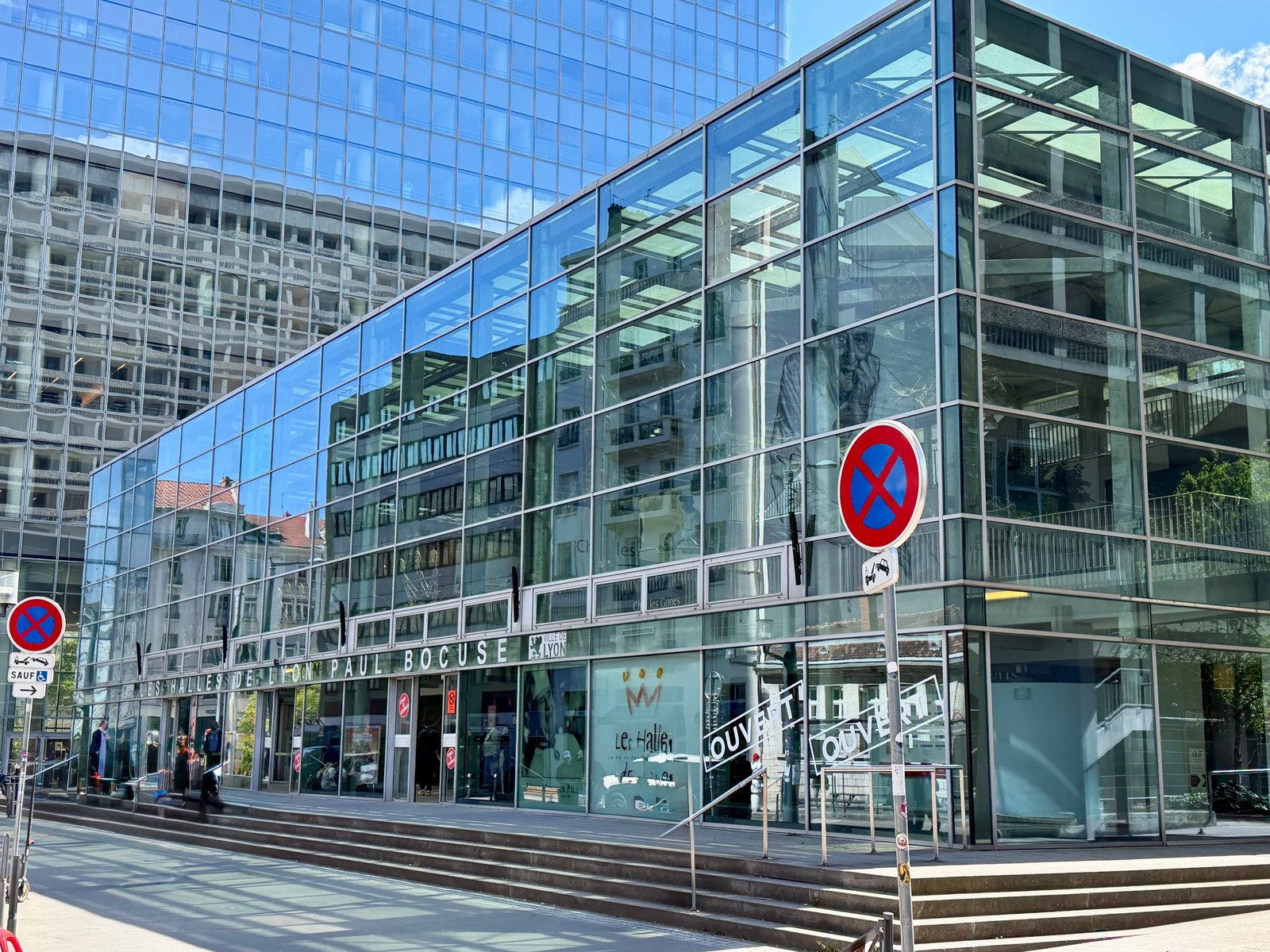
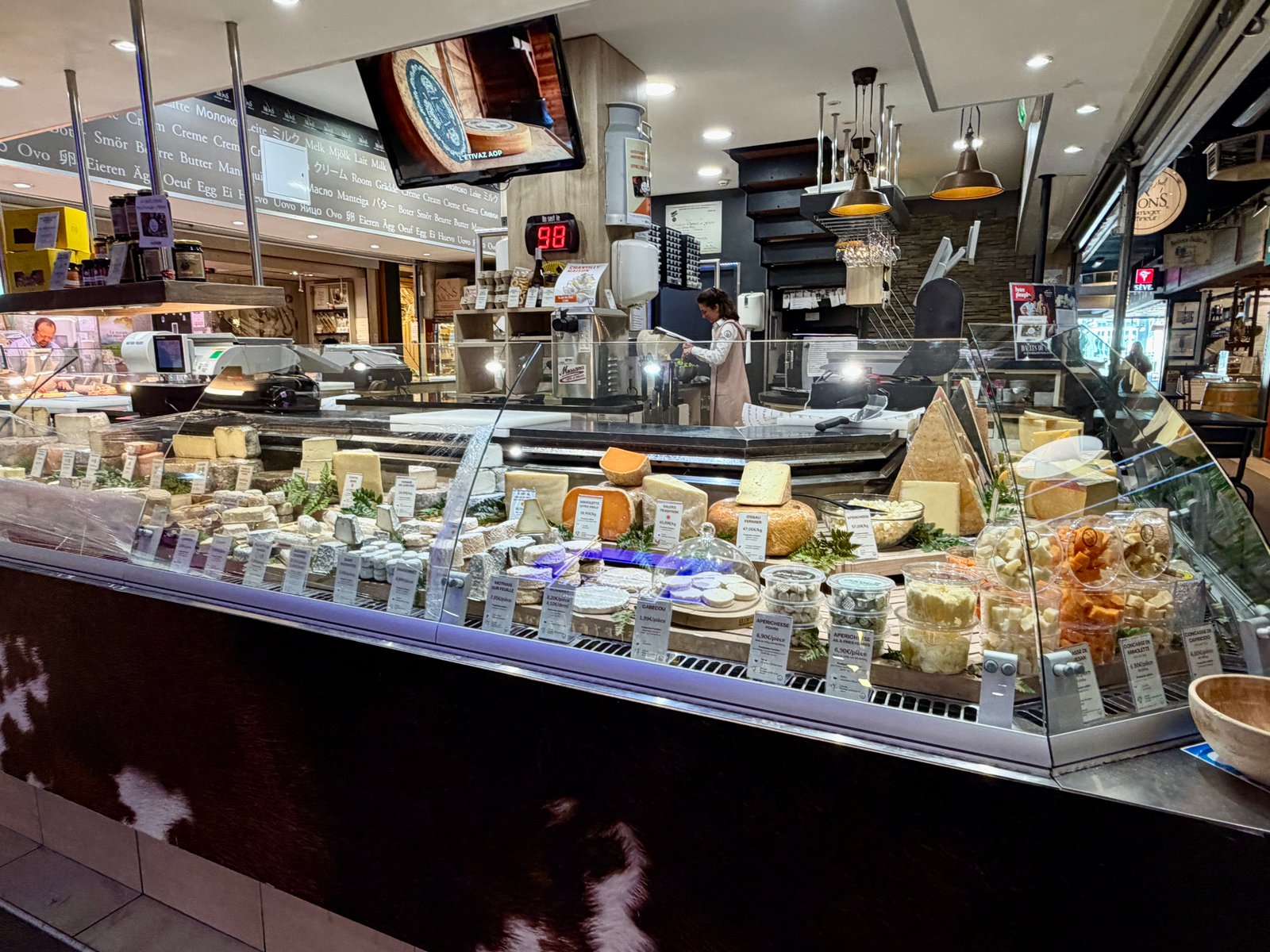
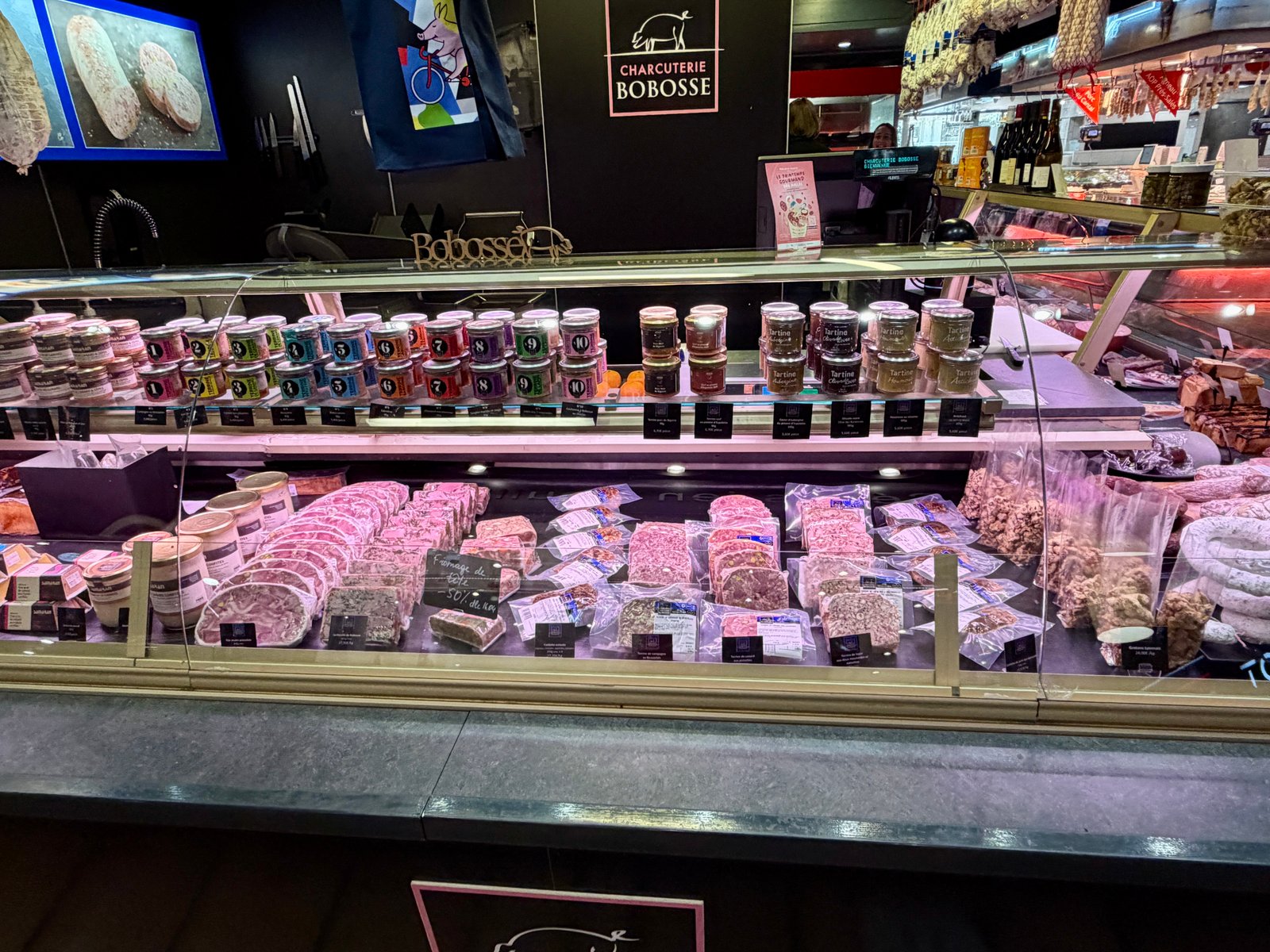
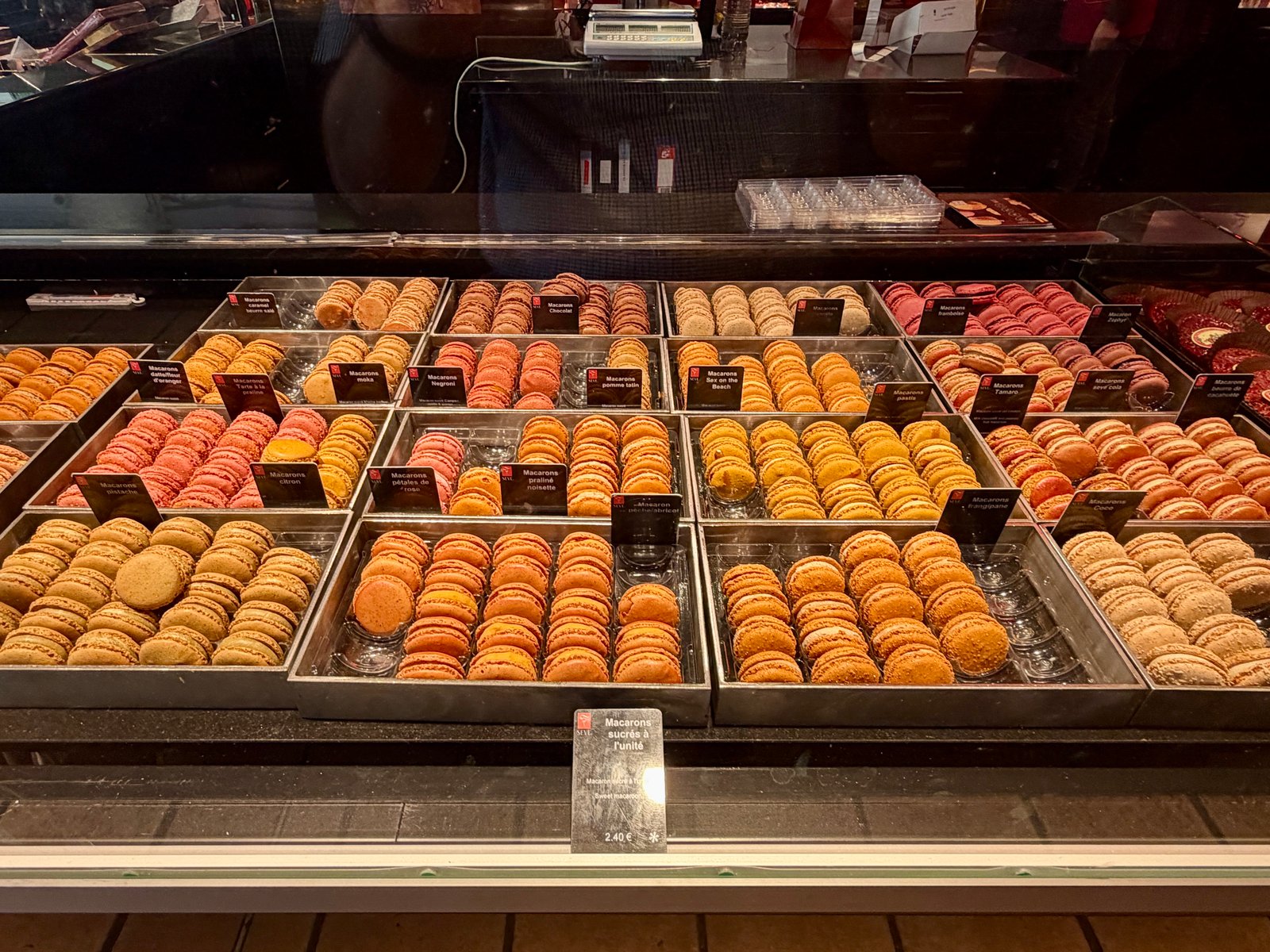
The Halles de Lyon Paul Bocuse is a renowned indoor food market and a premier gastronomic destination. With over 50 merchants, including cheesemongers, butchers, and bakers, it presents a diverse array of gourmet local specialties and restaurants. This culinary mecca, open daily, is a must-visit if you’re a food enthusiast seeking an authentic gastronomic experience. This place is huge. Grab a few items for a picnic, or stop and sample a few things like we did, accompanied by a glass of wine of course!




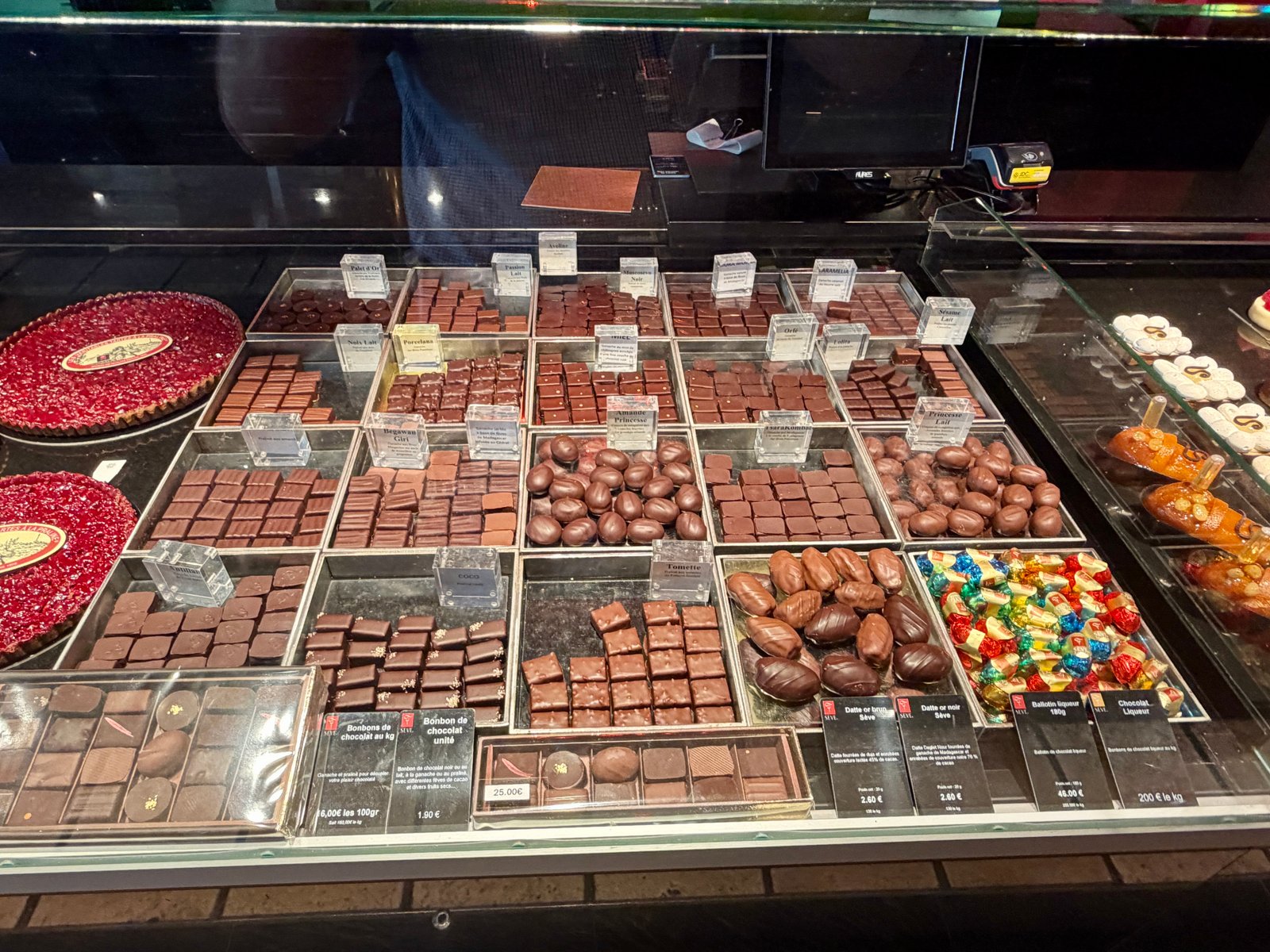
Basilica of Notre Dame of Fourvière
Notre-Dame of Fourvière Basilica, a true emblem of Lyon, stands as a testament to the city’s rich history. The city of Lyon actually began here in 43 BC as a Roman colony. That makes Fourvière not just a viewpoint, but the literal origin of the city.
Although fairly new, the basilica’s construction started in 1872. It has become a major pilgrimage and visitor destination. Dedicated to the Virgin Mary, the basilica holds special significance for religious believers. The interior is a stark contrast to many other French churches and cathedrals, adorned with six incredible, ornate mosaic murals and six magnificent stained glass windows.


However, don’t leave the church without visiting the crypt underneath the basilica. This lower church houses Statues of the Virgin Mary from around the world.


Perched atop the tallest hill overlooking Lyon, the basilica offers panoramic views of the entire city. The walk to the summit is very steep. So, we decided to take the funicular. The funicular is among the oldest in the world, operational since 1862. This is a must see sight, however you get there. Here are some views from the top.


Roman Amphitheater
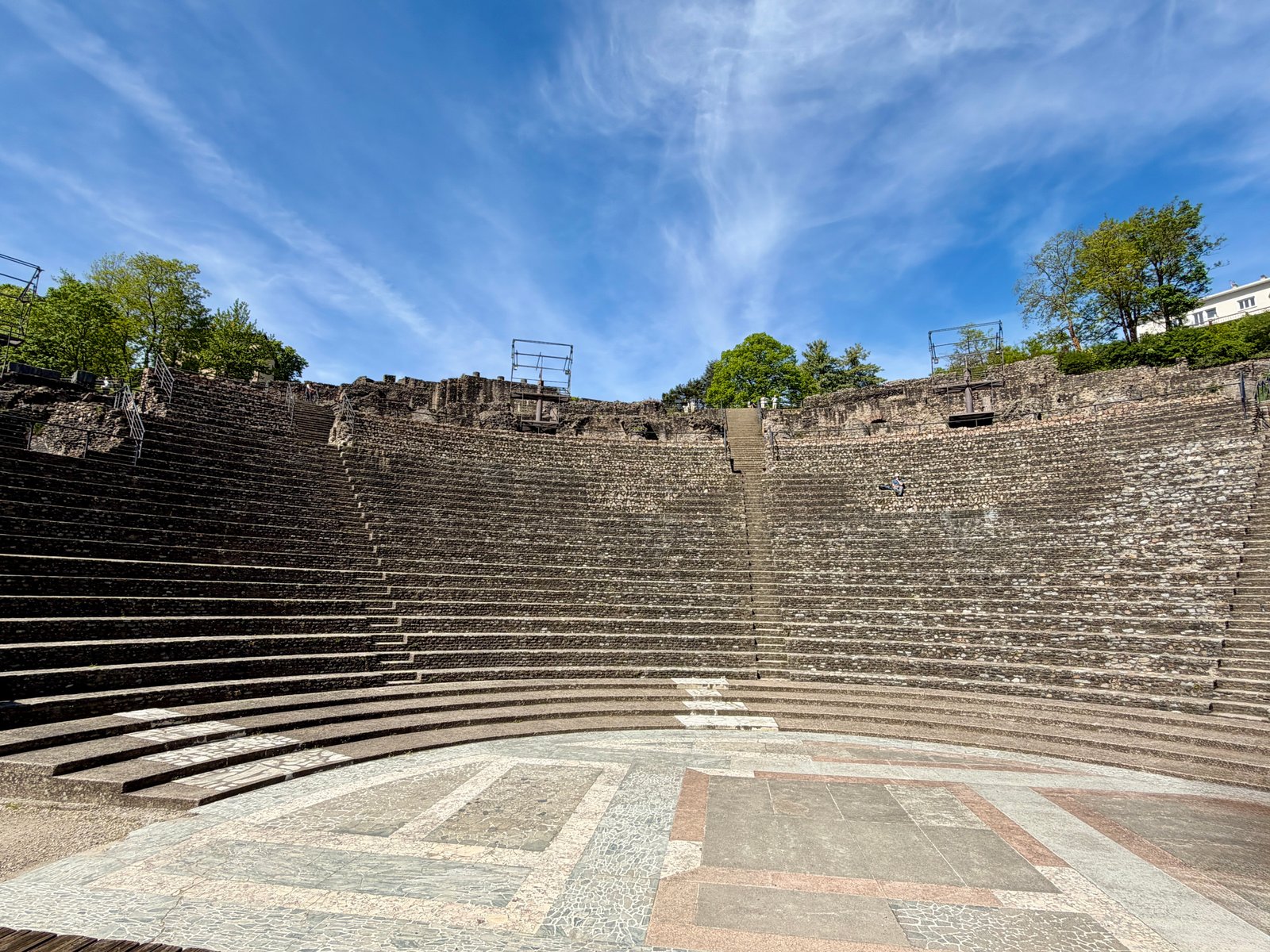
Lyon boasts two ancient Roman theatres, both remarkably well-preserved and situated near the city’s basilica on a hill. The larger and older of the two, the Ancient Theatre of Fourvière, dates back to around 15 BC and is the oldest Roman theatre in France. It accommodated nearly 10,000 spectators. Hidden for centuries, the theaters were buried and forgotten after the fall of the Roman Empire. They were only rediscovered in the 19th century during archaeological excavations. Both theatres are free to visit as well as the wonderful underground museum.
From the outside, you might miss the museum entirely. The building is almost invisible, buried into the hill with only a couple of curved windows peering out over the ruins. Step inside, though, and instead of walking through galleries, you begin a slow spiral descent of 5 stories—like traveling backward through time. As you wind downward, the objects on display tell a version of Roman life that feels unexpectedly human. Most of these objects originate from the 1st-3rd centuries and were recovered locally through excavation.



Metallic tower of Fourvière
The Metallic Tower of Fourvière is a landmark near the Basilica and can be seen all over town. It bears a striking resemblance to the Eiffel Tower. It was built between 1892-1894 by a private family. Although it’s only a third of the height of the Eiffel Tower, due to the elevation of the hill, it’s actually higher in elevation. It was privately owned by family from 1905 until 1953. They operated it as a tourist attraction with a restaurant, gift shop and elevator to the observation deck, before it was sold to a television company in 1953 and closed to the public


Food we loved in Lyon
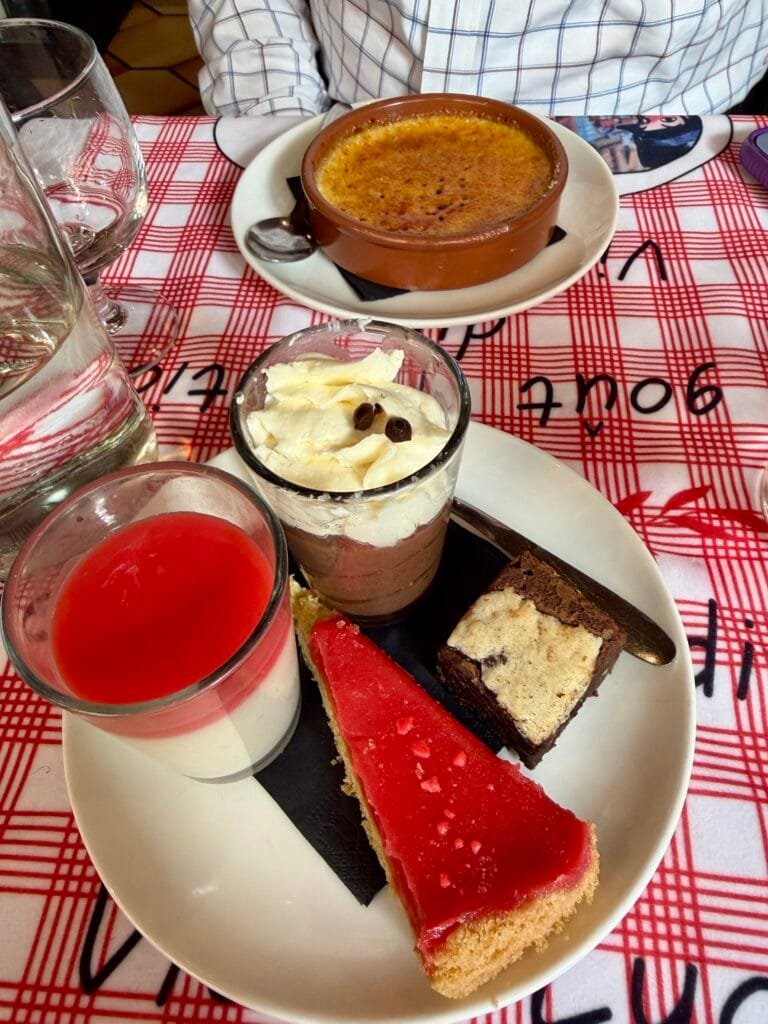
I’ve already mentioned meals and treats we’ve had while in town. But we learned something new when ordering a classic multi-course “menu” or “formule” that includes dessert. You’ll often see the traditional creme brûlée, flan, chocolate mousse, tarts, etc. But they will also sometimes offer for dessert a “cafe gourmand” or “assisette gourmande”. This translates to gourmet coffee or gourmet plate. It basically means instead of just one dessert, you’ll get a small coffee with multiple desserts or a plate of 3-5 desserts. Why not try them all?
One thing to keep in mind as you’re out sightseeing is that most restaurants in France are open for lunch 12:00-2:00, then close until dinner. If you’re running late, it’ll be hard to find something to eat unless it’s fast food to go, or you happen to stumble upon a restaurant listed as “service continue” or continuous service. We had a late breakfast one day and then got busy sightseeing and realized it was 2:30 and we hadn’t had lunch. We were hungry for pizza, but all the Italian restaurants we went to were already closed for lunch. One of the waiters recommended us to Rue Mercière, a pedestrian street filled with bouchons, bars, and restaurants. What an awesome area. We walked this street late one night and it was very lively.
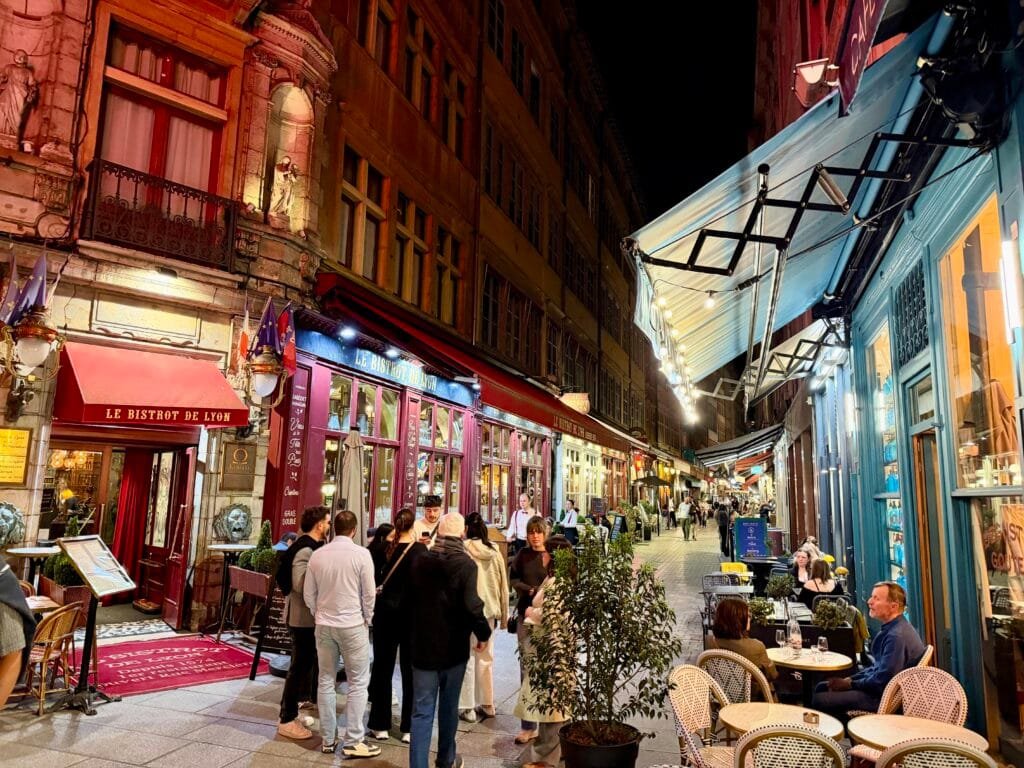
We returned another day at lunchtime for a typical Lyon Bouchon meal and ate at La Mère Maquerelle. It is a charming restaurant and the food is delicious! I believe we paid about 17 euros ($20) for a two course meal including an appetizer and entree with salad and fries.


Parc de la Tête d’Or
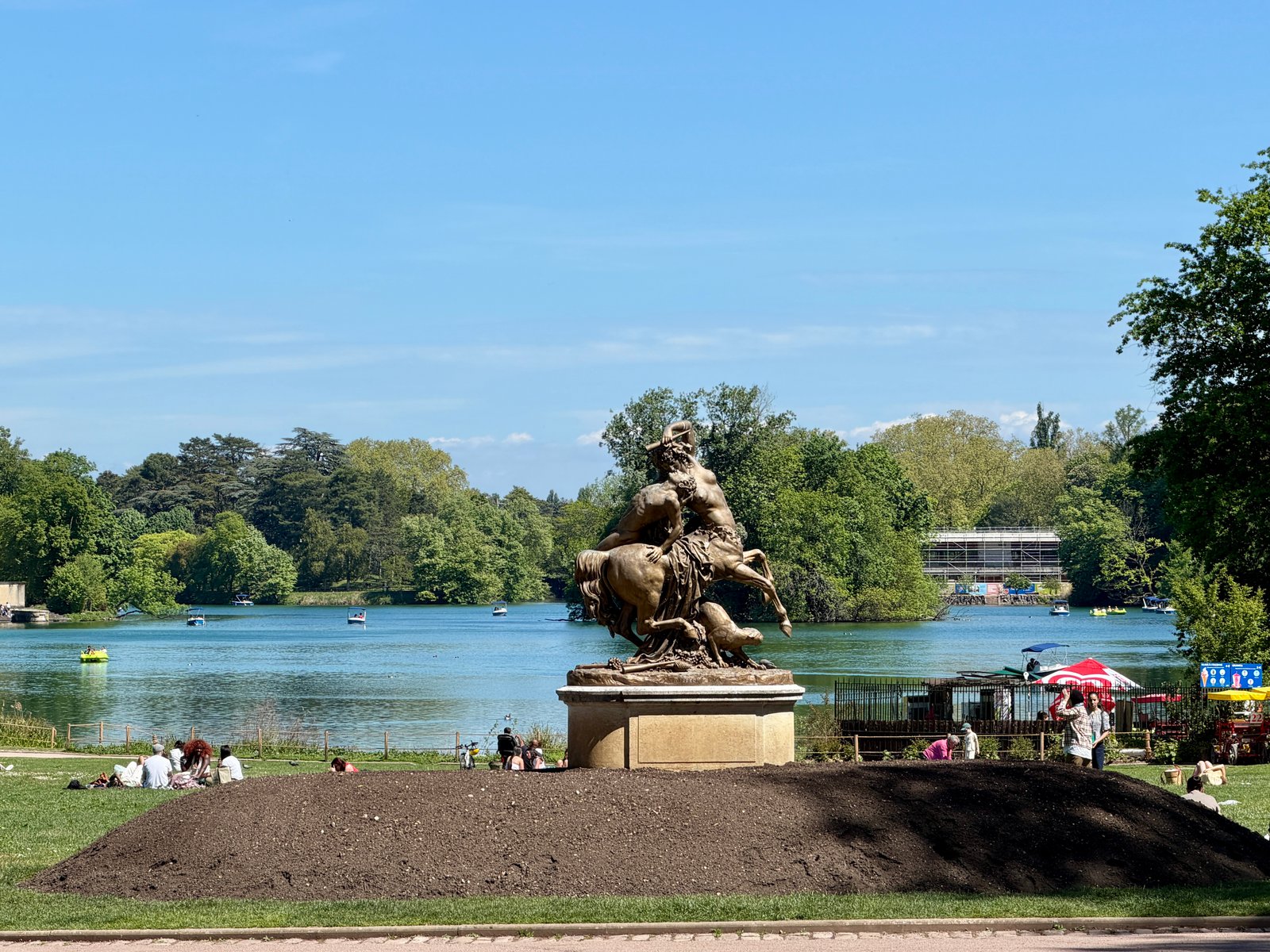
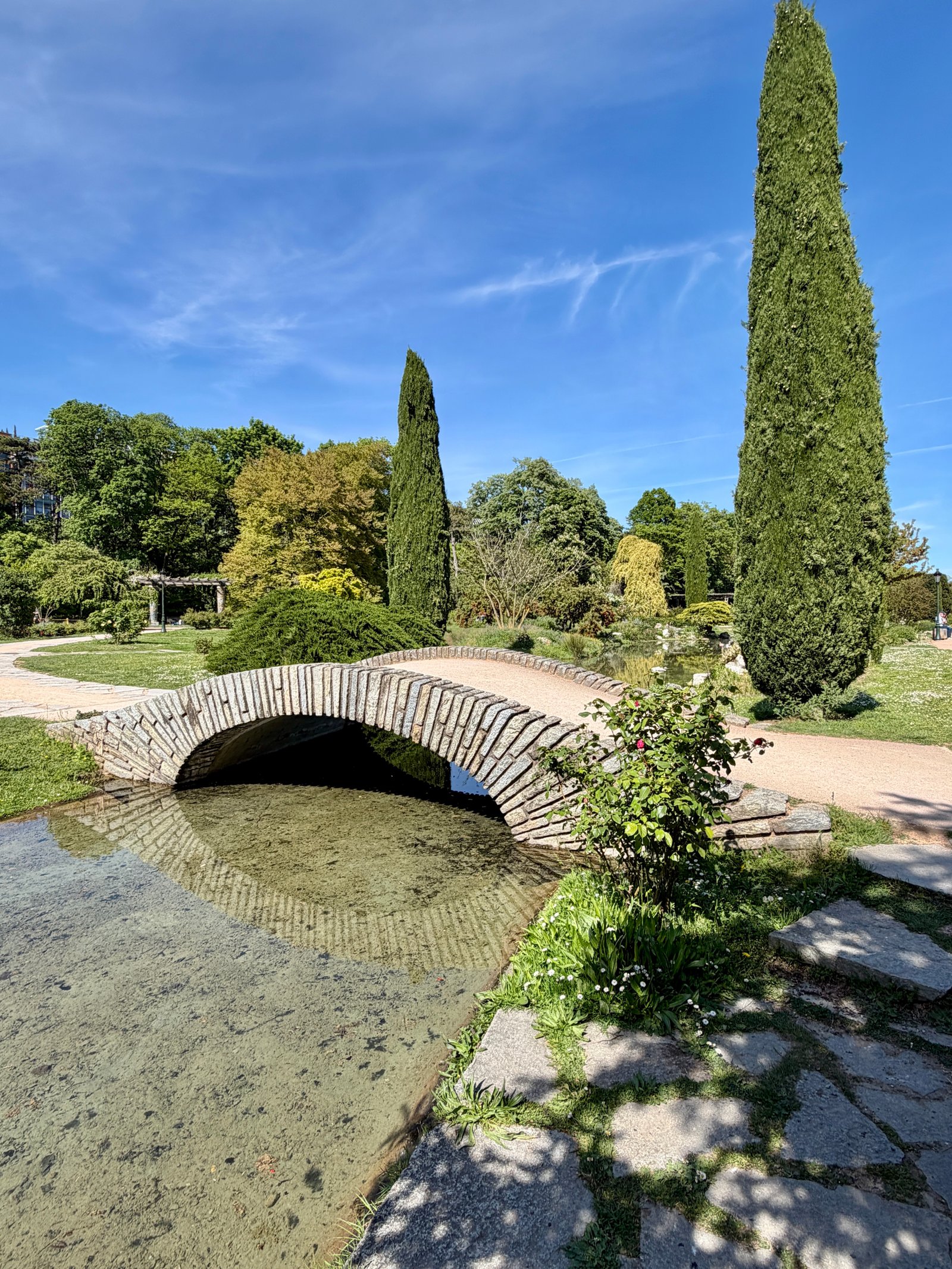
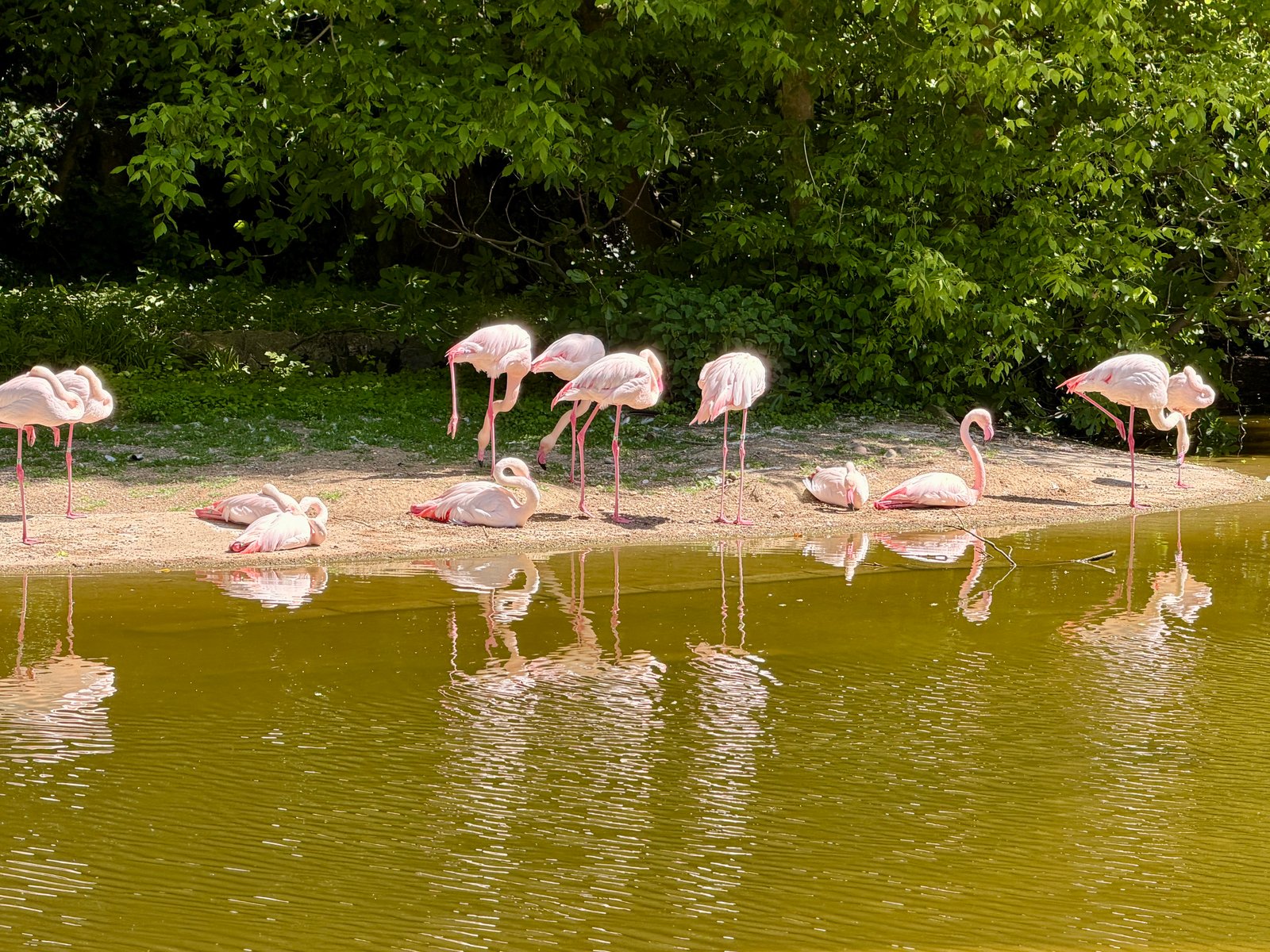
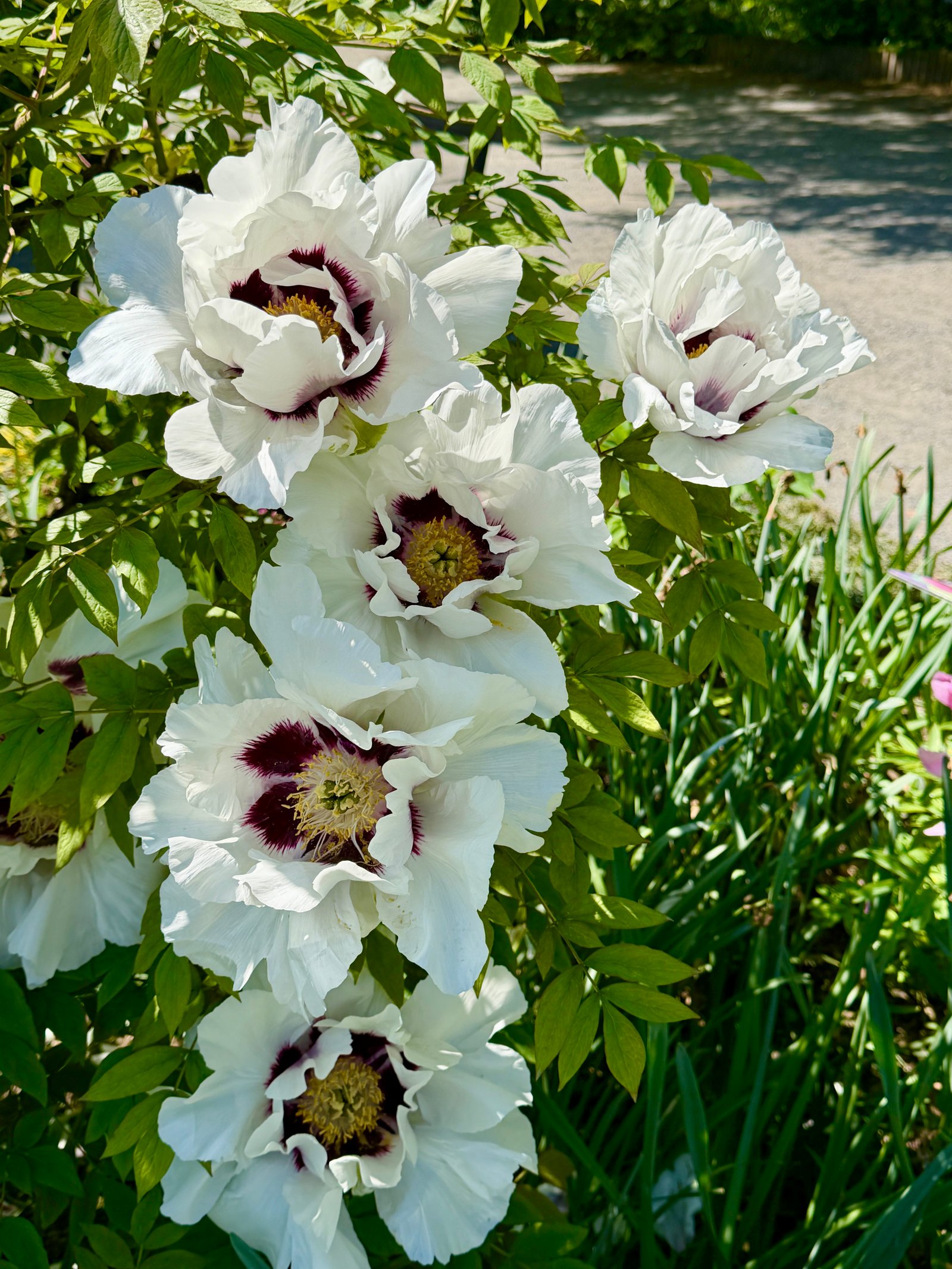
Spread across about 290 acres, the Parc de la Těte d’Or, is one of the largest urban parks in France—basically Lyon’s answer to Central Park, but with a French flair. The park opened in 1857 and the zoo in 1858. The name itself means “Park of the Golden Head,” and legend has it that a treasure with a golden Christ head is buried somewhere inside.
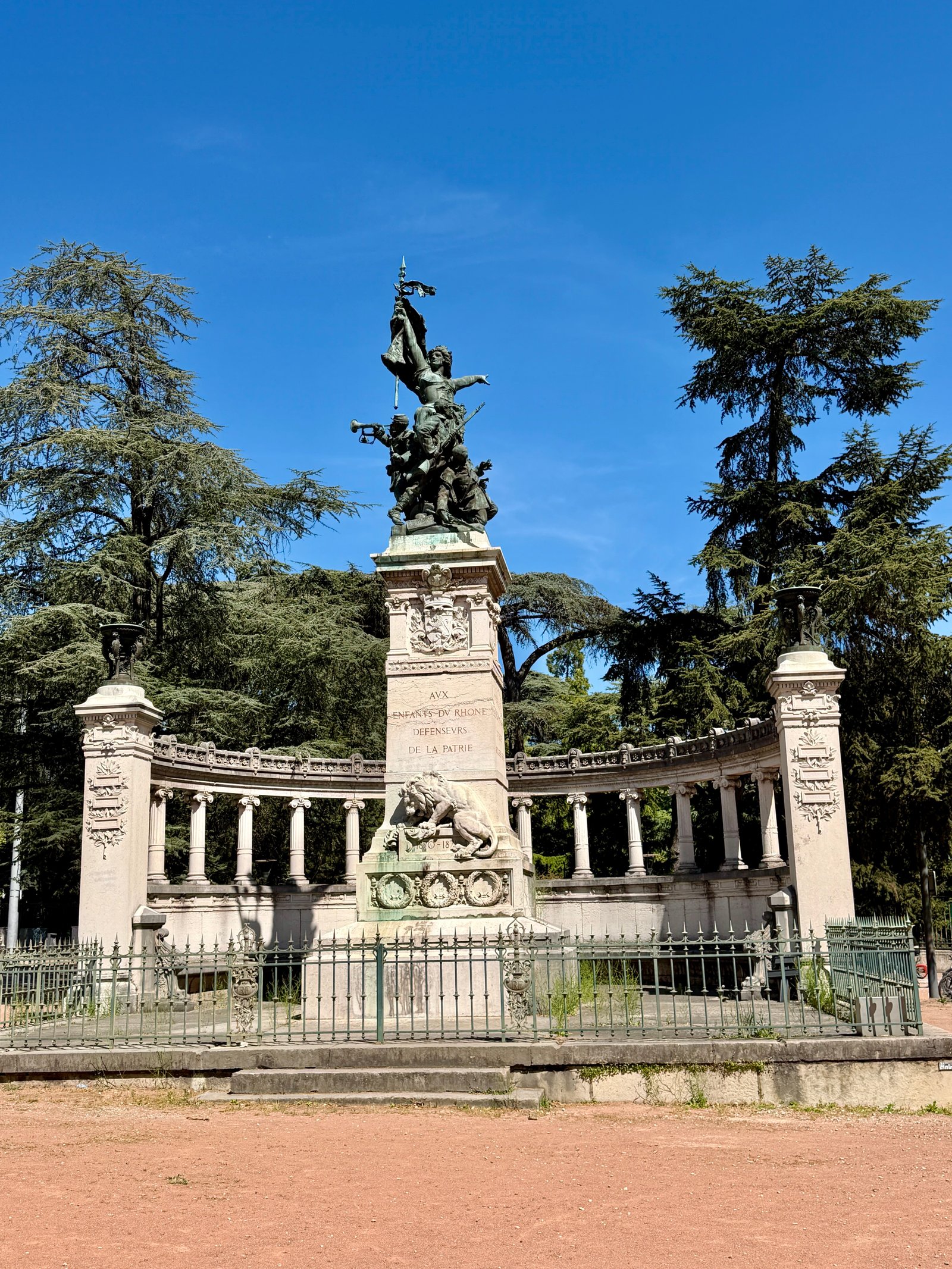
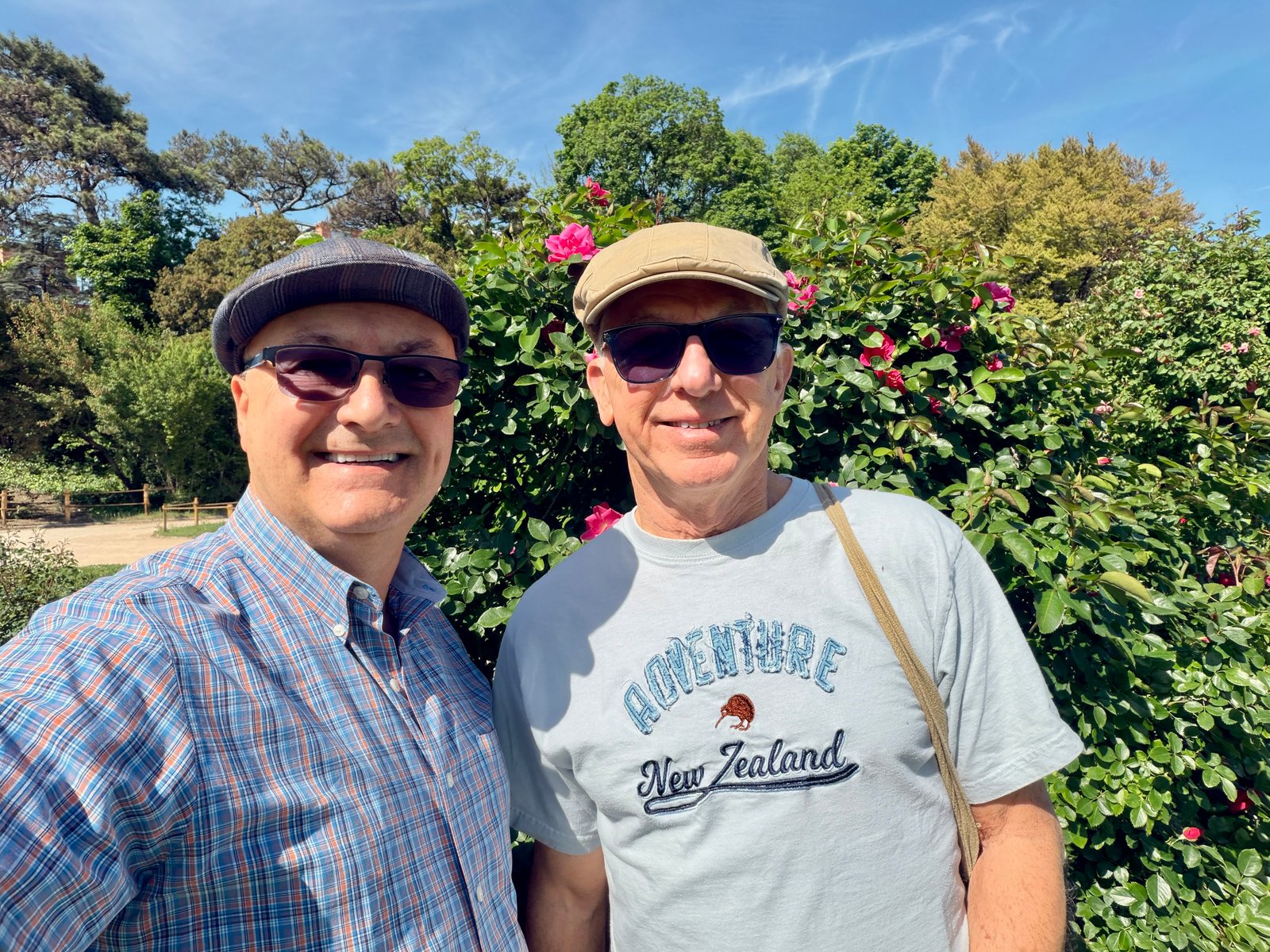
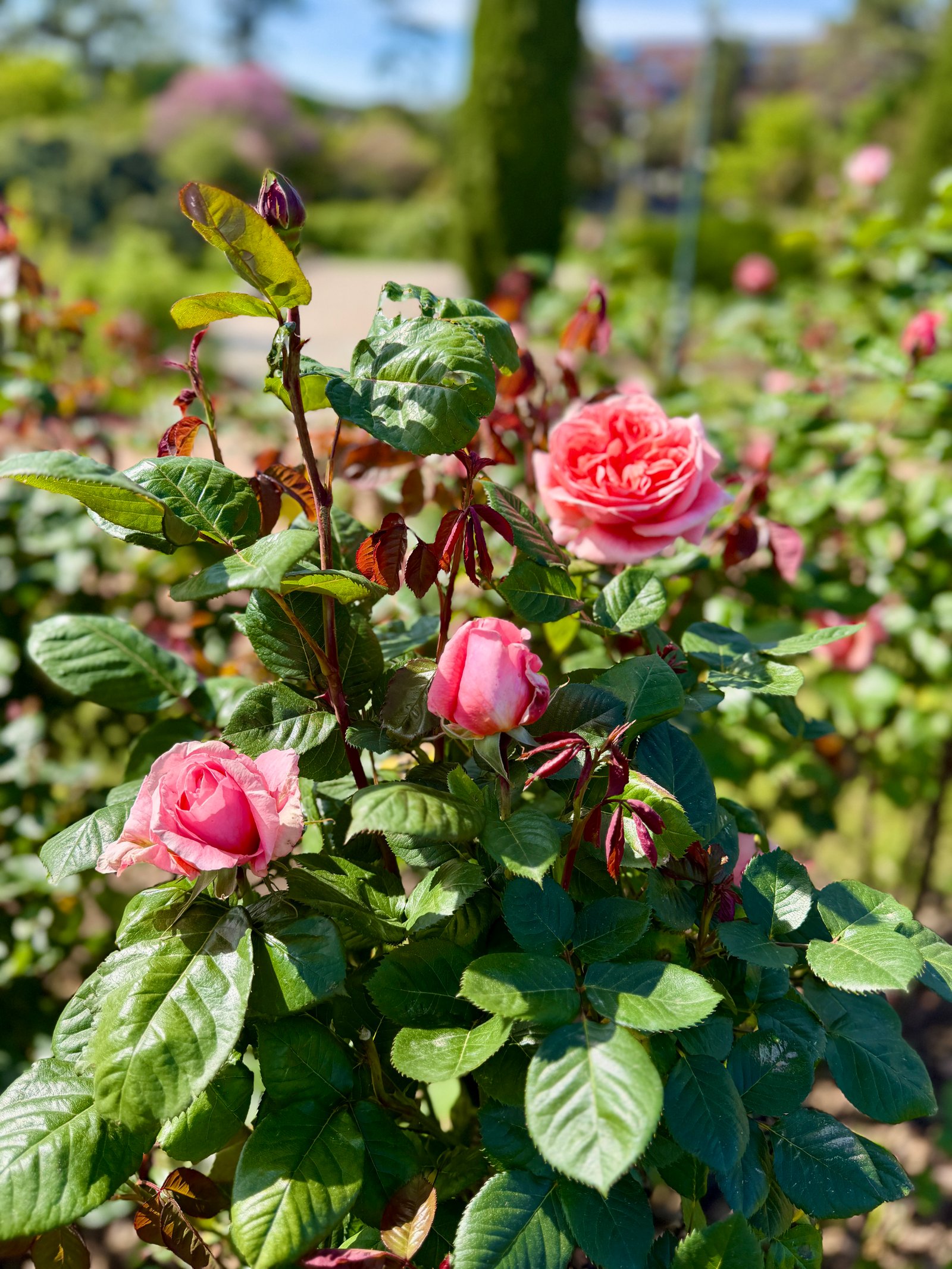
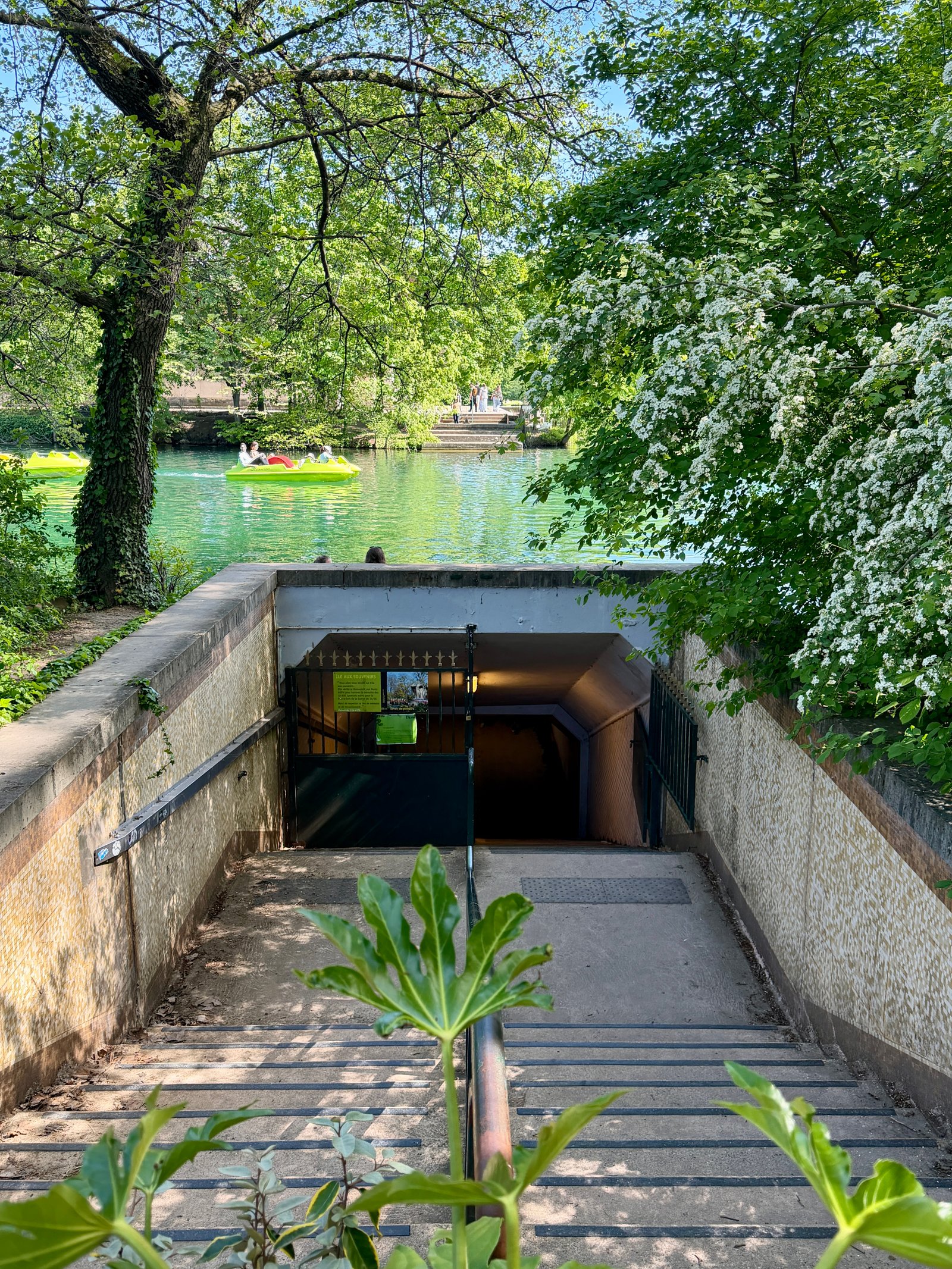
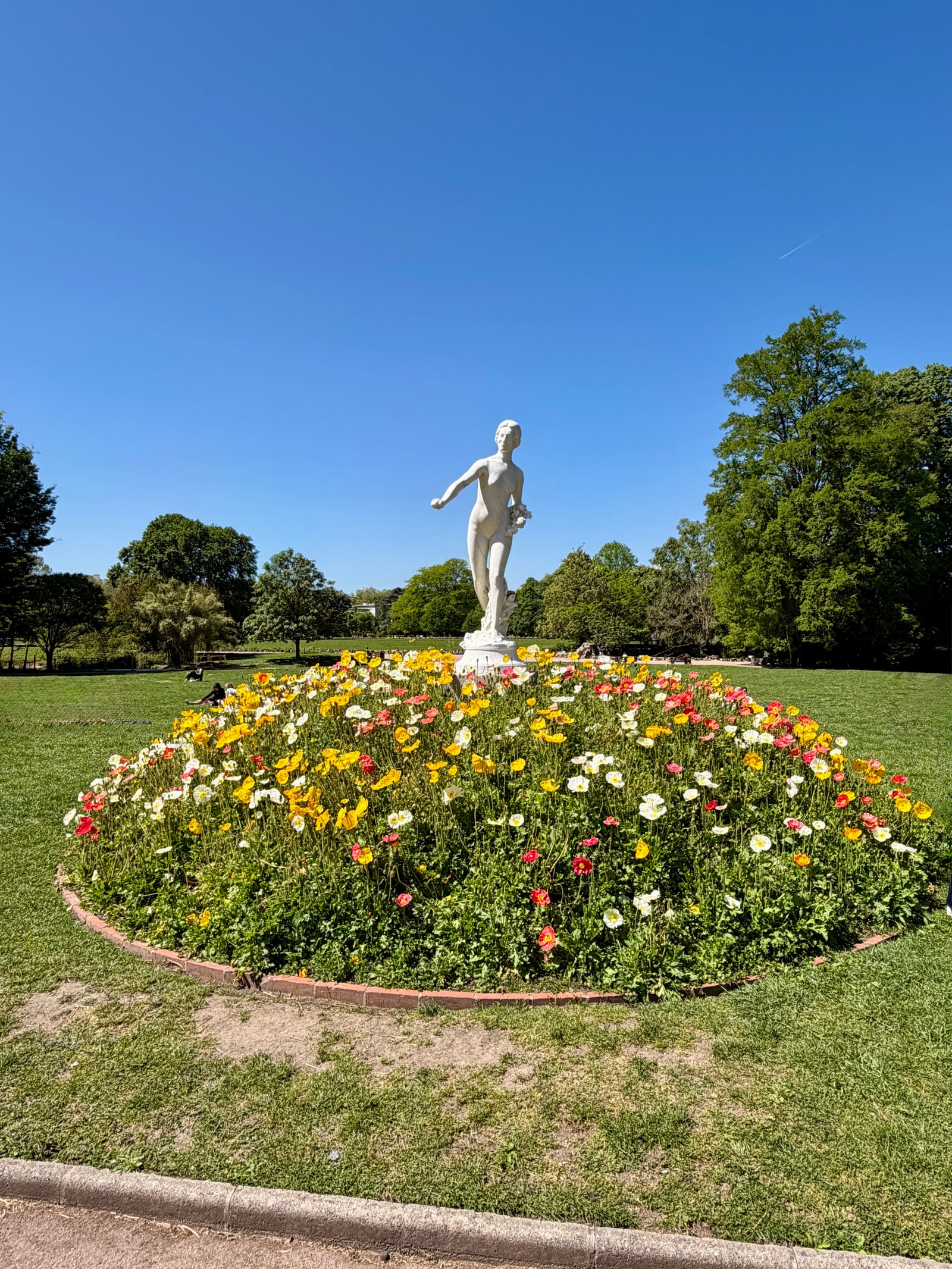
There’s lots to do here and everything is free to enter. It includes a lake, zoo, botanical garden, and rose garden all in one park. There’s even an island in the lake that includes a war memorial accessible via a subterranean walkway underneath the lake. You can spend all day here. We enjoyed a picnic and bottle of wine in the rose garden today. This rose garden holds a wonderful memory for us. We reminisced about our first trip to Lyon 35 years ago, when we met a friend here in the rose garden.





Puces du Canal
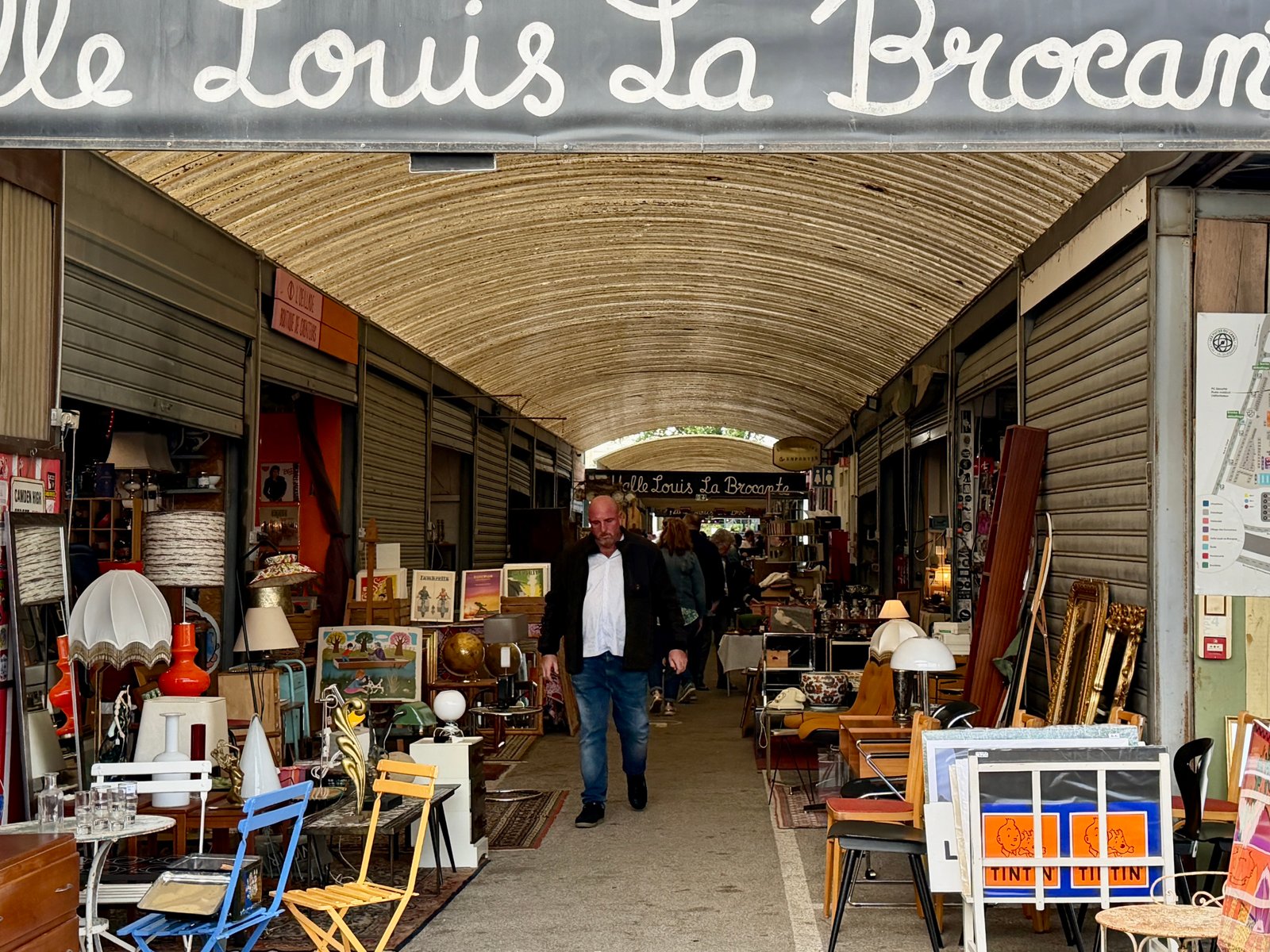
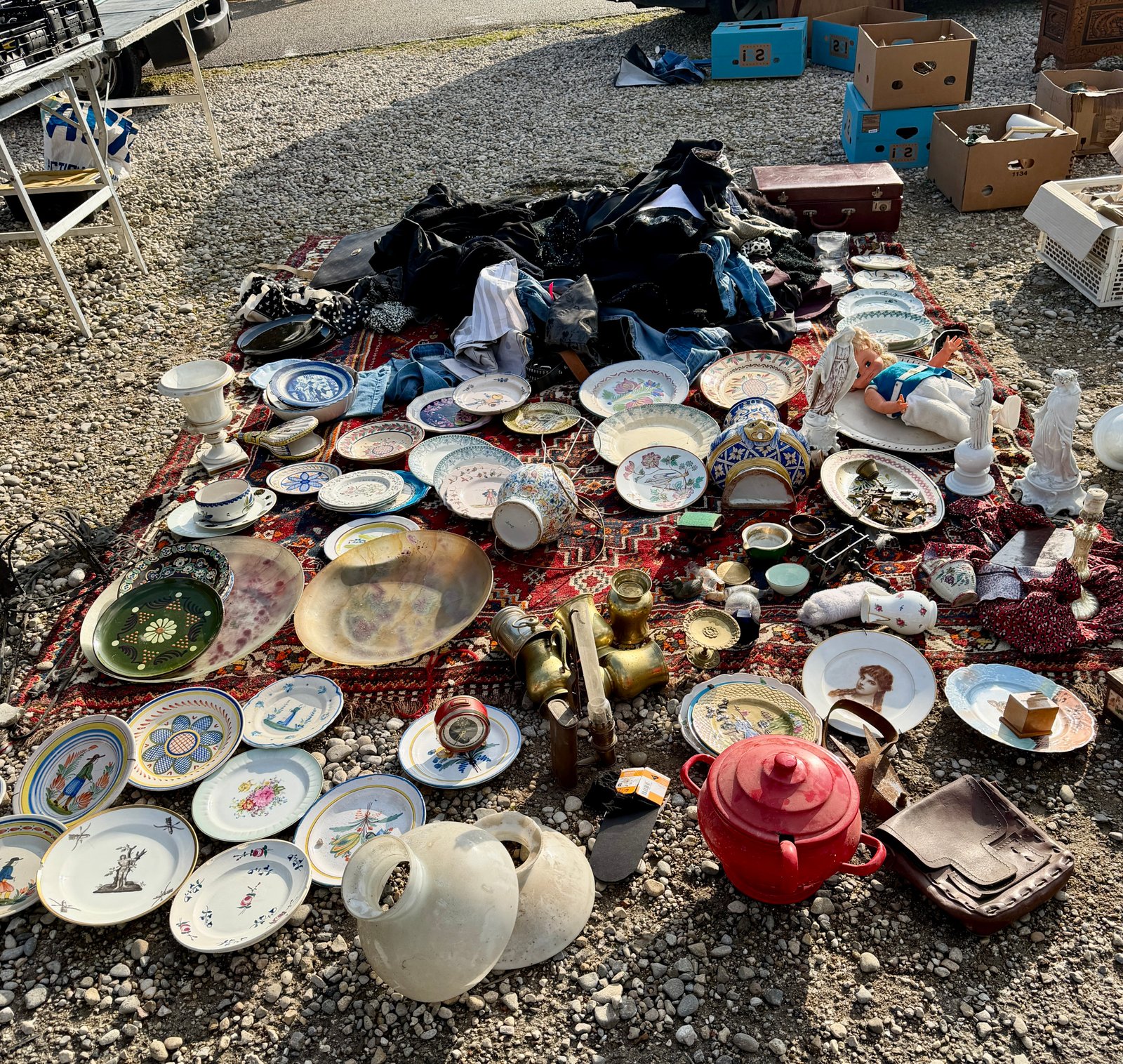
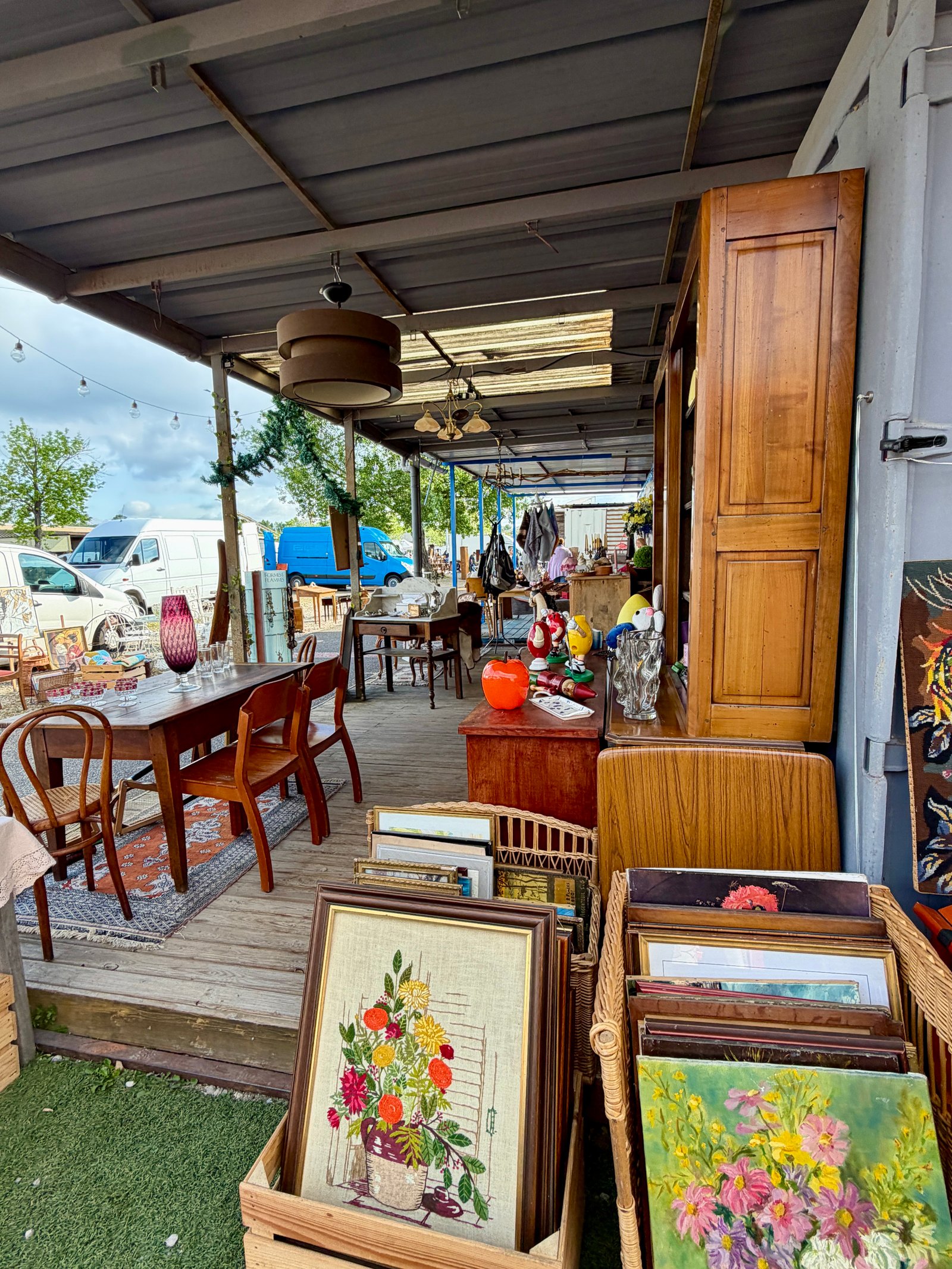
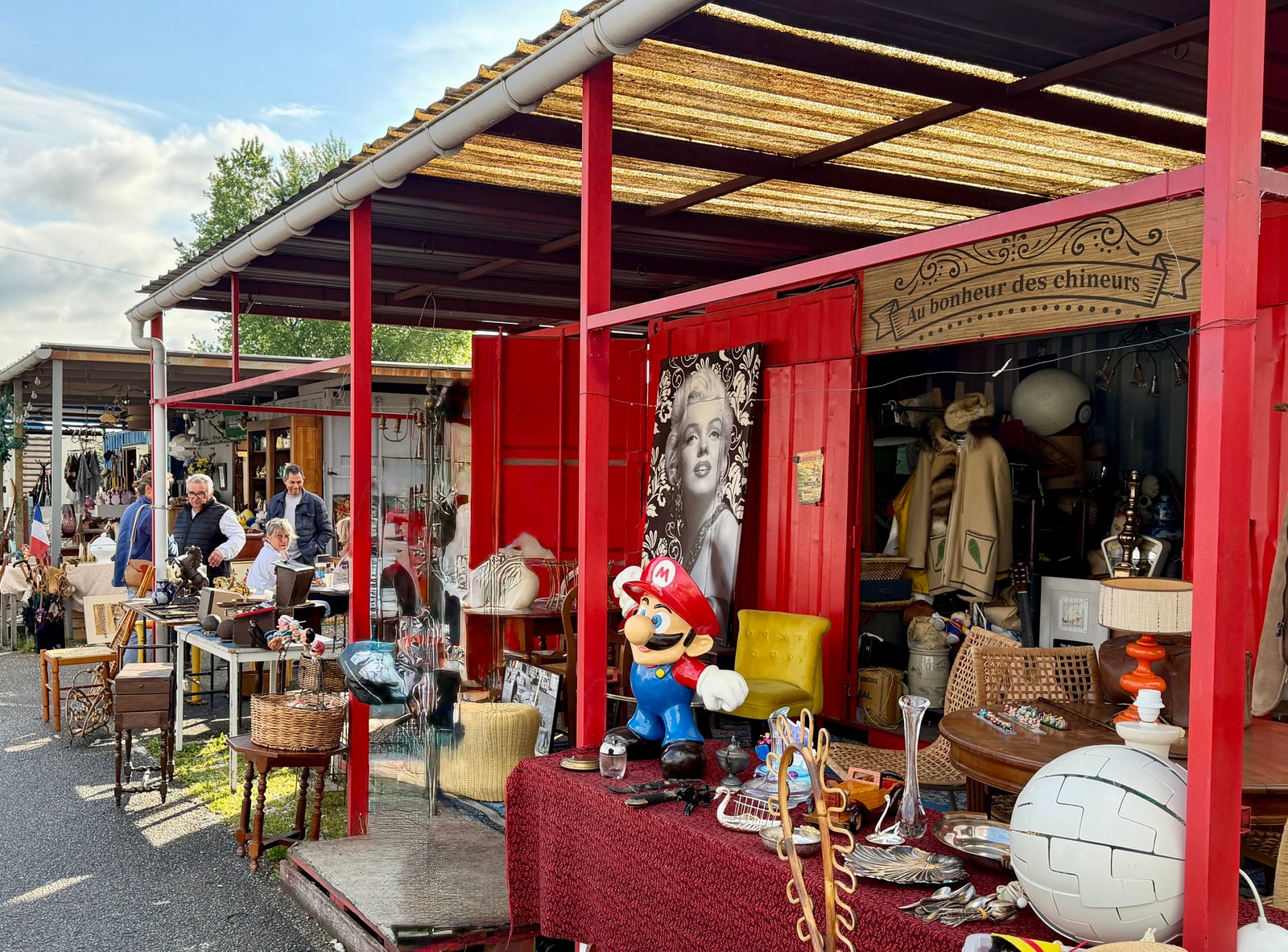
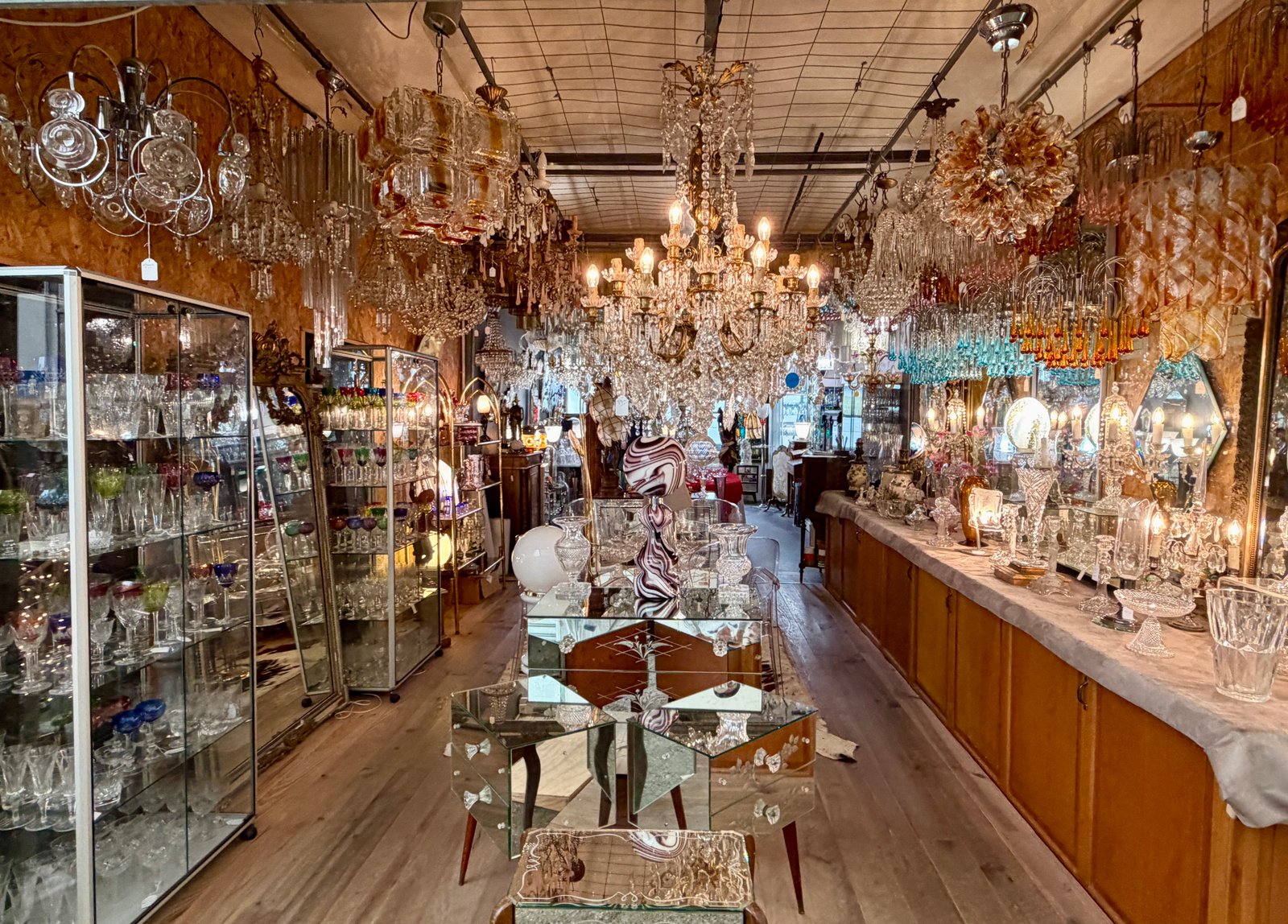
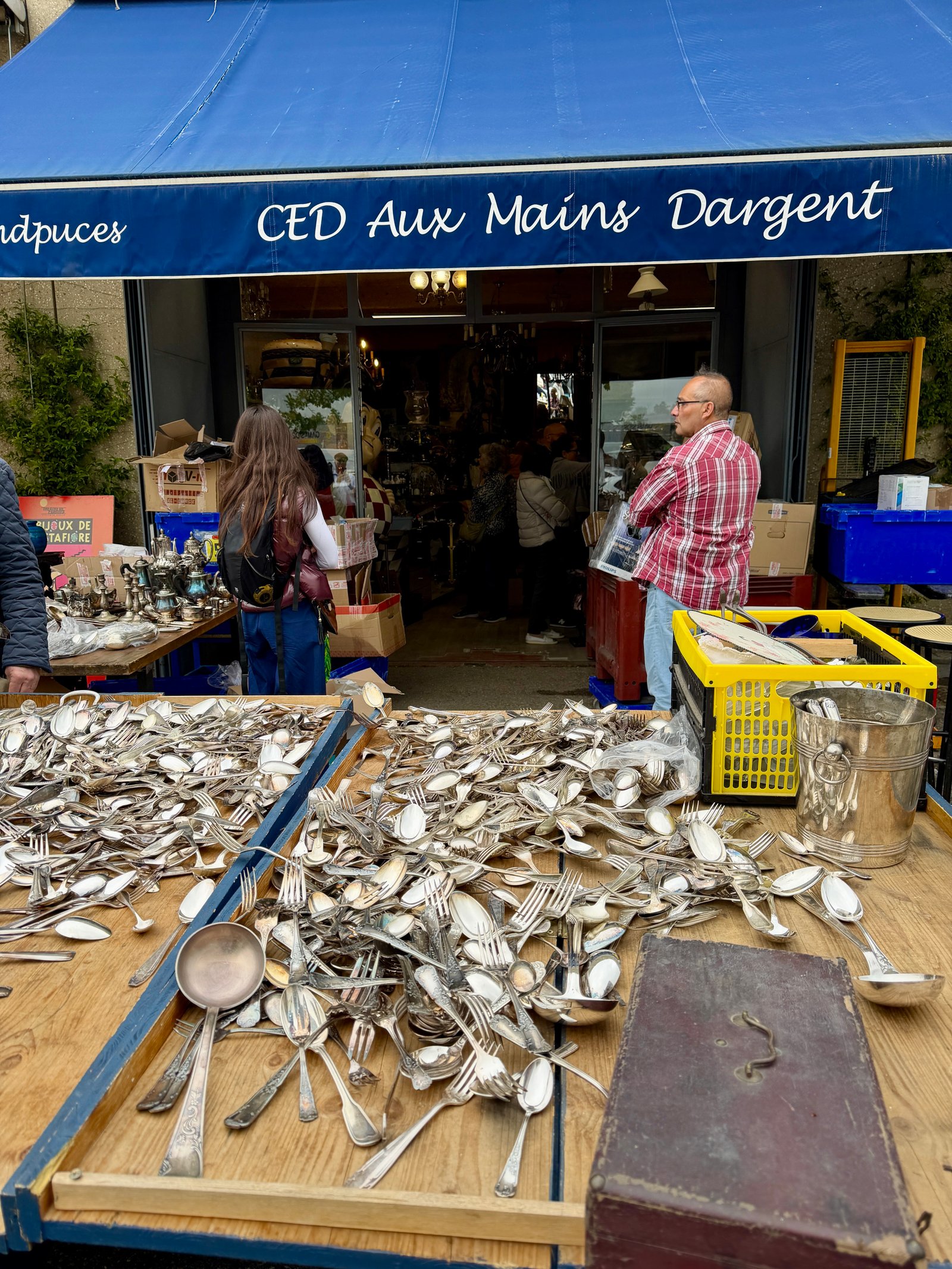
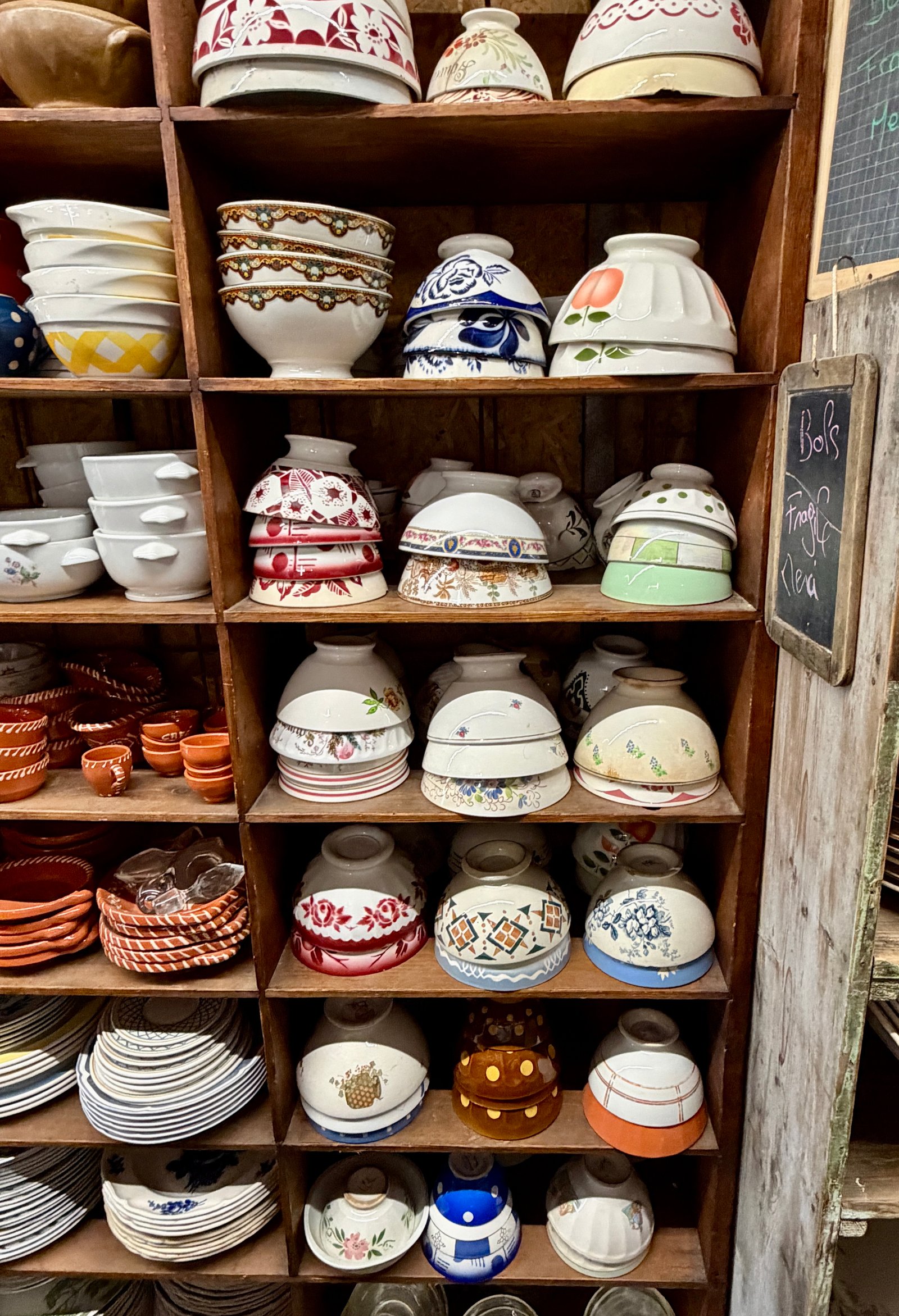
Just outside central Lyon in Villeurbanne, the Puces du Canal is a sprawling flea market hosting 400-500 vendors weekly. It has been a magnet for collectors, bargain hunters, and antique shoppers for over 30 years. It is now the second largest flea market in France, behind Marché aux Puces de Saint-Ouen in Paris. I’ve posted previously about my rankings of the three best flea markets in Paris including Saint-Ouen. I’m always happy to spend a morning antiquing.
There are several sections to shop from here. The permanent vendors are professional antique dealers and have carefully curated and higher quality items. The flea market & bargain section is the heart of the “puces” experience. Casual sellers and weekend vendors set up tables or layout boxes on the ground packed with everything from old postcards and vintage crystal and silver to random household items. It’s less polished, more chaotic—and that’s exactly the charm. If you enjoy digging for hidden gems or negotiating a good deal, this is your playground and mine. Finally, the vintage & retro design area focuses on mid-century modern furniture, retro décor, and other 1950s-1970s pieces. A little something for everyone.
If you had to pick, is it more the thrill of the hunt, the history behind items, or the satisfaction of finding something unique that hooks you? For me, it’s all the above especially if I can negotiate a bargain!


Lyon at night
I thought I’d share a few photos of Lyon at night. As beautiful as the bulidings, bridges, and monuments are during the day, most are beautifully lit at night. Even late at night, people are out eating, drinking and walking around. We felt very safe everywhere we went.


Pérouges, a day trip from Lyon
If storybook ancient architecture sound appealing, this ancient walled village is the destination for you. Listed officially as one of France’s “Most Beautiful Villages, Pérouges is a mere 30 minute train ride from Lyon! While there, be sure to try a Galette de Perouges, a sweet, buttery local pastry.
A journey back in time
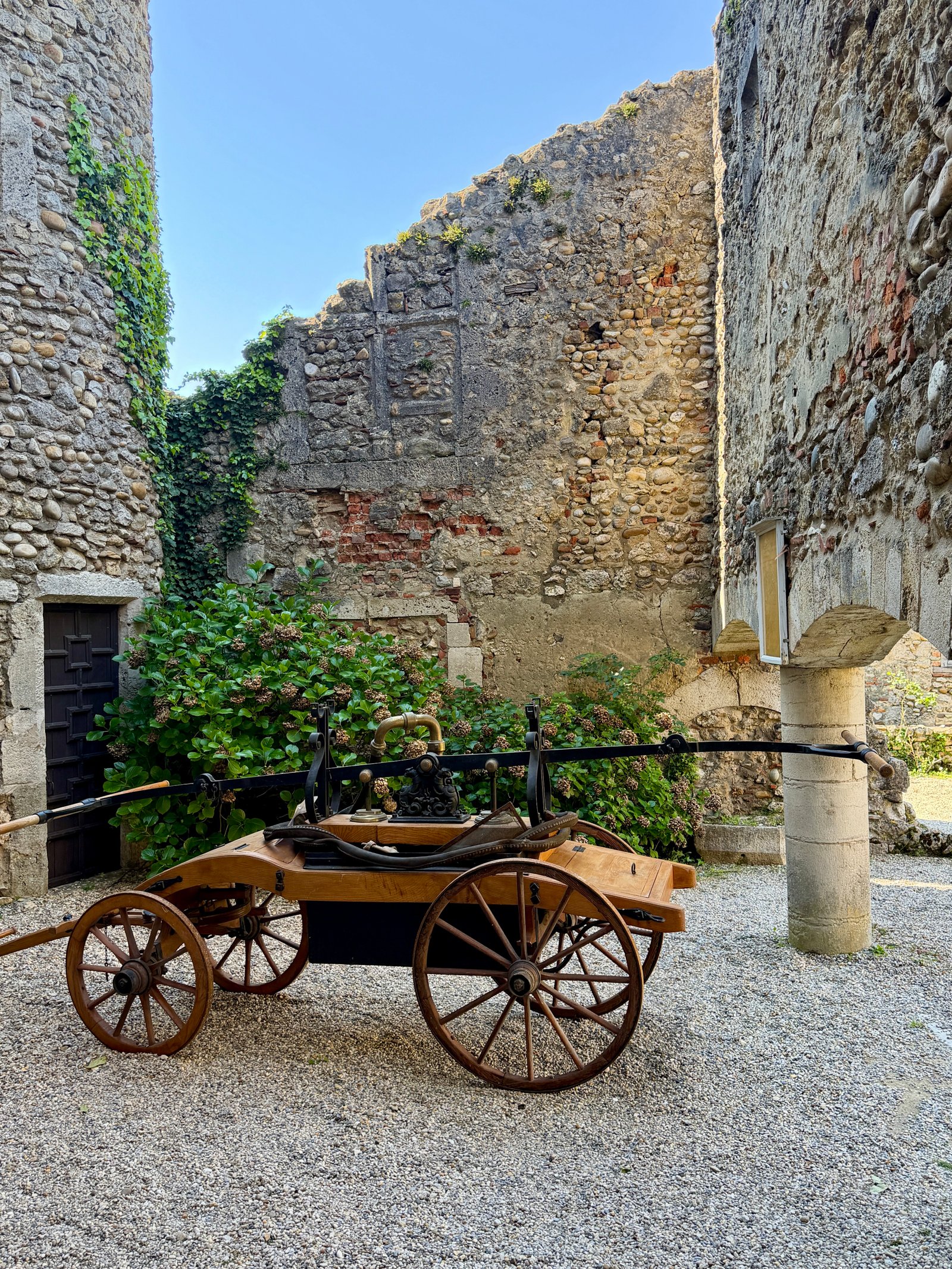
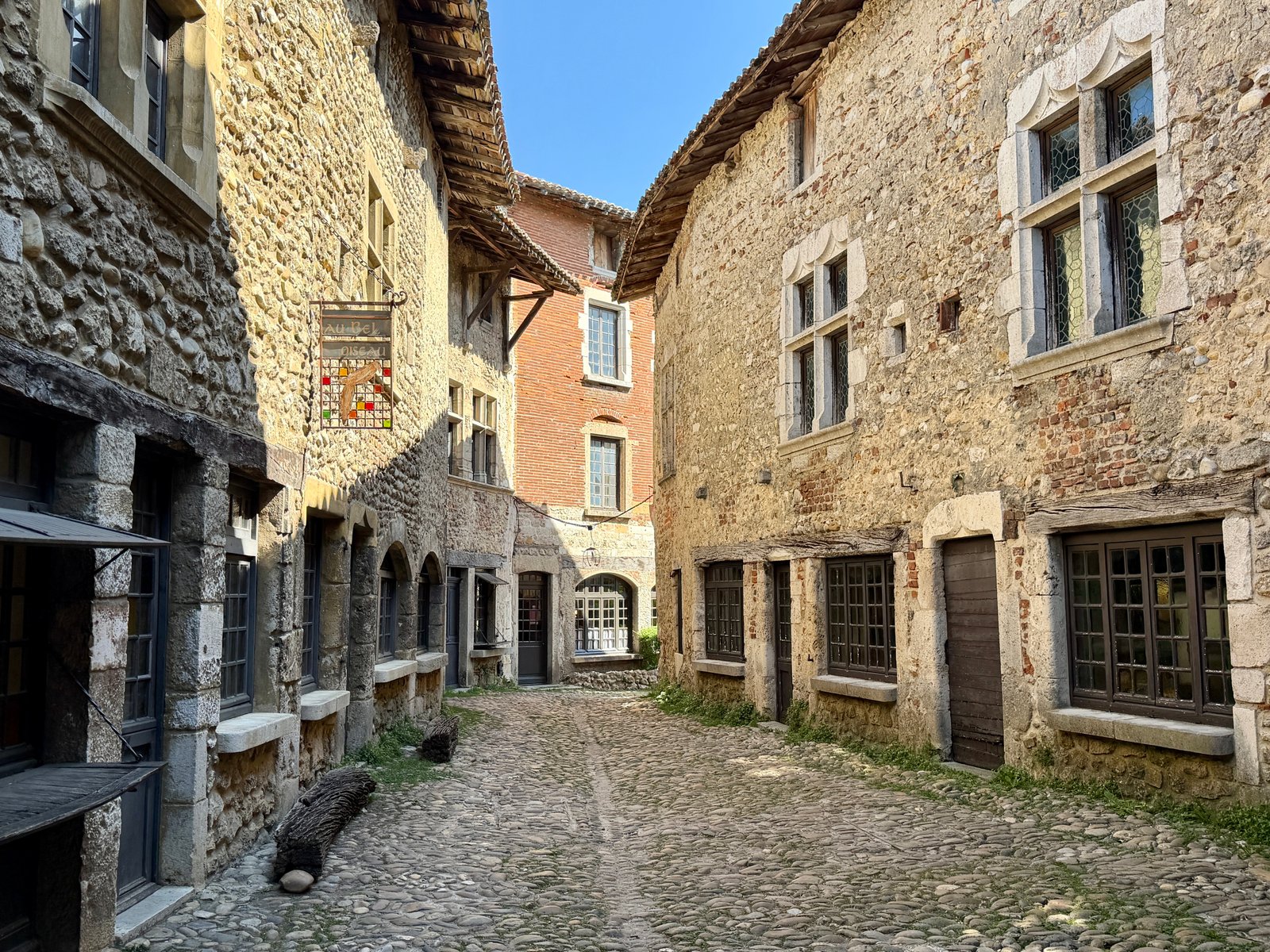
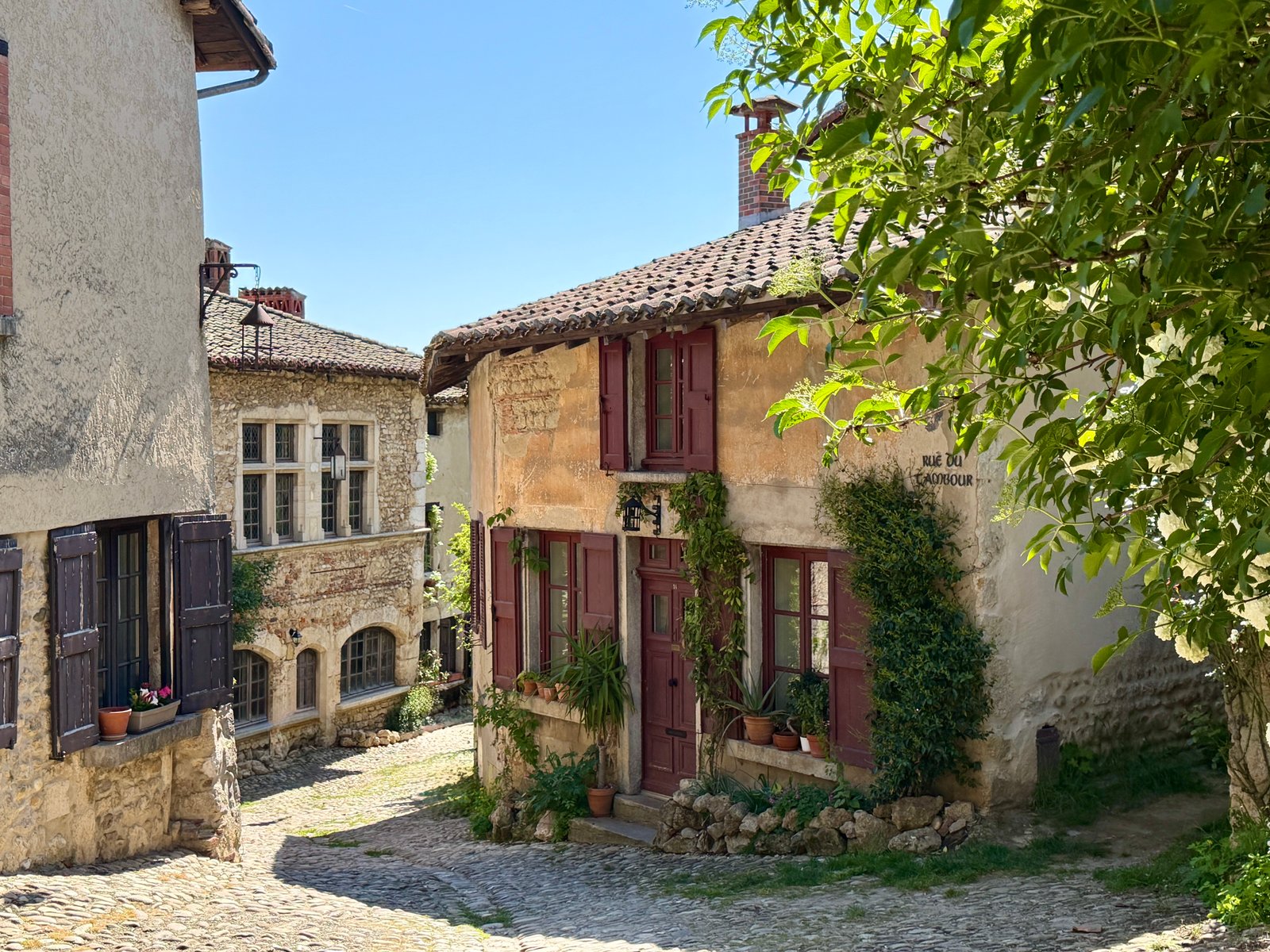
Pérouges is perched on a gentle rise overlooking the Ain plain. The moment you pass through its fortified gates, modern life fades away. The village is remarkably well preserved, with tightly packed stone houses, ivy-draped facades, and uneven cobblestone streets that have been worn smooth over centuries. The village of Pérouges is over 800 years old. It was first established in the 12th century (around the 1100s) as a fortified settlement. Over time, it grew into a small but important medieval town, especially during the 13th–15th centuries when weaving and trade brought prosperity.
Some parts you see today—like the walls and the Église Sainte-Marie-Madeleine de Pérouges—date from the 1400s, meaning they’ve stood for roughly 600 years. So when you walk through Pérouges, you’re literally stepping through eight centuries of history, much of it still remarkably intact.




A light lunch before we leave
Ok, we decided to have a light lunch in the main square before taking the train back to Lyon. The menu mentioned salad or charcuterie as an appetizer, chicken for the main course and a slice of the local specialty, galette, for dessert. Sounds perfect, right? We were given one of the last tables available as we didn’t have a reservation. I hadn’t thought to make one, but with only four restaurants in town, I should have planned ahead.
Our bottle of wine came to the table and she told us to help ourselves to the appetizer. It actually turned out to be a BUFFET of 12 different cold salads, green salad, 12 types of charcuterie and pâté, along with 25 cheeses to try BEFORE your main course.


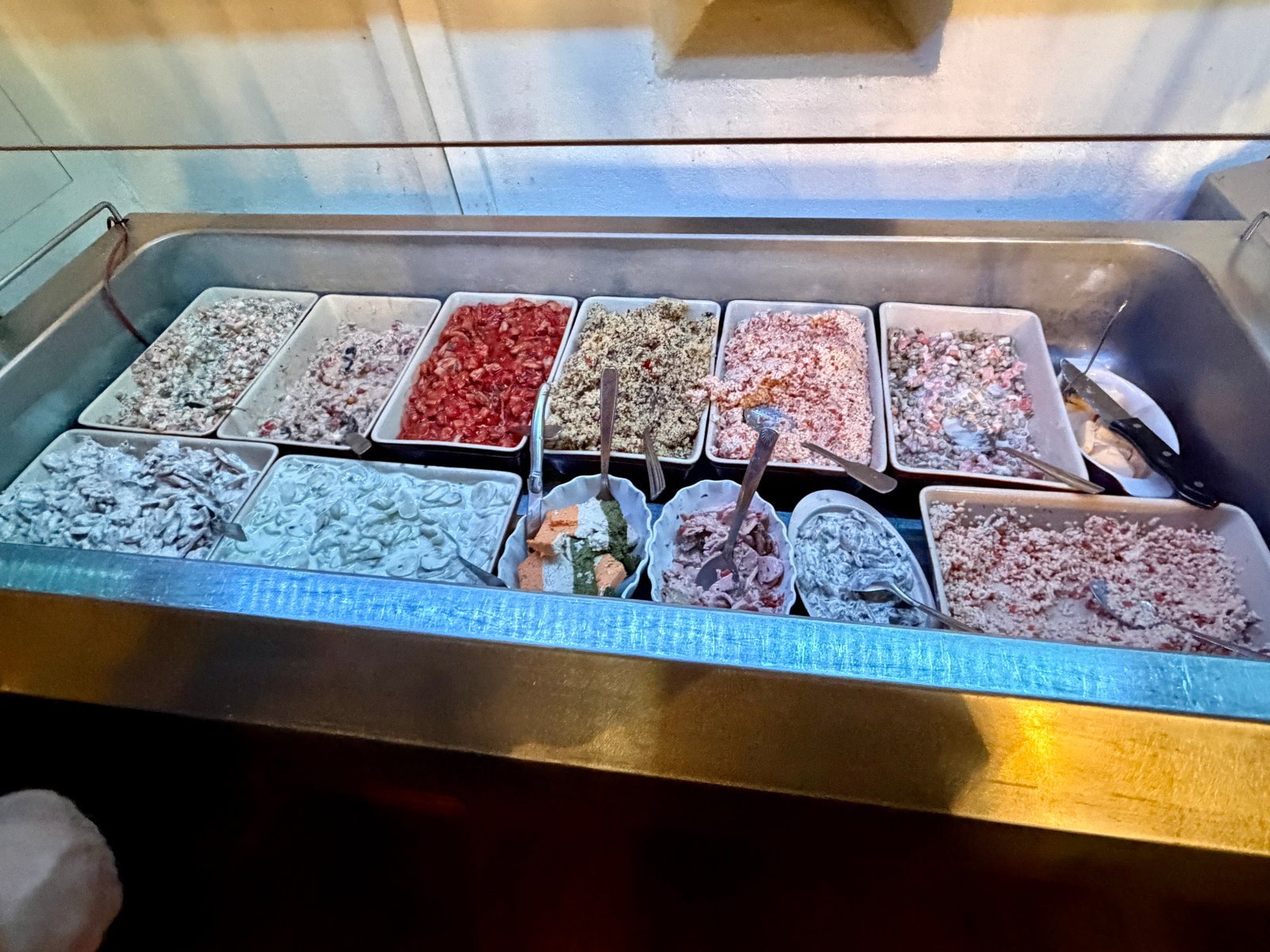
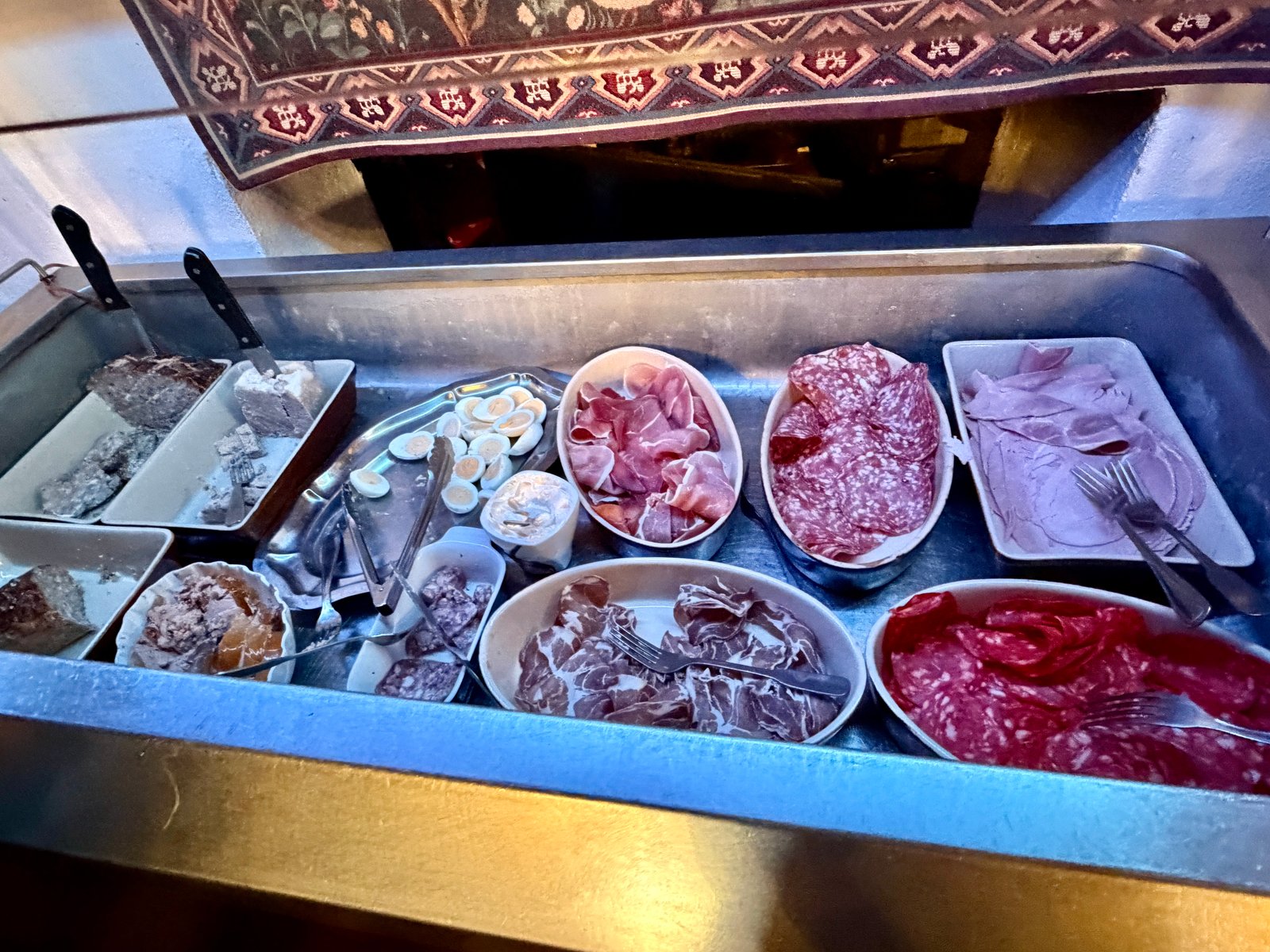
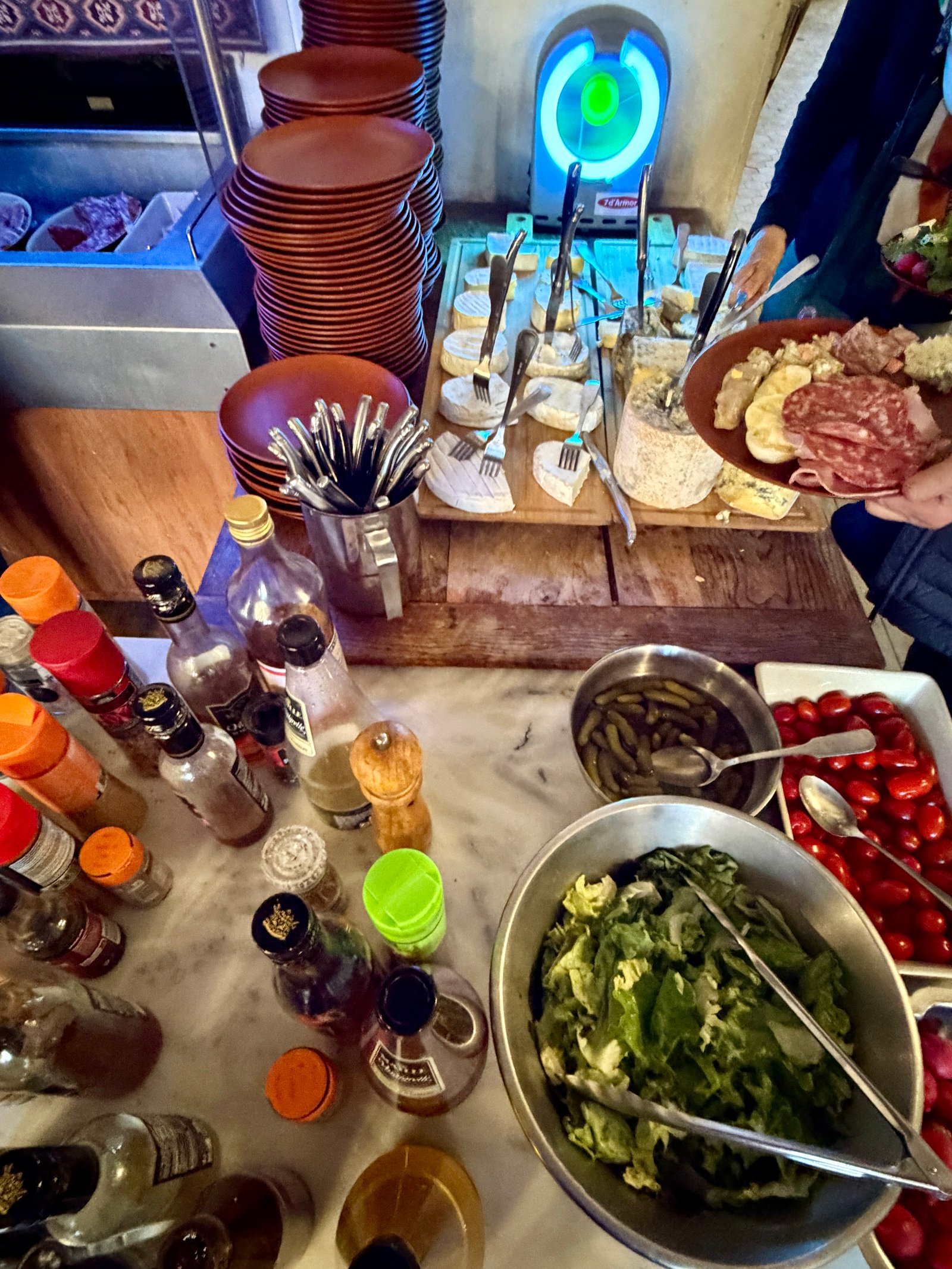

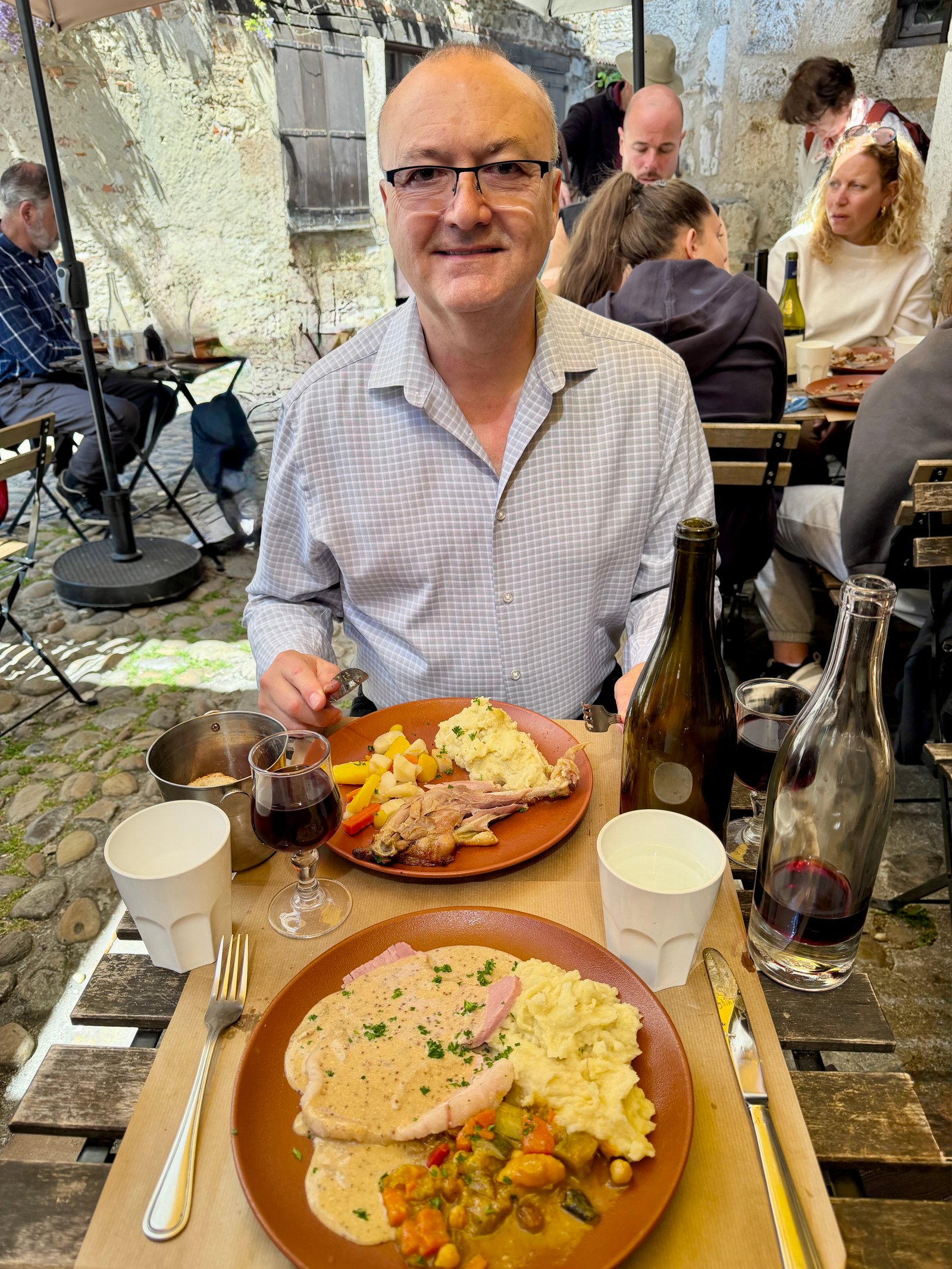
So much for eating light today. After all, we have to at least try a little of everything. I’m sure it’d be rude not to! Finally, time for dessert. Oh, did I fail to mention that’s a buffet course as well? All the galette you can eat, accompanied by toppings, warm chocolate, cream sauce, fruit, meringue and more. YIKES, we’re stuffed. Hopefully we won’t fall asleep on the train. Lyon is only 30 minutes away.


Vienne
Just south of Lyon, about a 20 minute train ride away, the town of Vienne feels like stepping into a quieter, deeper layer of French history—one where Roman ruins, medieval streets, and riverside charm all coexist. Vienne’s story stretches back over 2,000 years, when it was a major Roman settlement along the Rhône River.
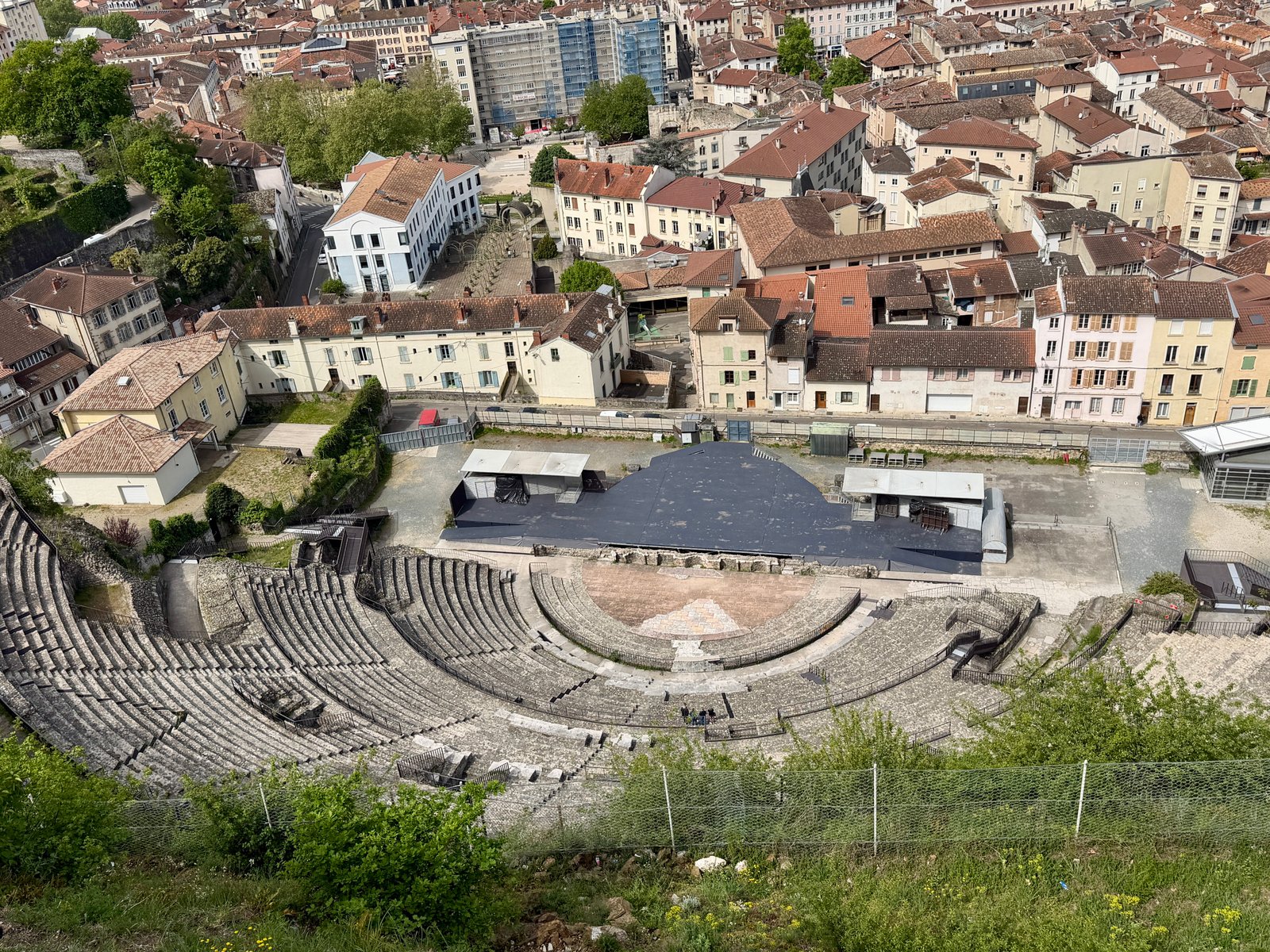
Today, that legacy is impossible to miss. The remarkably preserved Temple of Augustus and Livia (20-10 BC) stands proudly in the town center, its elegant columns a reminder of the city’s imperial past. Just a short walk away, the Roman Theatre of Vienne (40-50 AD) once held up to 13,000 spectators—making it one of the largest—and still hosts performances today, especially during the famous Jazz à Vienne, when ancient stone meets modern music.
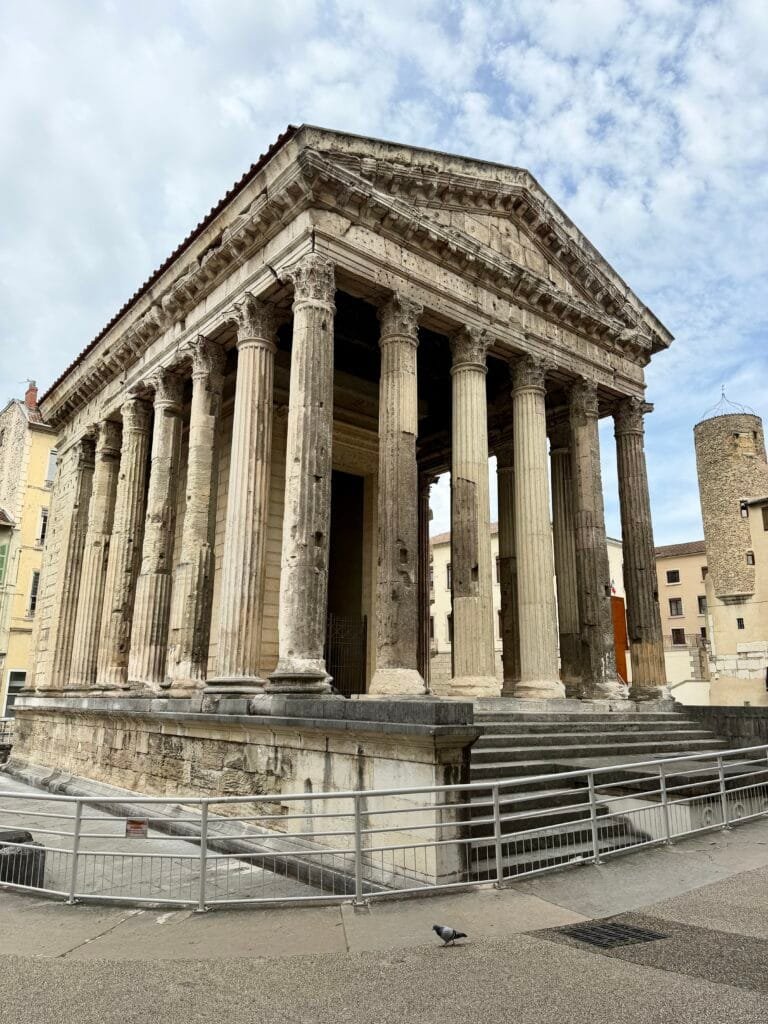
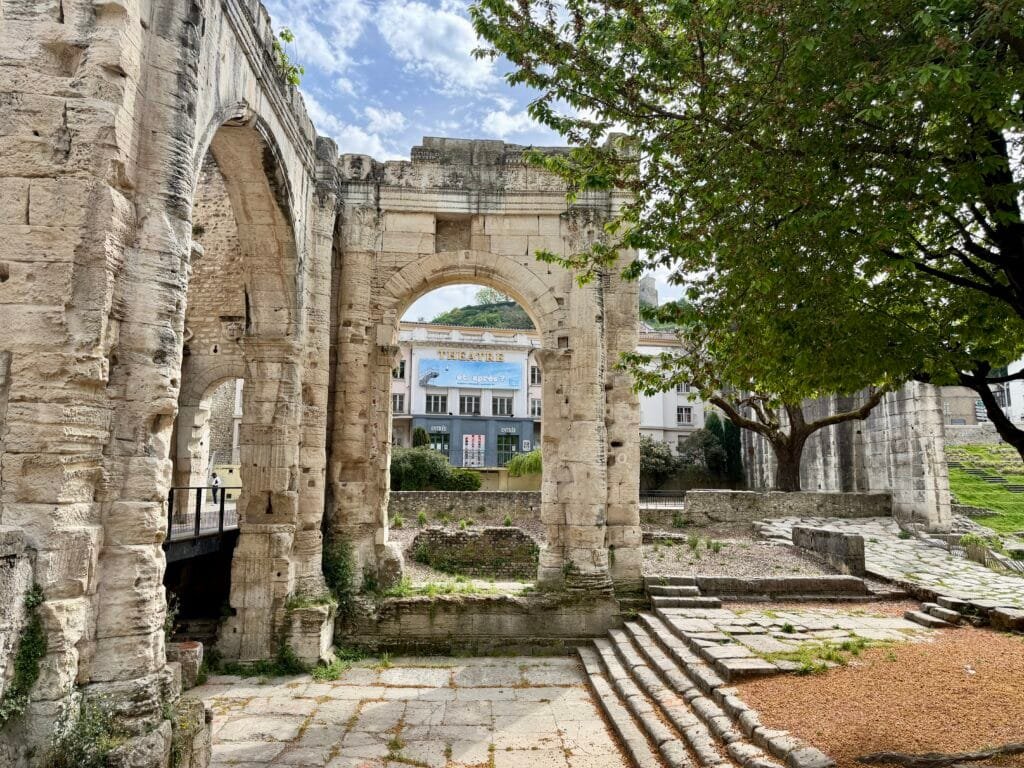
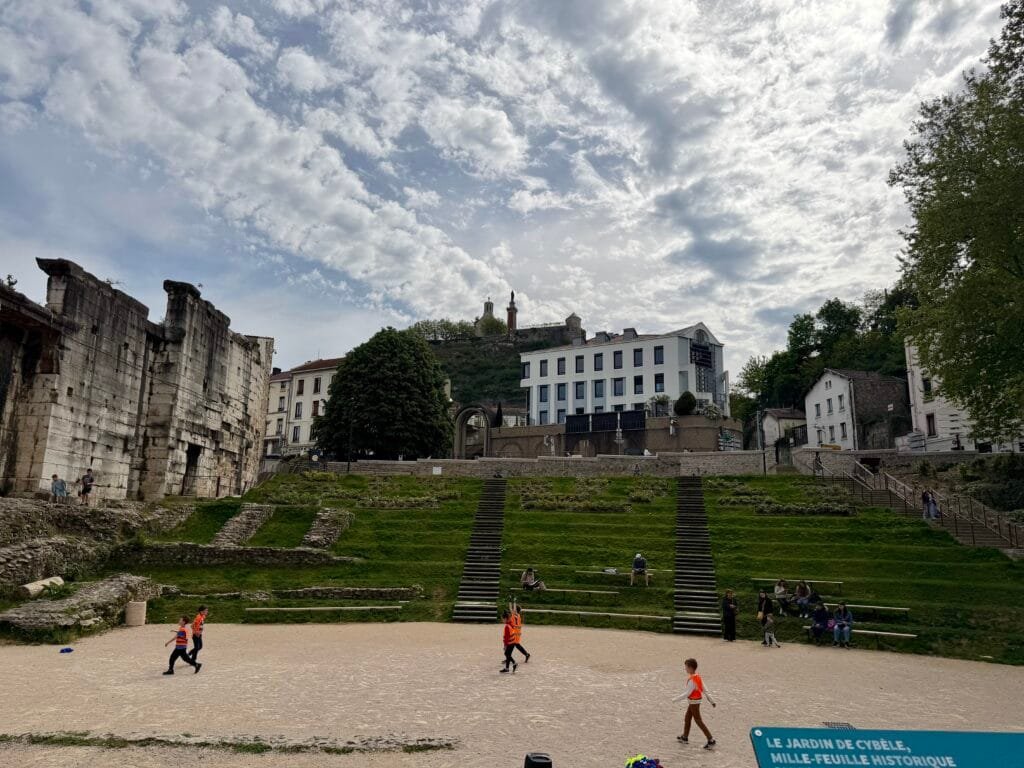
There is also the Cybèle archeological garden (27 BC) nearby.
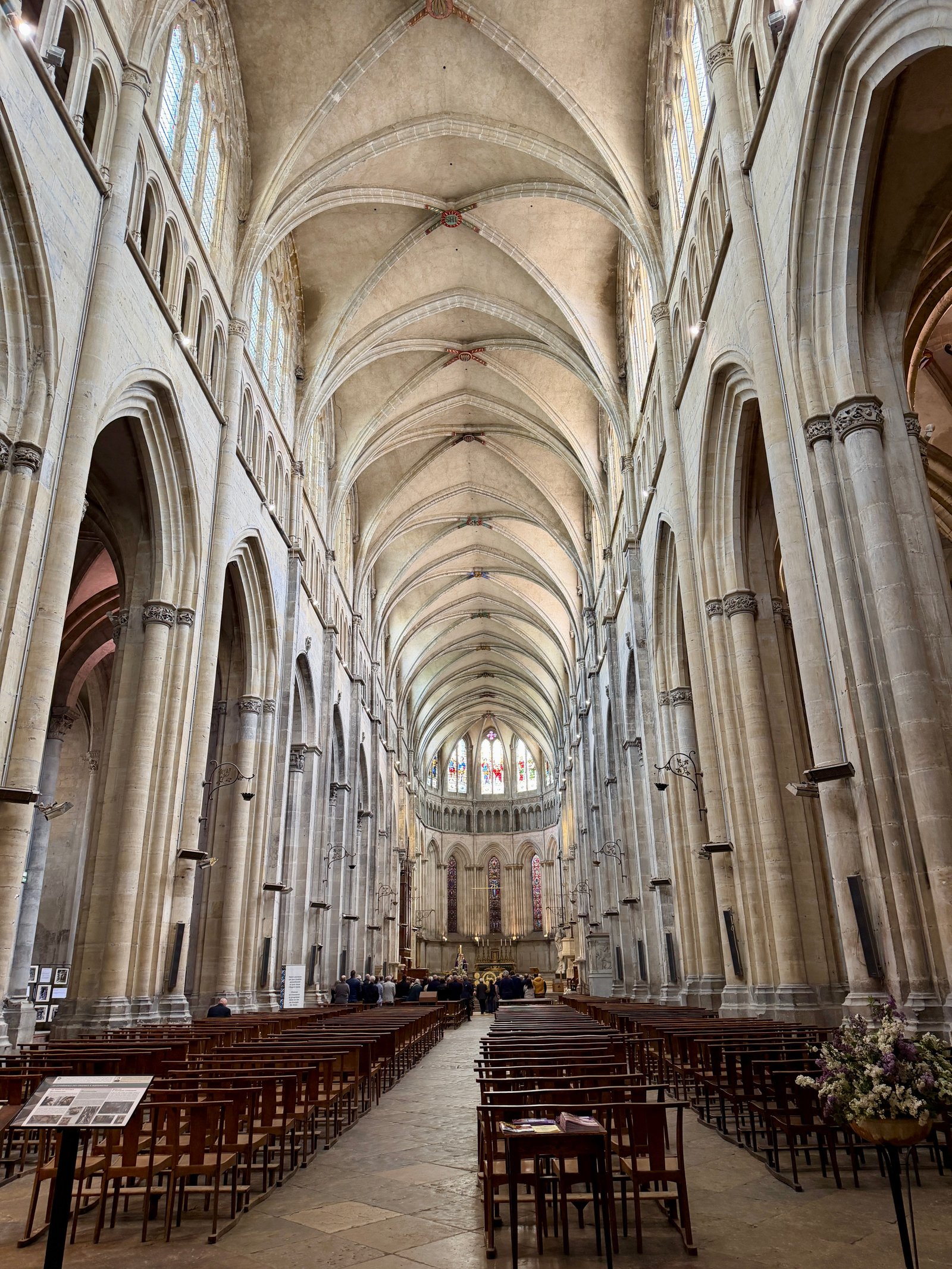
Wandering through Vienne feels effortless. Narrow streets wind past Renaissance houses, hidden courtyards, and small cafés where locals linger over coffee or wine. Above it all rises the striking Saint-Maurice Cathedral, a Gothic masterpiece that took centuries to complete. Construction began on the cathedral in 1130 and completed in 1529.


The Rhône riverbanks offer scenic views, perfect for a slow stroll or a pause to take in the landscape. Vienne isn’t about ticking off landmarks as quickly as possible. It’s about slowing down, noticing the details, and letting history unfold naturally around you.
A hike up Mount Pipet
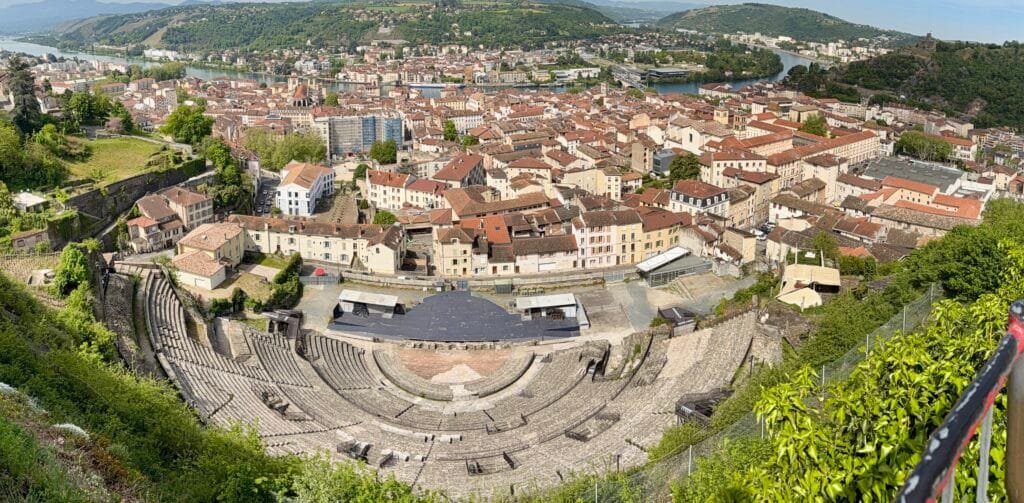
If you do have the chance to visit, and can manage a very steep walk up to the Pipet Belvedere, the view from the top is amazing. We walked slowly and took a brief break halfway up by the cemetery to catch our breath, but we made it. This small road leads to the Chapelle Notre Dame de la Salette on Mont Pipet. This 19th-century chapel offers panoramic views of Vienne, the Roman amphitheater below, and the Rhône River valley.


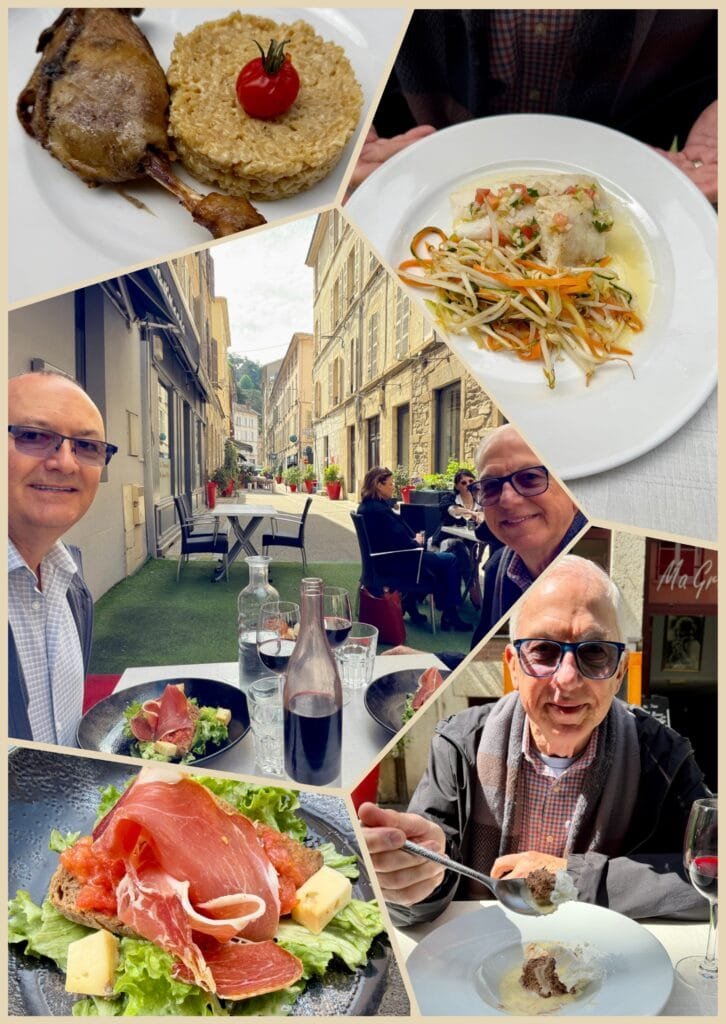
We couldn’t resist another excellent meal before returning to Lyon. A delicious lunch special at 19 euros ($22) for 3 courses and a bottle of house wine is 10 euros ($12). We eat very well here with top quality food for an great price. This meal started with a salad with Serrano ham. The main course is either duck confit with risotto or cod with stir fried veggies. We couldn’t decide, so we had one of each and shared. Dessert is chocolate mousse topped with whipped cream and chocolate chips. Yummy!
Vienne makes a great day trip from Lyon and definitely worth adding it to your must see list if you’re here.
Lyon is a large city with small town charm
At first glance, Lyon has everything you’d expect from a major European city. It’s France’s third-largest metropolitan area, a buzzing hub of culture, gastronomy, and commerce. The transport network alone makes it feel effortlessly connected: the metro is clean and efficient, and high-speed trains at Gare de Lyon-Part-Dieu whisk you to Paris or the Alps in no time. Add in bike-sharing, walkable streets, and riverfront paths along the Rhône River and Saône River, and getting around becomes part of the experience rather than a chore.
But what makes Lyon special isn’t just its infrastructure—it’s how human-scaled it feels despite all those amenities. You can spend your morning wandering the cobbled lanes of Vieux Lyon, stepping through hidden passageways, then stroll across a bridge and find yourself in the elegant Presqu’île district within minutes. There’s no sense of overwhelming sprawl here; neighborhoods flow into each other in a way that invites exploration rather than exhaustion. That walkability shapes the rhythm of daily life. You linger at cafés, staff are friendly and we are always humbled when they tell us that we speak French well compared to other tourists. You move at a pace that feels unhurried for a city of this size. Even in busier areas, there’s a calmness that feels more like a small town than a large city.
Slow paced lifestyle
And then there’s the lifestyle. Lyon is often called the gastronomic capital of France, but it’s not just about Michelin stars—it’s about accessibility. Traditional bouchons and cafés serve hearty, comforting dishes without the intimidating prices you might expect in a city of this caliber. Markets brim with fresh produce, bakeries are everywhere, and eating well feels like a given rather than a splurge. In the time we’ve stayed here, we think affordability extends beyond food. Compared to larger cities, Lyon offers a high quality of life without the financial strain. Whether it’s enjoying riverside picnics, exploring museums, or simply taking in the view from Fourvière Hill, many of the city’s best experiences are either low-cost or completely free.
Final Thoughts About Lyon
There are cities that impress you with their size, and then there are cities that win you over with how they feel. Lyon somehow manages to do both at once. In Lyon, you don’t just visit a city—you settle into it, almost immediately. We rolled into town expecting beautiful views and history, but found a love affair with food, culture and the people. From cobblestone lanes of Old Town to cozy bouchons serving unforgettable dishes, Lyon didn’t just impress us—it fed us well.
What truly sets Lyon apart, though, is its balance. It has the infrastructure, culture, and energy of a big city—but wrapped in an atmosphere that feels approachable, livable, and warm. It’s a place where you can have a full urban experience without losing that sense of connection—to the streets, to the people, and to the simple pleasure of wandering without a plan.
Over two amazing weeks, we tasted, explored, and soaked it all in—this city treated us right. If you’re wondering whether Lyon deserves a spot on your travel list, we hope we’ve shown you why.
Our next destination is a week in Dijon, France. Happy travels!