
We’ve traveled by plane, train, bus, automobile, and just about every floating contraption that can carry passengers across the water. There is something wonderfully old-fashioned and surprisingly relaxing about sailing from Southampton to New York City aboard the legendary Queen Mary 2.
Arriving in Southampton early
We arrived in Southampton by train from London a few days before our sailing. We hoped to leave the grey, rainy London weather behind us, but no luck. It’s more of the same, except it’s colder with low temperatures in the 40s and highs in the mid 60s. So, it’s back to sweaters and coats again.
Few cities are as closely tied to maritime history as Southampton. For centuries, this busy port on England’s south coast has served as a gateway to the world, from medieval merchants and ocean liners to today’s cruise ships. Southampton played a central role in the golden age of transatlantic travel and is perhaps best known as the departure point of the RMS Titanic on April 10, 1912. More than 500 crew members came from Southampton, and the city’s connection to the disaster remains deeply personal. Memorials throughout the city honor those who never returned.
Today, Southampton remains one of Europe’s busiest cruise ports, where modern ships sail from the same harbor that once launched some of history’s most famous ocean liners.
Exploring Southampton
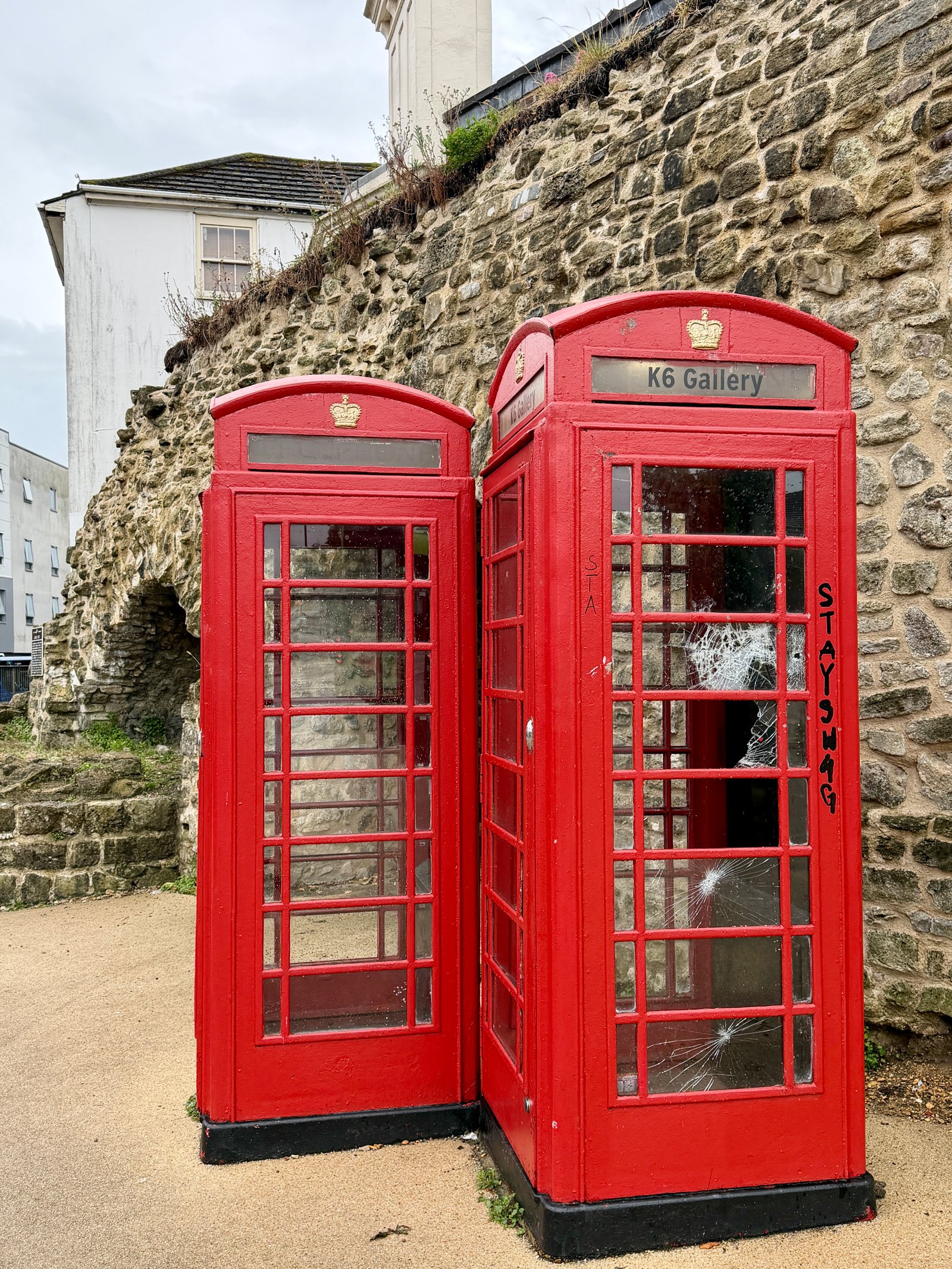
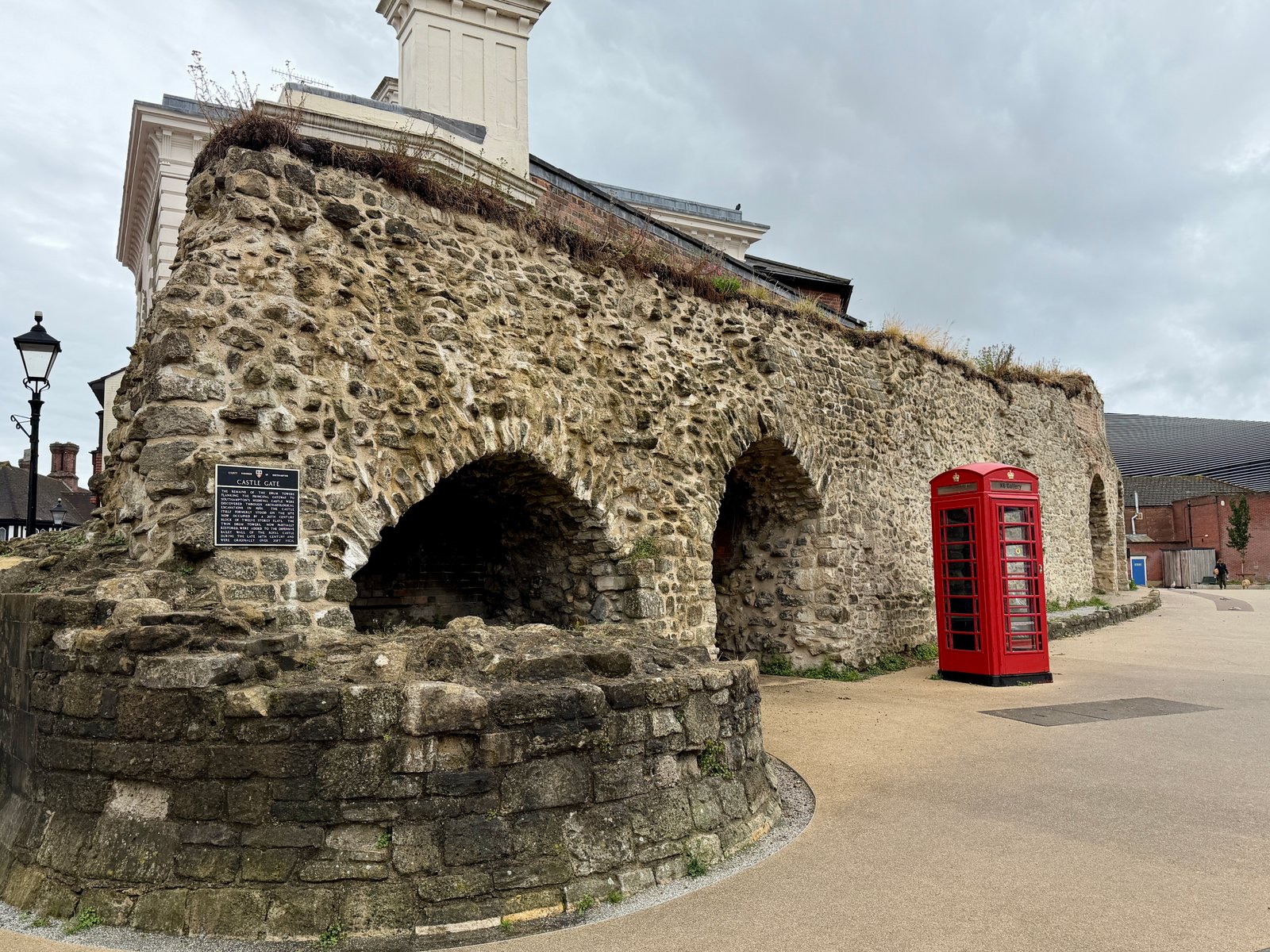
Southampton is far older than many visitors realize. Its history stretches back nearly 2,000 years. Some of the city’s top sights include the remarkably preserved Southampton Medieval Town Walls, which date largely from the 12th- 14th centuries. It forms one of the most complete medieval defensive circuits in England. Designed to safeguard the city from invasions and raids, the historic walls stretching over a mile in length. They once encircled the medieval town and still boast more than a dozen towers and several gates today. We had a brief reprieve from the rain this afternoon so we headed out to explore the walls and towers. We started at Bargate. It’s a 12th-century gatehouse and once the main entrance to the medieval town.



A walk through the park
Near our apartment is a lovely park with a rose garden, statues, and a floral arch above the walkway.


Memorials around the city
There are a number of various memorials around the city, but here are a few we visited. The first one is Pilgrim Fathers Memorial commemorating the departure of the Mayflower. The Mayflower sailed in 1620 from Southampton, England, bound for America. Then we visited three memorials related to the Titanic. The Titanic Engineers’ Memorial honors the engineers who died in the Titanic disaster in 1912. Twenty of the 38 named engineers originated from Southampton. Sadly, all engineers and electricians remained steadfast at their posts until the very end. Despite working tirelessly in complete darkness and suffocating steam, they ensured the lights and pumps continued to function. By making the ultimate sacrifice to maintain power, they provided people with precious additional time to evacuate.
A second Titanic memorial is the Titanic Musicians Memorial dedicated to the musicians who continued to play their instruments on deck while the ship sank in an attempt to keep passengers calm. Eight members of the Titanic’s band chose to continue playing music to soothe the passengers as the lifeboats were being loaded, and tragically, all of them perished. Bandmaster Wallace Hartley’s violin was eventually recovered and found strapped to his body.
Finally, we visited the Titanic Memorial Stone dedicated to the 1,500 crew and passengers who perished in the disaster.


Holyrood Church
Holyrood Church, constructed in 1320, is one of the original five churches inside the old walled town of Southampton. Tragically, it was destroyed by enemy bombing during the Blitz in November 1940. In 1957, the church’s shell was dedicated as a poignant memorial to the sailors of the Merchant Navy.


St Michael’s Church
Founded around 1070, St. Michael’s Church is the oldest building still in use in Southampton. It’s the only surviving medieval parish church within the city’s ancient walls. Although it’s closed today, they left the door open so visitors can peek inside through the glass doors. One of the treasures listed is a black Tournai marble font dating from about 1170. Carved from a single block of stone imported from what is now Belgium. It is one of only a handful of surviving examples in England. Another highlight is the impressive tomb of Sir Richard Lyster, a former Lord Chief Justice of England. Erected in 1567, the beautifully detailed Elizabethan monument stands as a reminder of Southampton’s importance during the Tudor era.


The Titanic Pub
The Titanic, a pub located on Simnel Street, has been a beloved watering hole since the 1880s. Originally named The Endeavour, the pub adopted its current name in 2012 to mark the 100th anniversary of the sinking of the RMS Titanic. Today, it holds the distinction of being the only pub in the United Kingdom to bear the name of the famous liner. What a charming little pub it is! We wanted to stop in for lunch, but unfortunately the kitchen is closed today.
Staff directed us to the Duke of Wellington Pub down the street.


Duke of Wellington Pub
We had lunch at the Duke of Wellington Pub to escape another rain shower. The building, built by an early Mayor of Southampton, dates from 1220. Another quaint and cozy pub with tons of history and character.


Oxford Street
Southampton’s Oxford Street transformed from 14th-century farmland into a premier maritime district. Its layout can be traced back to 1842, and it flourished alongside the Southampton Terminus Station (now Genting Casino) and docks. Ultimately, it became a cultural hub that was intimately connected to the tragic voyage of the Titanic in 1912. At the time, the street was bustling with lodging houses, boarding rooms, and businesses catering to the crew and providing supplies for the ship. Twenty six crew members listed the 1908 Sailors’ Home on Oxford Street as their address before the voyage.
The White Star Tavern served as a popular gathering place for both crew and passengers.
A story of three brothers
The Grapes is a pub famous for its connection to the Titanic. Their website shares a captivating story. Southampton buzzed with anticipation as the Titanic prepared to embark on its maiden voyage that morning. Hundreds of crew members, many from Southampton, prepared to board the ship before its departure. Among them were three brothers, known as the Slade brothers. As was customary for crew members embarking on a long voyage, they stopped at The Grapes for a drink, but time slipped away as they drank.
As they made their way back towards the docks, they encountered a passing train that blocked their route. By the time they reached the ship, the boarding process had already concluded, and the gangway withdrawn. Regrettably, they had missed their chance to board. The Titanic sailed without them. Tragically, the men who took their places did not survive the ill-fated voyage.
“A final drink, a passing train, and a few minutes that changed everything.”


I’m glad we decided to spend a few days in Southampton before the cruise, as this extra time gave us the opportunity to enjoy the city. There’s still more things to see and do here. My suggestion if you’re coming here for a cruise, spend some time in town first.
Transatlantic Cruise vs Crossing
There are cruises, and then there are ocean crossings. Crossings don’t have any ports.
For years, sailing across the Atlantic Ocean aboard the Queen Mary 2 has been on our travel bucket list. Unlike traditional cruises that hop between ports, this legendary voyage is all about the journey itself. A seven-day transatlantic crossing from Southampton, England, to New York City.
No island stops. No excursions. Just seven unforgettable days at sea aboard the last true ocean liner in service. From elegant afternoon teas and formal evenings to endless ocean views. Here’s what our life at sea is really like as we sailed crossed the Atlantic.
Ocean liner vs Cruise Ship
The first thing to understand is that the Queen Mary 2 isn’t really a cruise ship in the traditional sense. She’s an ocean liner. That may sound just like a small distinction. But out in the middle of the Atlantic, it makes a world of difference. Cruise lines design most modern ships for warm-weather vacations and frequent port calls. Cunard built the Queen Mary 2 to cross oceans.
Unlike cruise ships optimized for leisure cruising, the Queen Mary 2 uses a heavily reinforced hull. Her longer, stronger design cuts through rough seas and reduces pitching and rolling, while her specially shaped bow handles the massive waves of the North Atlantic. The ship slices through waves rather than riding over them, which is one reason she handles rough weather so well. She also has greater power and fuel capacity for long-distance ocean crossings.
Passengers often describe the experience as more like classic sea travel than a cruise. The ship features a grand ballroom, a planetarium, extensive promenade decks, and a more traditional atmosphere.
Today, the Queen Mary 2 remains the world’s only regularly scheduled ocean liner service.
Which is type of ship is better?
- If you want water slides, nonstop activities, and Caribbean-style vacations, a modern cruise ship is usually the better choice.
- If you want the romance of classic ocean travel, smoother handling in rough seas, and the experience of crossing the Atlantic under your own steam, QM2 is in a class by herself.
Facts about the Queen Mary 2
The Queen Mary 2 entered service in 2004, so she is now 22 years old. I guess that’s probably “middle-aged” for a major passenger ship. Although she might seem like a relic from the golden age of ocean liners, she did launch in the 21st century and remains the world’s only purpose-built ocean liner in regular service. QM2 also underwent a notable refit in 2016 and another refurbishment in 2023.
A significant refurbishment is scheduled in 2027. Current plans call for 30 additional staterooms and suites, new passenger areas and deck modifications. Given the enormous cost and the niche market for transatlantic crossings, industry observers generally believe QM2 will remain Cunard’s flagship for many years to come.
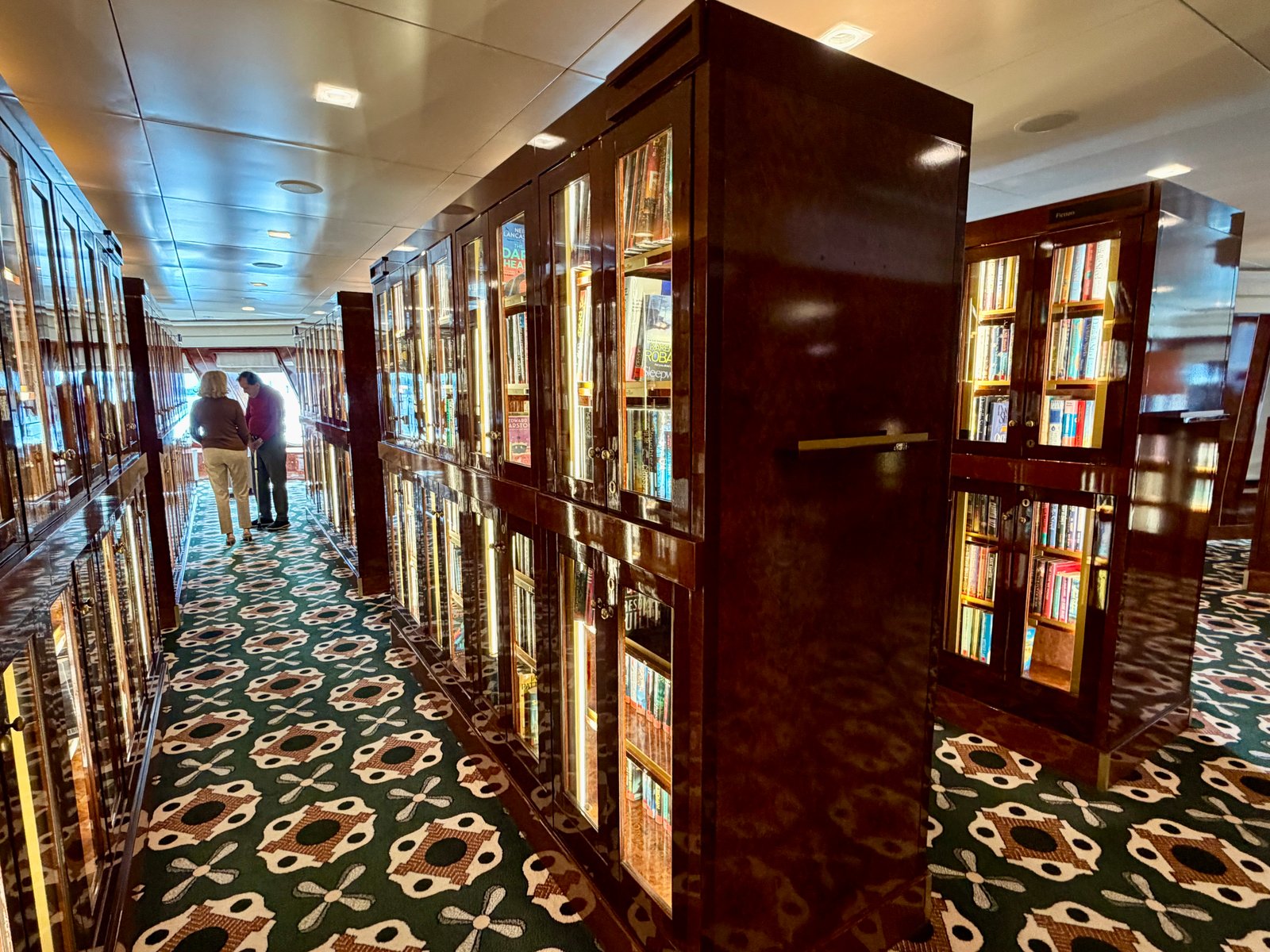
Other interesting facts about the QM2 is her capacity of 2,691 passengers and 1,292 crew members. She’s the height of a 23 story building and the only ship in the world with dedicated pet kennels at sea. The 24 luxury kennels feature a dedicated walking deck, a New York fire hydrant, and a traditional British lamppost. She houses “Illuminations,” the only Planetarium at sea, which also functions as a luxury 3D cinema and lecture hall. The Queens Room features the largest wood dance floor at sea, playing host to lavish gala evenings. She also has a beautiful library with 8,000-10,000 books available that is one of the largest afloat.
Embarkation Day in Southampton
Our adventure begins today. The excitement is palpable as we caught our first glimpse of Queen Mary 2 towering above the terminal. Since we booked last minute, we had a very late check in of 3:00 pm. However, we had to leave our apartment at 10:00 am. So, we are in for quite the wait. We arrived at 10:30 and at 11:00 they started boarding priority and suite guests. When the 11:45 general boarding began, Danny asked someone if we could sneak in early. They said as long as there isn’t a line we can embark. Woohoo, we are in early!
Check-in is smooth and efficient, and before long we are through security. We finally stepped aboard what is be our floating home for the next 7 days by 12:30.


The ship immediately impressed us with its grand staircase, elegant public rooms, and classic ocean liner atmosphere. Unlike many modern mega-ships, Queen Mary 2 feels sophisticated and timeless. A sort of old world charm and elegance combined with modern comforts. After our first meal and cocktail onboard, we set out to explore the ship’s interior.




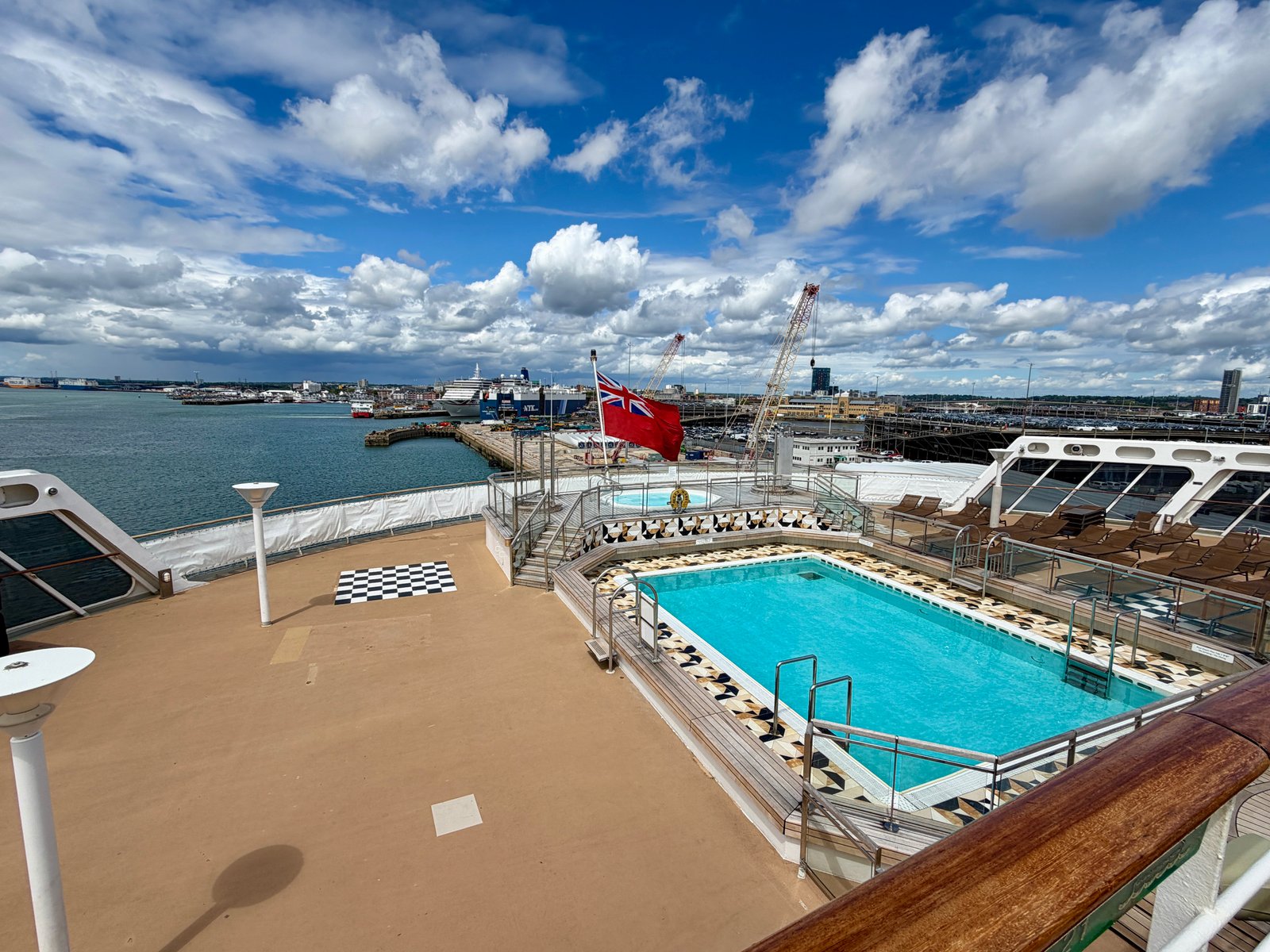
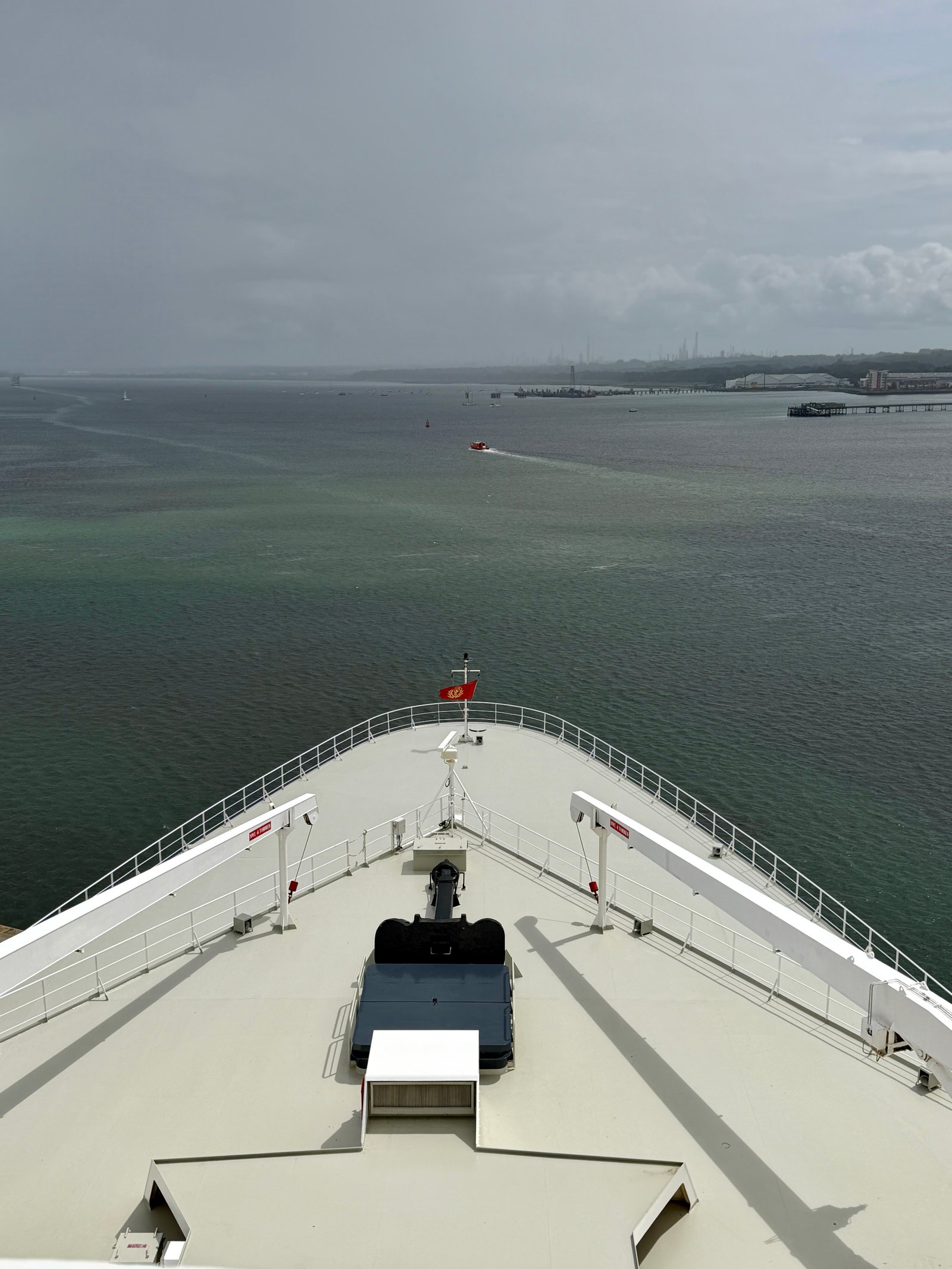
There’s even a scenic elevator on the outside of the ship with floor to ceiling windows. We then gathered on deck as storm clouds and misty rain started. Then, Southampton slowly disappeared into the distance as we sailed away. The Atlantic awaited.


Life at Sea: Settling Into the Rhythm
One of the biggest surprises of a transatlantic crossing is how quickly you adapt to life at sea. Without ports to visit or excursions to plan, each day unfolds at a slower, more relaxed pace. There is no rush, no schedule to follow, and no pressure to do anything at all.
Most mornings began with breakfast overlooking the ocean. Watching the endless horizon while sipping coffee became one of our favorite morning rituals. After breakfast, we strolled the interior decks, shops, bars and restaurants. On days the weather is good we went outside on the Promenade Deck, where passengers walked laps while breathing in the salty Atlantic air. It felt wonderfully old-fashioned in the best possible way.
Endless Ocean Views
Besides the ship itself, the true star of this voyage is the Atlantic Ocean. Unfortunately the first few days we had foggy wet weather. At times the fog is so thick you can barely see outside. Then the scenery changed. Some mornings greeted us with calm seas reflecting the sky like glass. Other days brought waves and rolling swells that reminded us we were crossing one of the world’s great oceans.


There was something mesmerizing about staring out at nothing but sea and sky. In today’s hyperconnected world, uninterrupted time surrounded by nature feels increasingly rare. The crossing provided exactly that—a chance to disconnect from daily routines and simply be present. Though there are tons of cozy places for peace and quiet on the ship to scroll the internet or read a book if that’s what you’d like to do instead of participating in planned activities.
Dining on Queen Mary 2
Food plays a major role in life onboard, and Queen Mary 2 certainly delivers. Each day offered a variety of dining options ranging from casual buffet meals to elegant multi-course dinners. Dinner quickly became a highlight of every evening. It included appetizers, salad, soup, main course with sides and dessert. Honestly, most days we had to skip a couple of the courses as the food is plentiful and delicious. Beautifully presented dishes and attentive service, created a dining experience that felt special every night.


One tradition we enjoyed was Afternoon Tea in the Queens Room. Served by white-gloved waiters, complete with finger sandwiches, pastries, cakes, and freshly baked scones, it felt like stepping back into a more glamorous era of travel.


Activities During the Crossing
A common question people ask is: “What do you do for seven days at sea?” The answer is: as much or as little as you want.
Queen Mary 2 offers an array of daily programming that includes lectures, enrichment classes, live music, dance lessons, sports broadcasts, quizzes, films, and musical performances. Each day at noon, the ship’s bell rings for announcements. One day we celebrated King Charles’ birthday with a huge cake. Another day, the captain announced that in the afternoon we are going to sail very close to where the Titanic sank.


The ship has a bookstore and the massive library became a cozy quiet space to relax and read. With thousands of books and comfortable seating overlooking the ocean, it was the perfect place to spend a peaceful afternoon.


Afternoon and evenings include cocktails, live entertainment, and performances in the theatre. The bars and pubs offer a variety of specialty drinks, beer and wine. The menus and options differ at each venue, so each has their own personality.
The Magic of Sea Days
By the middle of the crossing, we began to understand why so many passengers return again and again. The absence of ports creates a unique atmosphere.
You stop checking the time… You stop worrying about schedules… and you start appreciating simple pleasures—reading a book, watching the waves, enjoying a conversation, or witnessing another spectacular sunset. It is slow travel in its purest form.
An exciting aspect of the voyage is knowing we are following a route traveled by generations of ocean liners before us. Each day brought us closer to home as Queen Mary 2 steadily crossed the Atlantic.
The ship is specifically designed for ocean crossings. She handled the ocean with remarkable stability and grace. We’ve been on quite a few cruises on different cruise lines. I can say this ship is the smoothest and quietest of those we sailed. There is little to no rocking and rolling and you don’t even feel the vibrations of the engines. I always take medication as a precaution for seasickness on every cruise. But this is the first ship where I stopped taking medications after the first day. There is simply no need as it is truly smooth sailing.
Standing on deck while waves stretched endlessly toward the horizon provided a powerful reminder of the scale of the Atlantic Ocean and the incredible achievement of ocean travel.
Arrival in New York
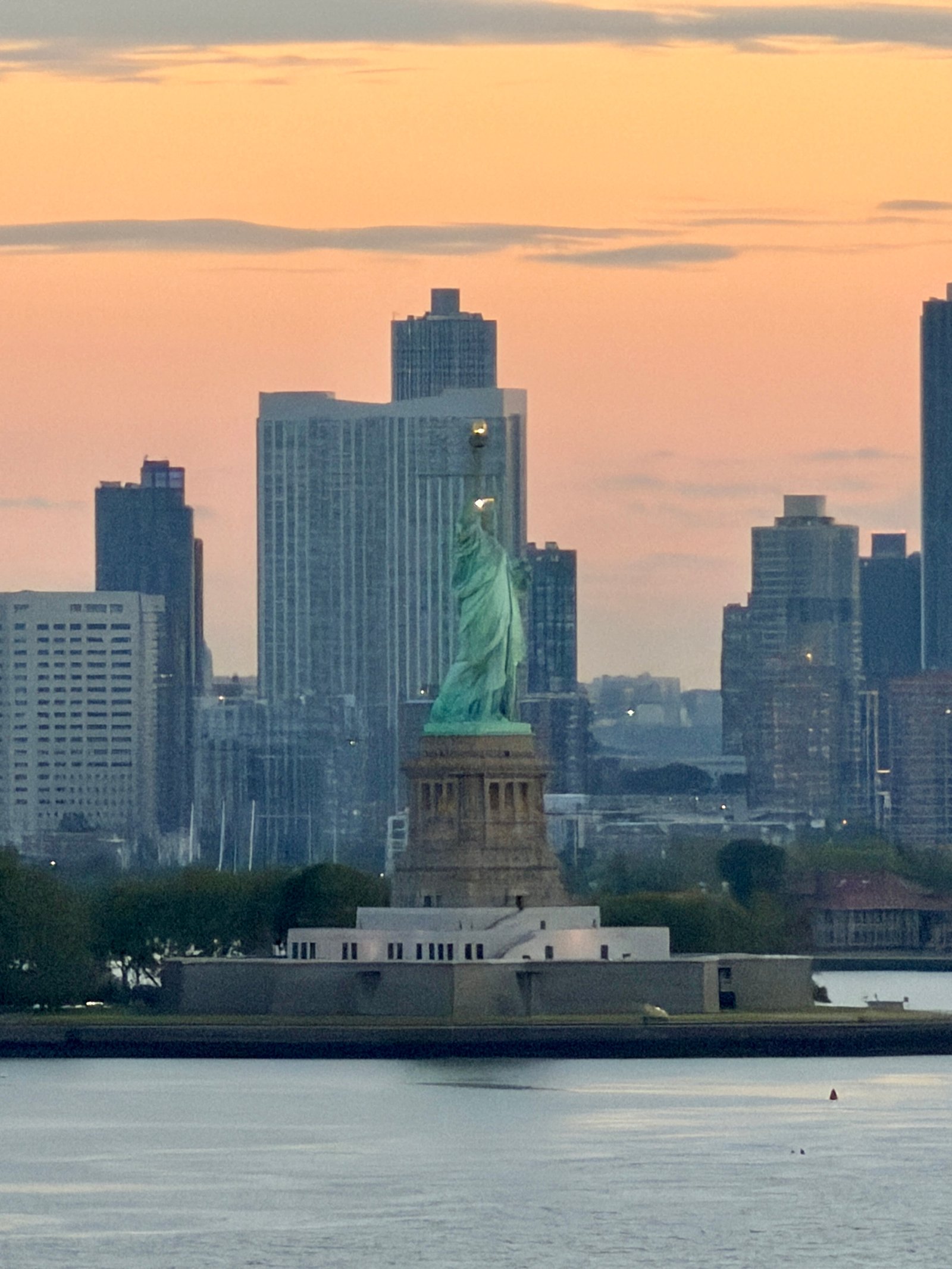
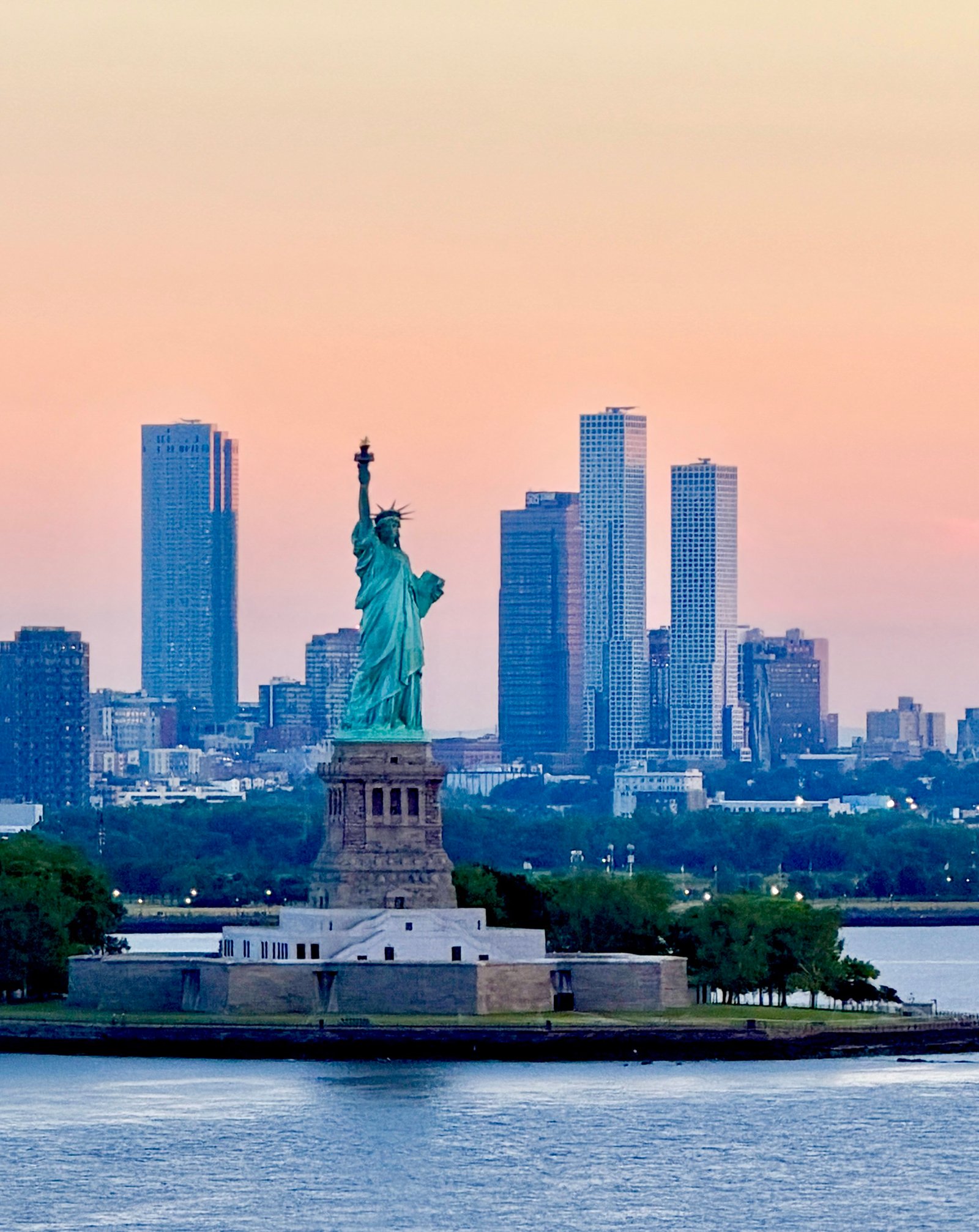
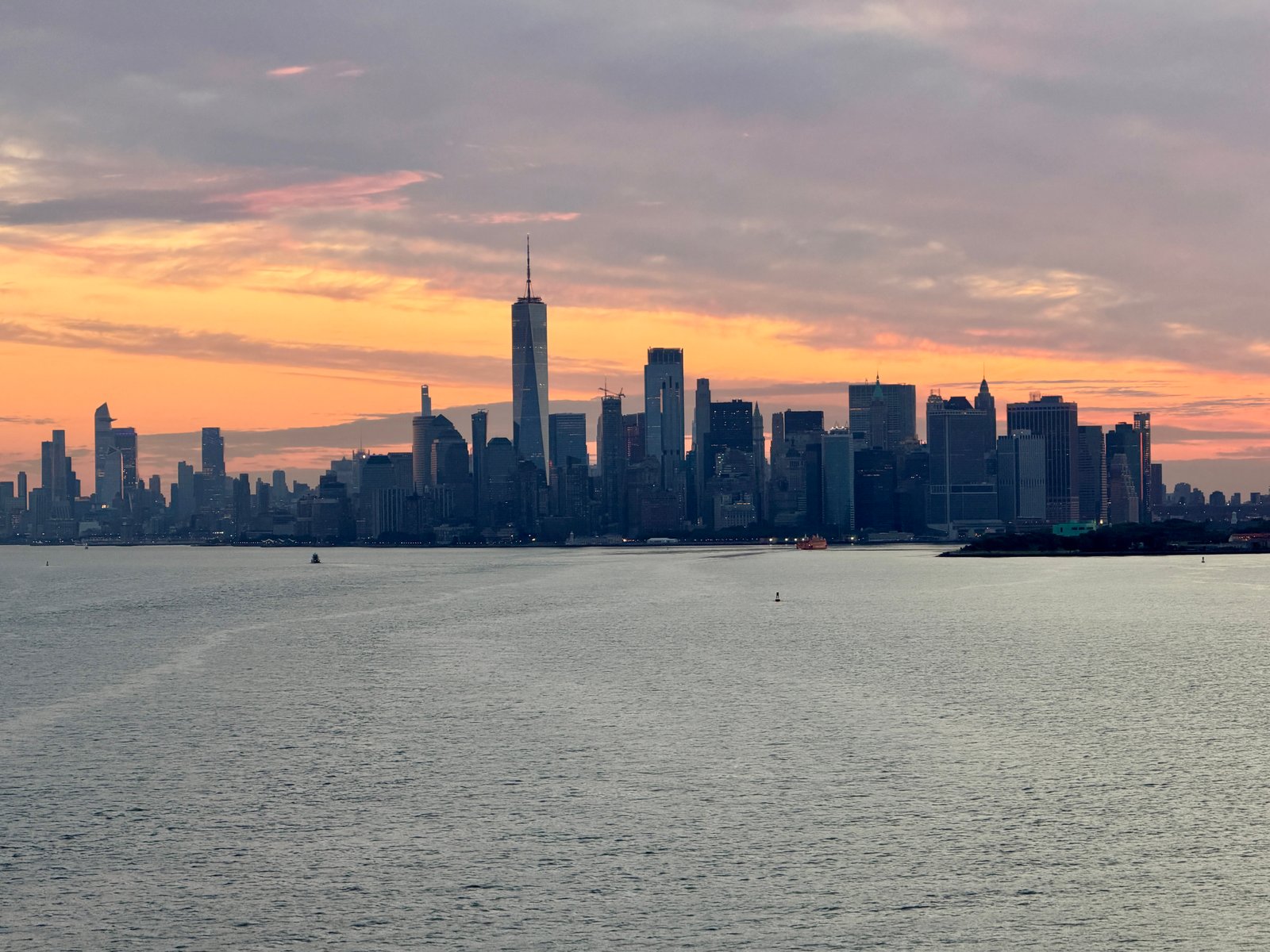
Nothing quite compares to arriving in New York by sea. On the final morning, passengers gathered on deck before sunrise as the skyline gradually emerged in the distance. Seeing the Statue of Liberty appear through the morning light was one of the most memorable moments of the entire journey.
As Queen Mary 2 sailed beneath the Verrazzano-Narrows Bridge and into New York Harbor, cameras clicked and passengers lined the rails to take in the view. After seven days at sea, arriving in one of the world’s most iconic cities felt truly special.
Why We Loved Our Southampton to New York Transatlantic Crossing on Cunard
You can feel that old world heritage from the moment you step aboard. Instead of rushing from port excursion to port excursion, the voyage itself becomes the destination. We spent our days watching the ever-changing Atlantic, reading in a comfortable lounge, enjoying afternoon tea, listening to lectures, music, playing games, socializing, or simply gazing out at an endless horizon. Somewhere between England and America, the usual urge to stay busy quietly slips away.
Atmosphere and Quiet
The atmosphere aboard was different, too. While many cruise lines focus on waterslides, zip lines, and constant activity, Cunard embraces a more classic style of travel. There are elegant public rooms, ballroom dancing, formal evenings, enrichment programs, and even a sense of occasion that seems increasingly rare in modern travel. It felt less like a floating resort and more like participating in a living piece of maritime history.
It is also much quieter, even in the entertainment venues. The music is at a level where you can still enjoy conversations. I can recall on other ships how I constantly looked for quiet calm places to relax away from the busy crowds and noise. It’s not like that on this ship, which is awesome.
Dress code
They do enforce dress codes after 6 pm. Unlike other cruise lines we’ve sailed on, where guests often wear shorts, sandals, and even swimwear in the main dining room, this cruise line enforces a strict dress code. Each evening, the dining room posts signs that outline the required attire for dinner, ranging from smart casual to formal or themed evenings. On gala nights, for example, men may need to wear a jacket in the main dining room. Staff politely turn away guests who do not meet the dress code and invite them to change before returning for dinner.
We saw this first hand with passengers in front of us. So, if you want to opt out of dressing for dinner or want to wear casual shorts or collarless shirts, then note that the buffet or other pub venue is your dinner option. Thankfully, we had a sports coat which helped us “fit in” and we ate in the dining room even on formal nights. Passengers do dress very well in the evenings, so at times we felt just a little underdressed.
No disposables
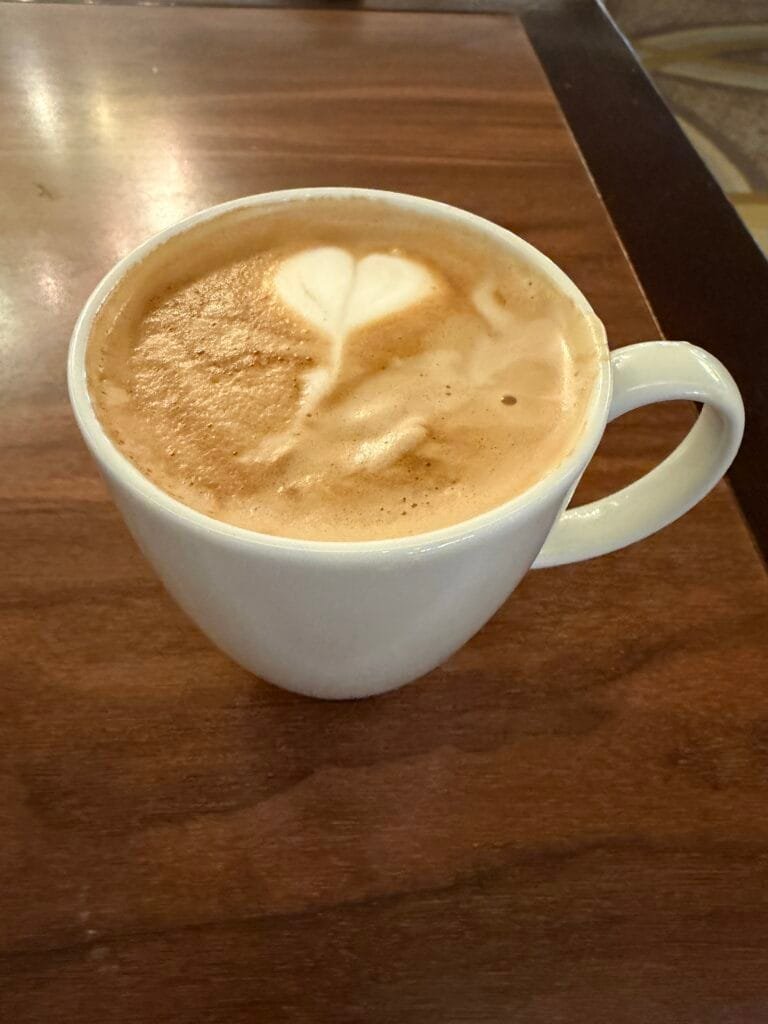
Another thing I noticed immediately is that there are no refillable cups, plastic ware, cans, paper or cardboard items of any type available. If you order items “to go”, whether it’s a soft drink or specialty coffee, it will always be served in a glass or porcelain cup, nothing disposable. Bottled water, both flat and sparkling, is literally in glass bottles. Soft drinks are in glass bottles. That also means you don’t see trash containers anywhere as everything is recycled and picked up by the crew. Just a different approach to service and sustainability I assume. Here’s my “to go” coffee.
Laundry
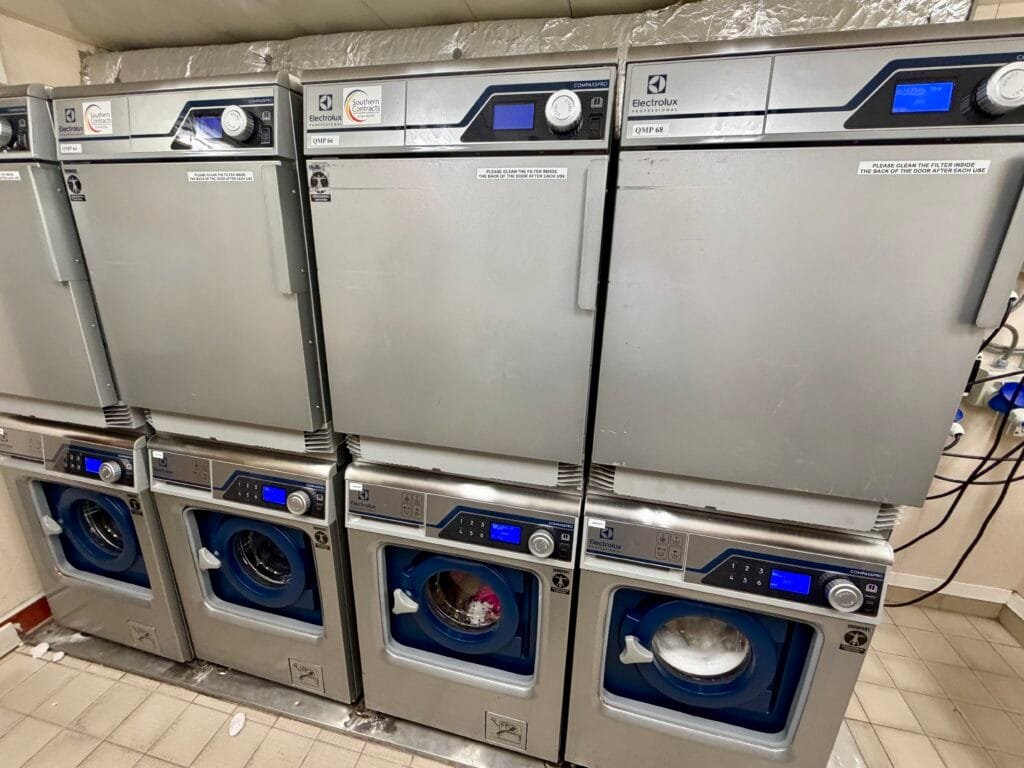
Queen Mary 2 features six complimentary self-service launderettes. The facilities include washers, dryers, ironing boards, and complimentary biodegradable detergent sheets all free of charge. The only other cruise ship we ever had this is on the Crown Princess. This is a huge benefit, especially if you’re on a long cruise or simply need to wash things before returning home.
No jet lag
This is another great bonus of a transatlantic cruise or crossing. On a 7 day crossing westbound to the USA, you change your clock back an hour almost every day. So once you arrive, you’re not only rested, but your body is already acclimated to the correct time zone. Unlike flying overseas, you’re not changing your time zone 6-7 hours all at once after a night of travel and missing a day of sleep.
Older crowd, few children
Of course it’s important to note that because of all these differences from a traditional cruise, the passengers’ ages skewed older. Also, I only saw about 6 minors under 18 years old the entire week. Depending upon your travel style, this could be positive or negative. For us, it’s a bonus!
What impressed us most
I think what impressed us most is how the ship handled the ocean. The North Atlantic can be unpredictable, but the Queen Mary 2 felt solid, stable and purposeful. Her deeper hull, stronger construction, and ocean-liner design helped her slice through seas that might cause more movement on conventional cruise ships. Even when the Atlantic reminded us who’s boss, we felt remarkably comfortable.
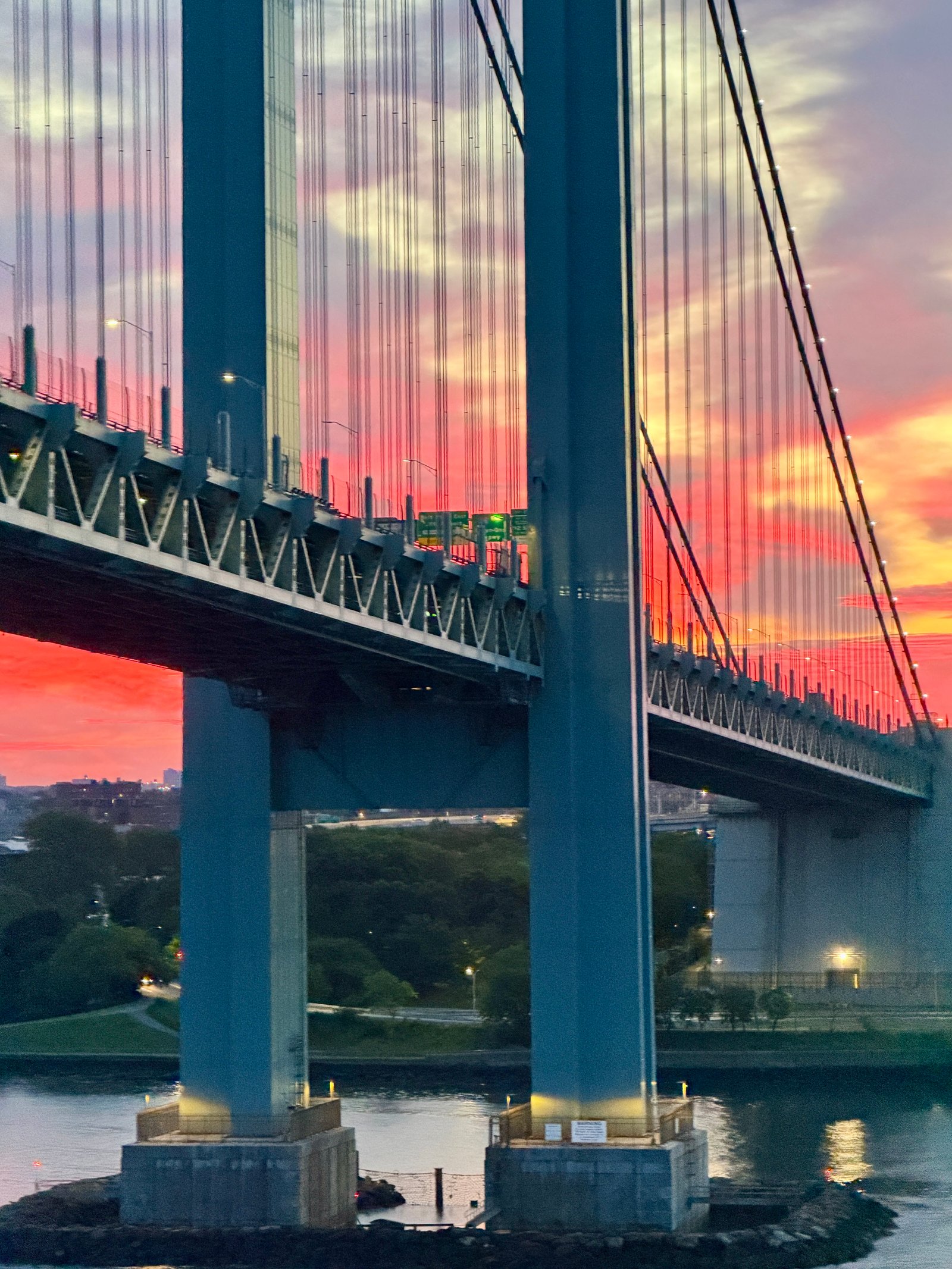
One of our favorite moments came on the final morning. After days surrounded by nothing but ocean, the early morning sunrise over the skyline of New York slowly emerged from the mist. We gathered on deck long before sunrise, cameras in hand and coffee cups warming chilly fingers. We sailed underneath the Verrazano-Narrows bridge. This bridge connects Staten Island and Brooklyn. It is one of the longest suspension bridges in the world and serves as the gateway into the New York Harbor.
As we entered the harbor and caught sight of the Statue of Liberty, there was a shared feeling of excitement throughout the ship. For generations of travelers, this has been one of the world’s great arrivals, and experiencing it by sea gave us a new appreciation for those who crossed before us.





Final Port of Call
By the time we stepped ashore, we understood why so many travelers become devoted fans of transatlantic crossings. There are quite a few people we met onboard who are sailing back to back. Two weeks from Southampton to New York and back to Southampton. We met others who have sailed this ship a dozen times.
The Queen Mary 2 offers something increasingly difficult to find in today’s fast-moving world: the chance to slow down, disconnect from the rush, and savor the journey itself. For us, it didn’t serve as transportation from one continent to another—it provided us a memorable travel experience. One that will remain with us forever.
The distinction between a cruise ship and an ocean liner is more than marketing—it comes down to how the vessel is designed and its primary purpose. After experiencing this first hand, we completely agree.
Our seven-day voyage aboard Queen Mary 2 was far more than a cruise—it was a journey into the golden age of ocean travel.
Until the next journey, happy sailing!